Other than dandruff, several things can cause your flaky scalp. Finding out what you have will help you find the best way to clear it up. An examination can tell what you have.
Psoriasis is a long term immune-mediated inflammatory disease, and is not contagious. Despite a common belief, it isn’t caused by poor hygiene or not washing your hair frequently enough. It flares and remits and its treatment is different depending on where it is on your body.
Scalp psoriasis can be a particular challenge because of the effect on itching, flaking, and hair care, even when it covers a small part of your scalp.
How It Looks and Feels, and What Sets It Off
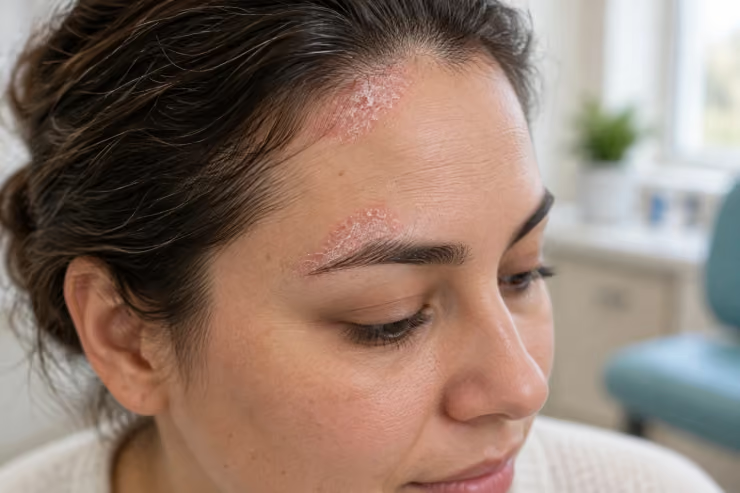
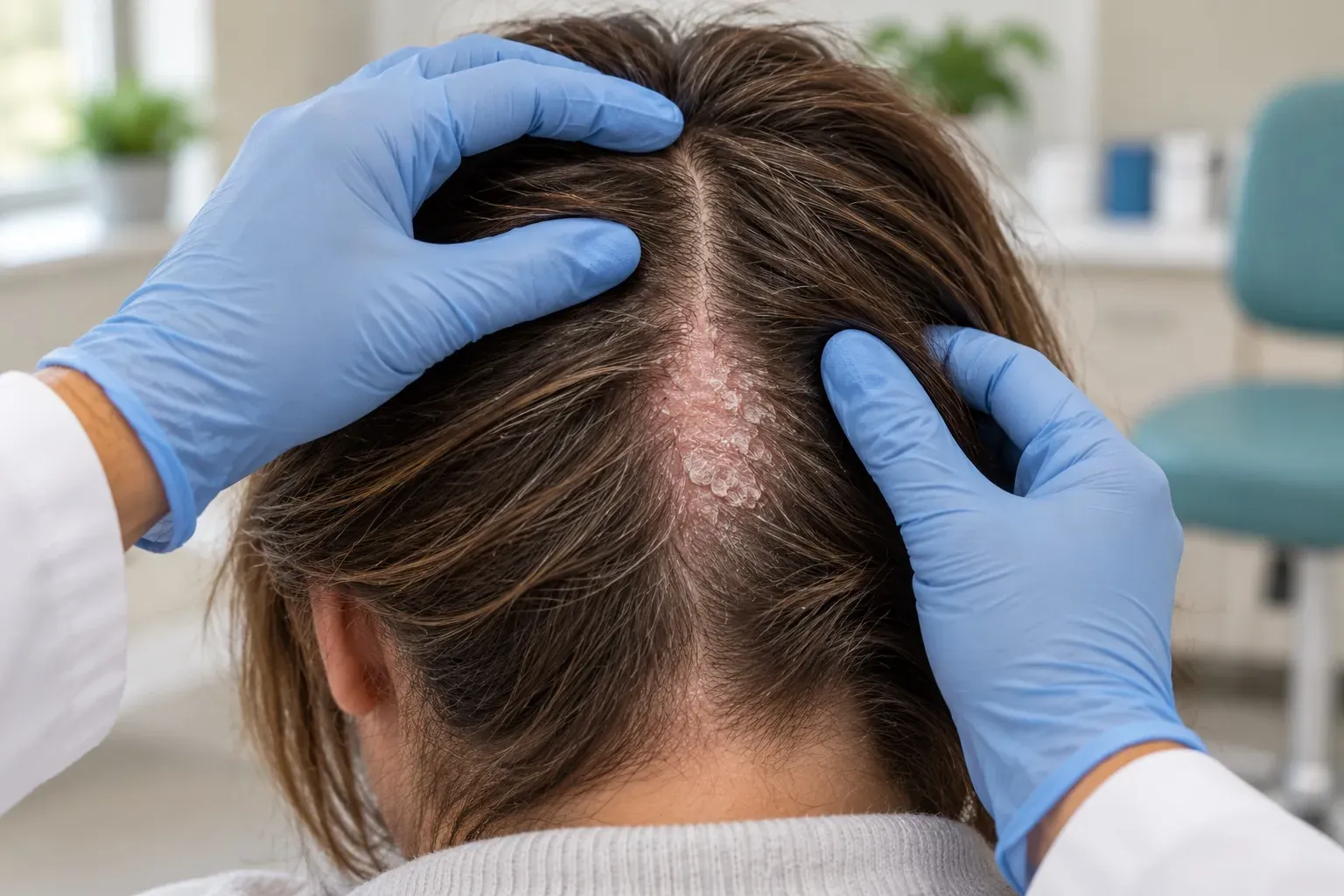
Psoriasis on the scalp often looks like a patch with a well-defined border and dry skin that’s stuck on. Inflammation makes extra skin cells that flake off as scale, and the patch may itch, be sore, and bleed from scratching. Psoriasis can extend beyond your hairline, even to behind your ears.
Scratched eczema, infections, and other scalp conditions can also cause a scab on your scalp.
Psoriasis is due to inflammation from your immune system. Flares of scalp psoriasis can be triggered by scratching your scalp, picking at the scale and trying to force it off, burning your scalp, or other injury to the scalp (sometimes from hair styling). Other triggers for psoriasis can be stress, certain infections, and cold dry weather.
Psoriasis flares are never your fault because of your hairstyle or how often you wash your hair.
Is It Psoriasis, Dandruff or Both?
Psoriasis can be similar to dandruff and you can even have both of them, but they need to be treated differently. Other scalp conditions can also look similar.
- Psoriasis: the patches are typically thicker and have more of a border
- Dandruff and the flaky rash that causes stubborn dandruff, called Seborrheic dermatitis: the scale is often thinner and less well-defined
- Both of the above: sometimes you can have features of both and controlling the Seborrheic dermatitis with an anti-fungal dandruff shampoo can be helpful
- Contact rash from a hair product: this can be very itchy, sometimes burn, and often isn’t just on your scalp, but can also affect your ears, face, and neck
- Scalp Ringworm: common in children, this fungal infection usually requires a prescription for an oral anti-fungal medicine, not just shampoo
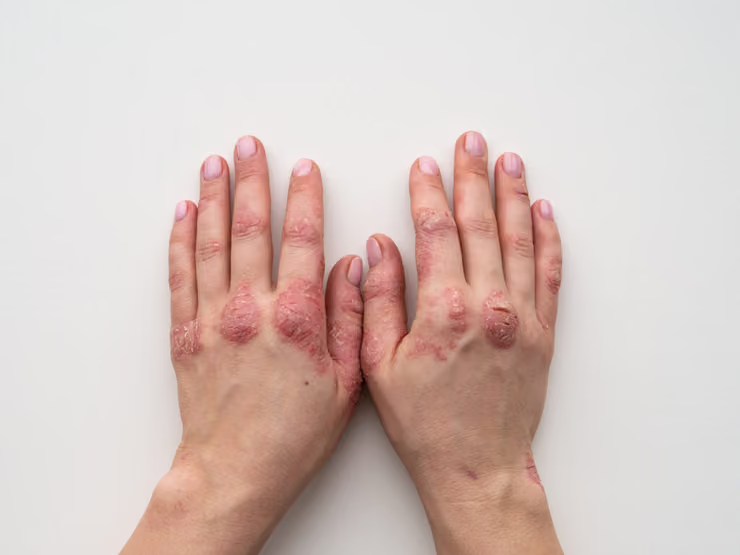
Psoriasis can also be violet, gray, or dark brown on brown and Black skin, making the scaling stand out compared to red patches on lighter skin.
A dermatologist can examine your scalp to look at the texture and border of the patch(es) to help figure out what you have. They can also do some tests on the scale or hair to check for fungus.
Allergy patch testing and reviewing hair products can help to see if a contact rash is present. A biopsy (taking a small sample of skin to send to the lab) is rarely needed except in unclear cases or when a hair losing condition that can cause scarring may be present.
Shampoo Ingredients and What Each Can Do
There is no “best” shampoo for scalp psoriasis because it depends on the thickness and inflammation of the psoriasis, whether or not you also have dandruff, and your hair care routine. However, some of the ingredients that are helpful include:
- Salicylic acid: to help remove the scale build-up
- Coal tar: may reduce scale, itching, and inflammation
- Anti-fungal: to treat Seborrheic dermatitis (if present)
Although there’s not a lot of research comparing the available over-the-counter (OTC) shampoos, using one of these medicated shampoos can be part of controlling your psoriasis. An anti-fungal one may help the dandruff side and still leave the psoriasis needing treatment. However, if the scale and itching are not going away, psoriasis often also needs a prescription for a leave-on medication.
Soothing the Scalp and Treating Skin Under Hair
Medicine is hard to apply to skin covered with thick scale, like a lid. Scale that seems stuck on may need to be softened with moisturizing oil or cream or with a scale softening product that we will recommend. Itching tends to decrease as we treat the inflammation of your scalp.
Medicines containing steroid alone or combined with a vitamin D medicine have research support for short term control of scalp psoriasis. They can be prescribed in a variety of textures: solutions, foams, gels, lotions, oils, and shampoos.
All of these need to be applied to the skin under your hair, following each one's instructions on whether to rinse it off and when to stop. Depending on the medicine we choose, we may limit the duration of use, and we start off carefully, then adjust treatment up or down as your scalp responds.
We will see you regularly starting out.
We will ask you how often you wash your hair, how you style it, and what textures you think you could live with. We may decide that it would be better to use a leave-on medicine and then carefully part your hair to apply it rather than washing frequently with medicated shampoos. This may be especially true if you have textured hair and use protective styles.
For some people it may help to use a medical light (phototherapy), although the hair may make it hard to light the skin. We can refer you for that.
We can also discuss with you whole-body medicines that you take either as a pill, by injection, or as an infusion to treat your scalp psoriasis. Even if you have a small area of skin involved, if it doesn't go away and it is bothering you, we can talk about these medicines.
Coconut Oil, Home Remedies and Your Hair
You may find it helpful to use coconut oil as a moisturizer for your scalp to help soften dry scale.
Some people use apple cider vinegar on their scalp for itching, but it can sting or burn, so keep it off broken skin and stop if it irritates. Using tea tree oil has not been shown to help with psoriasis and can cause an allergic rash in some people.
Although many things have been shown to help dandruff or eczema, that does not mean that they will help psoriasis. Also, there is no diet that will cure your psoriasis. Scalp psoriasis can have a big effect on your ability to sleep well and your confidence, especially if you are worried about losing your hair.
A population study suggested that people who had scalp psoriasis might be at risk for developing joint inflammation of psoriatic arthritis later on. So whatever your age or however your scalp looks, let us know if you develop symptoms in your joints.
Temporary hair loss can result from scratching and/or removing the scale, but hair tends to grow back once the scalp is under control. If you are losing hair for a long time, in patchy areas, or in areas that look scarred, we can check for other causes of hair loss.
When to See a Dermatologist
When you come in, tell us how often you wash and how you style your hair, including heat, chemical treatments and protective styles. Mention the shampoos, oils and treatments you tried before, any hair loss, any joint pain or stiffness, and all your medicines. Let us know, too, whether you are pregnant, breastfeeding or planning a pregnancy.
Before any medicine that works throughout the body, we review your health, and some need tests before and during treatment. Our psoriasis treatment page explains what that screening involves.
Some of these medicines raise the risk of serious infection, and an active infection can delay starting one. Tell us about any current or repeated infection, past tuberculosis or hepatitis, and planned vaccines. Pregnancy, breastfeeding and plans to become pregnant change which treatments fit, including some prescription creams, as do a child's age and body site.
Book a visit if symptoms persist despite a suitable shampoo used as directed, or if patches are painful or bleed. The same goes for a diagnosis you are unsure of, itch that disturbs your sleep, and any hair loss.
The patterns below are rare but can be serious, including on skin where redness is hard to see. Seek emergency care right away, rather than booking an appointment, if you notice any of them:
- Severe redness or other inflamed discoloration over most of your body, or skin over large areas that looks burned, whether or not it peels or spreads quickly
- New pus-filled bumps that spread widely, especially with painful skin
- Fever or chills with a widespread painful rash, pus-filled bumps or rapid peeling
- Marked weakness, or feeling very ill, with that kind of rash
- Signs of dehydration with that kind of rash, such as passing much less urine, dark urine, a very dry mouth, dizziness or lightheadedness, or fainting
- Confusion, fainting, fast or difficult breathing, or extreme or rapidly worsening pain with a suspected infection
- Severe eye pain or a sudden change in vision
Contact us promptly if you notice any of the signs below; where an item calls for same-day care, it says so:
- A patch that is increasingly warm, tender or swollen, which calls for same-day care
- Pus, drainage or crusting
- Discoloration spreading outward from a patch, which calls for same-day care and may look darker rather than red on brown or Black skin
- Any of these spreading quickly, or with fever, chills or feeling unwell, which calls for urgent care right away rather than waiting for an appointment
- Scaly bald patches on the scalp, in a child or an adult
- Broken hairs or black dots on the scalp
- Swollen glands in the neck alongside these scalp changes
- A tender, soft, swollen area on the scalp, which calls for same-day care
- Joint pain or swelling that persists
- Stiffness after rest, such as in the morning
- A whole finger or toe that swells
- Pain at the heel or the back of the ankle
- Back pain that persists and is worse after rest
- Eye pain or redness, light sensitivity, new blurred vision, or new or newly increased floaters, which need same-day eye or urgent care rather than a dermatology visit
This article is general education, not a diagnosis, and it does not replace an examination.
How Our Clinicians Approach Your Scalp
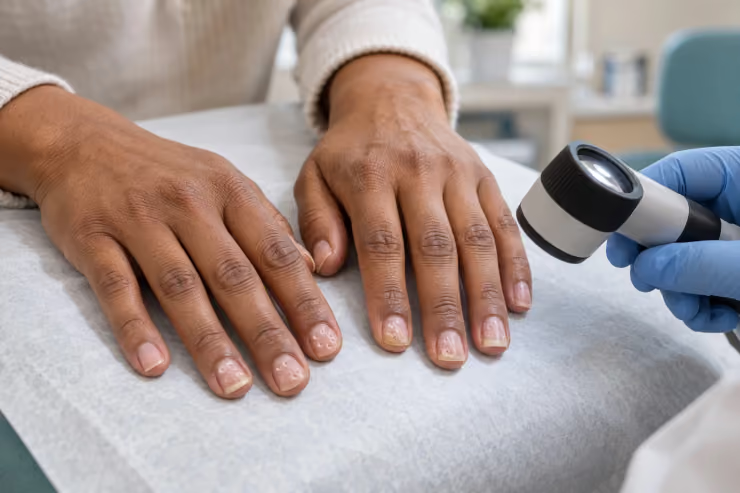
Our South Loop practice will examine your scalp, skin and nails to craft an evidence-based treatment plan that considers your hair and daily routine. We provide physician-directed care, and our dermatologists are board certified.
Questions Patients Often Ask
Can Scalp Psoriasis Spread to My Face?
Yes. The patches can spread past your hairline onto your forehead and around your ears. If you have psoriasis on your face, we can prescribe medicine that is gentler and better suited to that area.
Avoid getting your scalp prescription on your face or eyelids unless it has been prescribed for that area.
Can Scalp Psoriasis Be Cured?
No. With the right treatment, it is possible to bring it under control and enjoy long periods of remission. Our plan will also help you deal with the condition when it isn’t active.
Is It Okay to Pick, Scratch or Comb the Scale Off?
No. Picking, scratching and forceful combing can damage your skin, pull out your hair and trigger more patches. These things will not speed up your treatment.
We can help you soften the scale, which is a better approach.
Do I Have to Wash My Hair Every Day?
Not necessarily. There is no evidence-based recommendation to shampoo your hair every day to treat scalp psoriasis. Washing your hair more often or more vigorously will not cure the condition.
We will craft your plan based on the frequency with which you already shampoo.
Talk With Us About Your Next Step
Not sure if you have dandruff, psoriasis or both? Come in for an examination and a plan.
Request an appointment or contact us with questions.
Individual results and duration of results may vary. Outcomes are not guaranteed.