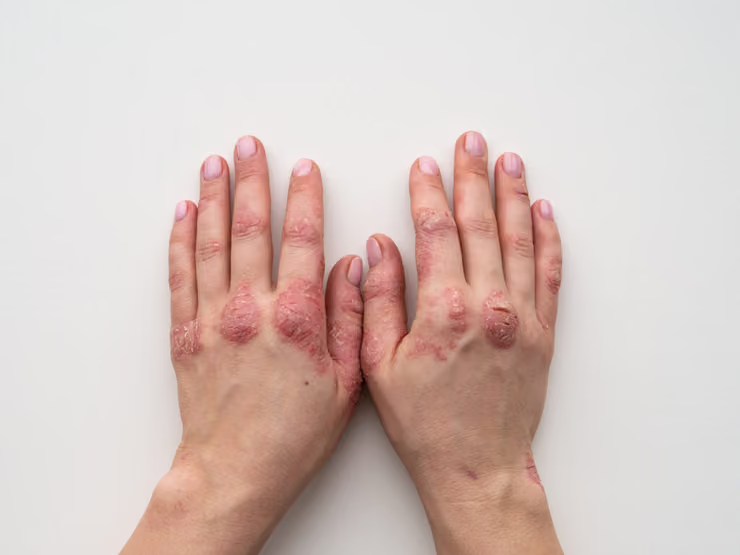
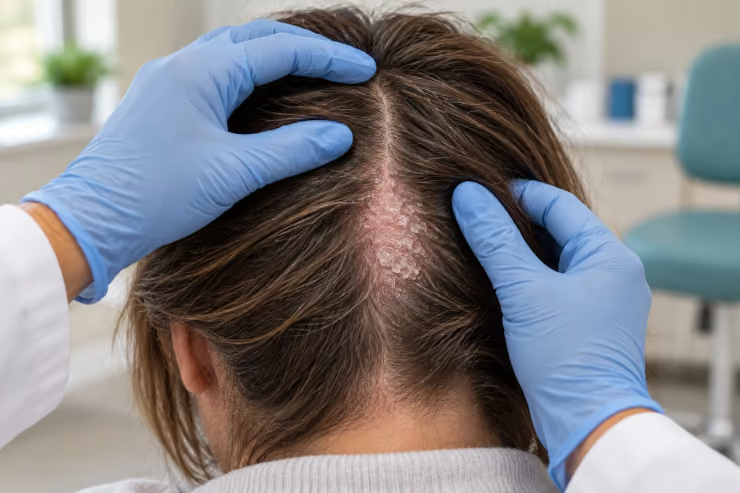
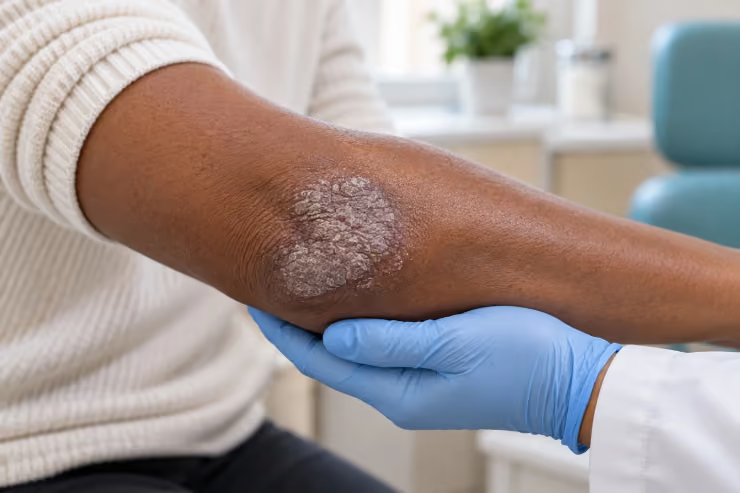
If your nails are pitting, lifting, or thickening, it’s important to know the cause. This article can help you determine the cause of your nail symptoms. An exam or simple test can confirm the cause.
What Psoriasis Is, and Why Nails Matter
Psoriasis is driven by your immune system, with your genes and triggers also playing a part. Inflammation from your immune system causes flare-ups, with quieter periods in between.
Psoriasis is not contagious, it’s not caused by poor hygiene, and treatment can improve or clear it for a period of time. Knowing what causes psoriasis helps us treat it effectively.
Nail psoriasis is a medical problem. Nail psoriasis can be painful, and it can make it hard to use your hands for skilled tasks or work. It can make it hard to wear shoes comfortably, and it can make you feel self-conscious.
Nail psoriasis can be an important reason to treat psoriasis more strongly, even if you have minimal skin psoriasis.
Nails grow slowly, so nail psoriasis is slow to improve.
Reading the Signs in Your Nails
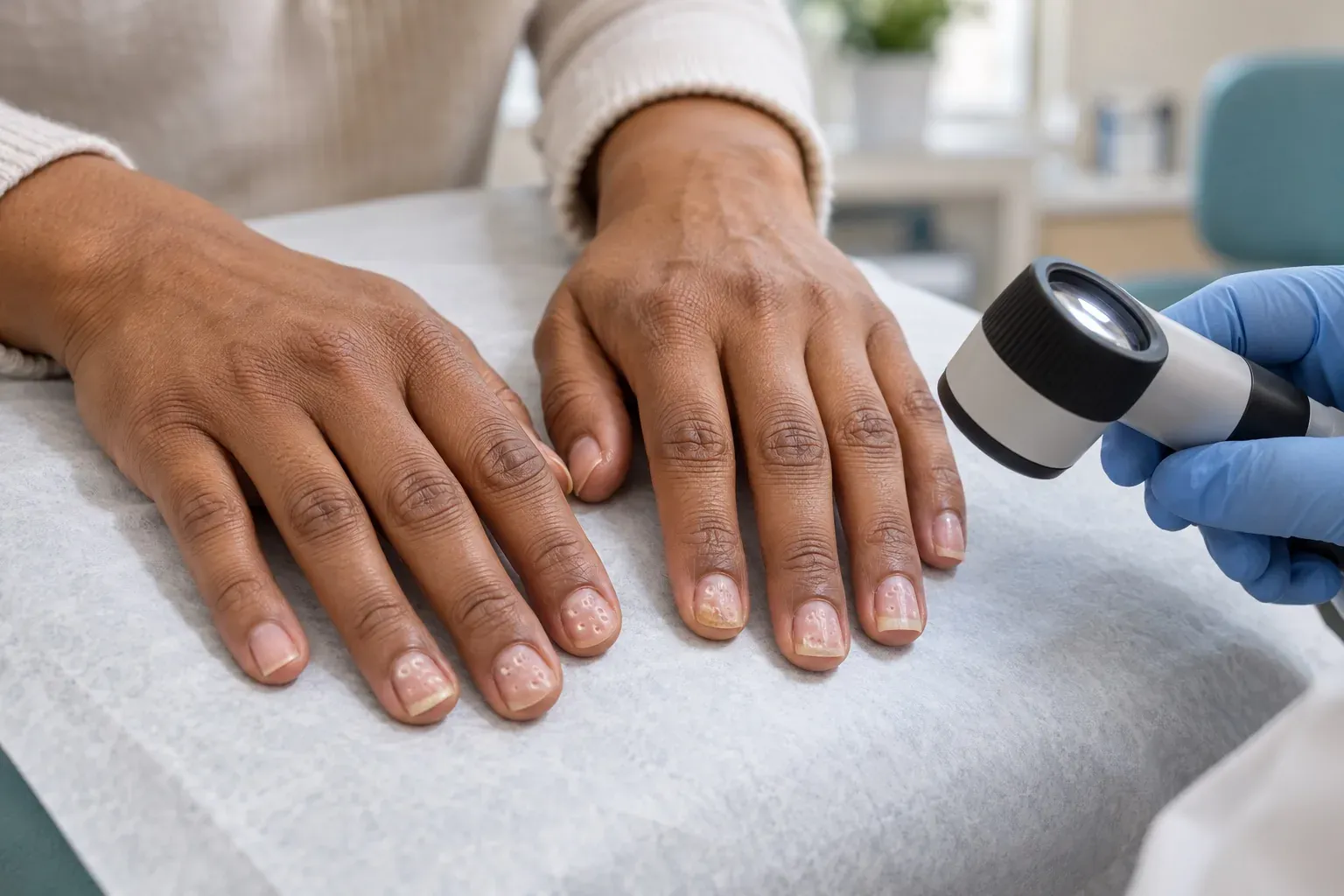
Nail psoriasis can occur where the nail is made (at the base of the nail) or on the nail bed (under the nail). Sometimes both places on the same nail are affected.
- Pitting: small dents in the nail surface
- White spots, grooves in the nail, or crumbling of the nail: starts at base of nail
- “Oil drop” spots: yellow-pink or salmon-colored patch under nail
- Lifting: of the nail off of the skin underneath (onycholysis)
- Thick, chalky buildup under the nail: raises it up
- Tiny, dark red or brown streaks under the nail: looks like splinters
Not all of these signs are unique to psoriasis. Pitting is a useful sign of psoriasis, but other conditions like eczema or alopecia areata can cause it. Color changes alone are not reliable for determining if it’s psoriasis.
Some data suggests that darker-skinned people can get pigment changes along the nail folds or brown or gray streaks running from the base to the tip of the nail when they have nail psoriasis. The salmon-colored spots may be harder to see too. The data about nail psoriasis in people of color is limited, but our clinicians look at nails of all colors with these differences in mind.
Is It Nail Fungus, Psoriasis or Both?
Onychomycosis (nail fungus infection) can look like nail psoriasis. You can have both at the same time.
An exam and often a test to look for fungus can tell the difference. The test looks at clippings of your nail or material from underneath your nail, sometimes after staining it or trying to grow a fungus in a culture.
The American Academy of Dermatology recommends testing to confirm a fungus before prescribing an anti-fungal pill. The products used to treat fungus will have no effect on psoriasis, so it’s important to know if you have fungus. Dermatologists test for fungus in nails that are thick or that are not responding to treatment.
Injury to the nail can cause lifting, thickening, or discoloration of the nail. Lichen planus is another inflammatory condition (like psoriasis) that can cause ridges, splitting, and thinning of the nail. It can permanently scar the nail, so it’s important to treat it promptly.
A dermatologist may use a magnifying light (dermoscopy) to look at your nail, take a sample (rarely), or do patch testing to see if you’re allergic to something you’ve put on your nail.
Any new or changing dark streak should be examined to determine what it is.
Triggers, Injury and Gentle Nail Care
Psoriasis triggers: there is no biggest trigger. For nail psoriasis an important trigger is injury.
Repeated injury to your nail from knocks, picking, biting, aggressive manicures, cutting your cuticles, or scraping things from under your nail can make nail psoriasis worse. Wet work and products on your nails can cause a rash on your hands or an infection in your nails, which is also important for people with hand psoriasis.
In some cases, certain infections, cold dry weather, stress (for some people) and certain medicines can also contribute to it. Don't change any medicine you take without discussing it with the person who prescribed it.
There are things you can do to look after your nails, but on their own these won't clear nail psoriasis. They help protect them while you're finding the best way of treating your nail inflammation.
Keep nails short and smooth. Moisturize your nails. Protect your hands if you do a lot of wet work.
Don't cut or push back your cuticles. Don't put artificial nails on your nails if you've got active nail damage. Don't dig or scrape under nails if they've lifted.
How Treatment Is Chosen
Once we're sure you've got nail psoriasis and we've tried to minimize any injury to your nails, we'll work with you to find the best treatment for your nail inflammation. This will depend on where your nail inflammation is and how much it's affecting you.
We'll start off at the level your nails need and step up your treatment if we need to. Once we've started you on something, we'll see you regularly to review how things are going, especially at the beginning.
- Prescription medicine applied to the nail: For limited nail psoriasis, applying a strong steroid, often along with a vitamin D-based medicine, is backed by expert opinion. We'll advise you on where to apply this, as putting it on the surface of your damaged nail won't always get to the inflammation.
- Injections applied near the nail: For inflammation affecting just a few nails, mainly at the base, a dermatologist may recommend a steroid injection around your nails. This has to be given by a clinician. There is a risk of it causing pain or thinning the skin there.
- Medicines that work throughout the body: If your nail psoriasis is causing you a lot of pain, trouble using your hands or feet, or distress, we may talk to you about them. The same goes if treatments aren't working or if you need treatment for skin or joint psoriasis too. These can come as pills, injections or infusions.
We can refer you for medical light treatment, but this doesn't reach the nail very well so isn't very reliable for treating nail psoriasis even if it improves your skin.
There are also several targeted pills, and injectable or infusable medicines that target specific parts of your immune system (often referred to as 'biologics'), that have been shown to help nails too. However, there's not as much evidence for nail psoriasis as there is for skin psoriasis yet, so there's no best treatment for everyone.
Nail Growth and the Joints
It can take about six months for a new fingernail to grow and 12 to 18 months for a new toenail. These are estimates, not guarantees, of how long it will take your damaged nails to grow out.
It may take longer if your nails continue to become inflamed or if you develop another nail problem. Your nail inflammation may calm down sooner than that, but any damage that's already happened inside your nail will usually have to grow out.
After your nail inflammation has gone, you may find that the skin around your nails is darker or lighter than it used to be. This is more common if you've got psoriasis and dark skin. Again, any damage to your nail itself will often have to grow out.
If you've got nail psoriasis, especially if you've got pitting, you're more likely to develop inflammation in your joints as a result of your psoriasis (psoriatic arthritis) further down the line. It doesn't mean you have it or you will definitely get it, but it does mean you're at increased risk of getting it.
Psoriatic arthritis can be missed, but treating it early on can help limit the damage it does to your joints.
If we think you might have psoriatic arthritis, we can work with a joint specialist (usually a rheumatologist).
When to See a Dermatologist
Tell us how your nails have changed and when, your manicure habits and nail products, and anything you already tried, including antifungal treatment. Also mention any joint pain or stiffness, all your medicines, and whether you are pregnant, breastfeeding or planning a pregnancy.
Before any medicine that works throughout the body, we review your health and other conditions. Some need tests before you start and checks during treatment, as our psoriasis treatment page explains.
Some of these medicines raise the risk of serious infection, and an active infection can delay starting one. Tell us about any current or repeated infection, past tuberculosis or hepatitis, and planned vaccines. Pregnancy, breastfeeding and plans to become pregnant change which treatments are appropriate, including some prescription creams.
See us for persistent pitting or lifting, painful thickening, uncertainty about fungus, treatment that is not working, or nail changes with joint symptoms.
Seek emergency care right away, rather than booking an appointment, for the patterns below. They are rare but can be serious, including on skin where redness is hard to see.
- Severe redness or other inflamed discoloration over most of your body, or skin over large areas that looks burned, whether or not it peels or spreads quickly
- New pus-filled bumps that spread widely, especially with painful skin
- Fever or chills with a widespread painful rash, pus-filled bumps or rapid peeling
- Marked weakness, or feeling very ill, with that kind of rash
- Signs of dehydration with that kind of rash, such as passing much less urine, dark urine, a very dry mouth, dizziness or lightheadedness, or fainting
- Confusion, fainting, fast or difficult breathing, or extreme or rapidly worsening pain with a suspected infection
- Severe eye pain or a sudden change in vision
Contact us promptly for these signs, unless the item names another place to go.
- Skin around a nail that is increasingly warm, tender or swollen
- Pus, drainage or crusting around a nail
- Discoloration spreading from around a nail, which may look darker rather than red on brown or Black skin
- Any of the three signs above spreading beyond the nail fold, or with fever, chills or feeling unwell, which calls for same-day care rather than waiting for an appointment
- A new dark streak in a nail, or one that is widening or changing
- Skin beside a nail or at its cuticle that is newly dark or darkening
- A nail that is being progressively destroyed, or that looks as if it is scarring
- Joint pain or swelling that persists
- Stiffness after rest, such as in the morning
- A whole finger or toe that swells
- Pain at the heel or the back of the ankle
- Back pain that persists and is worse after rest
- Eye pain or redness, light sensitivity, new blurred vision, or new or newly increased floaters, which need same-day eye or urgent care rather than a dermatology visit
This article is general education rather than a diagnosis, and it does not replace an examination.
How We Evaluate Your Nails
When you first see us, we will examine the nails, skin, and scalp. We will also inquire about your joints.
Our South Loop practice is led by board-certified dermatologists, who direct your care. Our entire clinical team treats nail psoriasis according to the latest evidence.
Questions Patients Often Ask
Is Nail Psoriasis Contagious?
No. Nail psoriasis is not contagious, and it is not caused by poor hygiene. Moreover, not all yellow, thickened nails are due to fungus.
Are Nail Polish, Manicures and Artificial Nails Okay?
It varies. It is important not to cut your cuticles, get aggressive manicures or apply artificial nails over active nail damage. Also let us know if your nail psoriasis seems to be irritated by a particular product because an allergic reaction to a product may look like a flare.
Can Diet, Supplements or Home Remedies Clear Nail Psoriasis?
No. There is no quick fix for nail psoriasis. None of these have been shown to clear nail psoriasis, and it takes time for your nails to grow out after they have been damaged by psoriasis.
Are Over-the-Counter Products Enough?
Not necessarily. It is unlikely that store-bought moisturizers or nail care products will clear nail psoriasis, although they can help you prevent injury to your nails. And, store-bought antifungal creams for skin, such as athlete's foot creams, do not reach fungus inside a nail well enough to treat it, even when it is confirmed.
Can Children Get Nail Psoriasis?
Yes. We tailor treatment to your child’s age and the specific features of his or her nail psoriasis. We do this because there is limited evidence to guide our care of nail psoriasis in children, so we cannot simply apply adult treatments to children.
Talk With Us About Your Next Step
If you are still considering nail psoriasis as the possible cause of your symptoms, we invite you to make an appointment or contact us so we can examine your nails and develop a treatment plan.
Individual results and duration of results may vary. Outcomes are not guaranteed.