

Hair Loss Evaluation and Diagnosis in South Loop Chicago
Shedding, thinning, breakage, and patchy loss all have different causes. At our South Loop practice, we look for the most likely cause before recommending treatment. Some diagnoses are clear at the first visit, and others need testing or follow-up.
Physician-directed care, part of the Northwestern Medicine Physician Network.
- Appointment
- Varies by case
- Downtime
- None for the exam; a biopsy needs wound care
- Most often used for
- Shedding, thinning, breakage, patchy loss, scalp symptoms
- Possible next steps
- Diagnosis and plan; labs, biopsy, or follow-up
- Results timing
- Some answers at the visit; regrowth assessed over months
- Payment
- Insurance for evaluation; PRP is self-pay
Why Hair Loss Starts With a Diagnosis
A hair loss evaluation is a medical visit to find out why your hair is shedding, thinning, breaking, or forming patches. Hair loss has many causes, and the right care depends on the cause.
Your provider asks about when it started, recent illness, stress, childbirth, medications, family history, and your hair care routine. We then examine your scalp, hairline, and the pattern of loss. A clear diagnosis, sometimes reached only after testing or follow-up, guides everything that follows.
Why Schedule This Visit
- Sudden or increased shedding, or hair coming out in clumps
- A widening part, thinning at the crown, or a receding hairline
- Round patches of loss on the scalp, beard, or eyebrows
- Breakage or thinning at the edges, especially with tight or tension styles
- Scalp itching, burning, tenderness, scaling, crusting, or smooth shiny areas
- Hair changes after illness, childbirth, weight change, surgery, stress, or a new medication
Seek prompt evaluation if hair loss is worsening quickly or comes with burning, pain, marked tenderness, crusting, or new smooth or shiny areas. These signs can occur with active inflammatory or scarring hair loss, where early treatment may help preserve remaining follicles.
Possible Next Steps
Treatment depends on the cause and type of hair loss, so your plan starts with the diagnosis.
Male and female pattern hair loss
Male and female pattern hair loss is a chronic condition that needs ongoing management. Treatment choice also depends on side effects, medical history, other medications, and pregnancy plans.
Telogen effluvium
Telogen effluvium is diffuse shedding that often begins about two to three months after a physical or emotional trigger. Many cases improve once the trigger resolves, but shedding can persist if the trigger continues or another condition coexists. Visible fullness often takes six to nine months, sometimes longer, to return.
Alopecia areata
Patchy hair loss from alopecia areata is treated based on its extent. Hair may regrow on its own or with treatment, but regrowth can be slow, loss can recur, and some patients do not regrow hair. Your options depend on the extent, duration, and course of the disease, and range from monitoring to treatments your provider will review.
Scarring types of hair loss
Scarring types of hair loss, including central centrifugal cicatricial alopecia and others, are a higher priority. Follicles can be permanently destroyed as scarring advances, and hair is not expected to regrow where that has happened. Early care focuses on calming inflammation and preserving the follicles you still have, which is why prompt evaluation matters.
Hairstyling has not been established as the cause of central centrifugal cicatricial alopecia.
PRP therapy
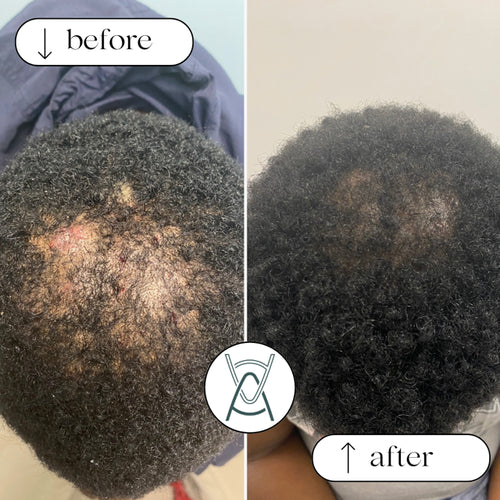
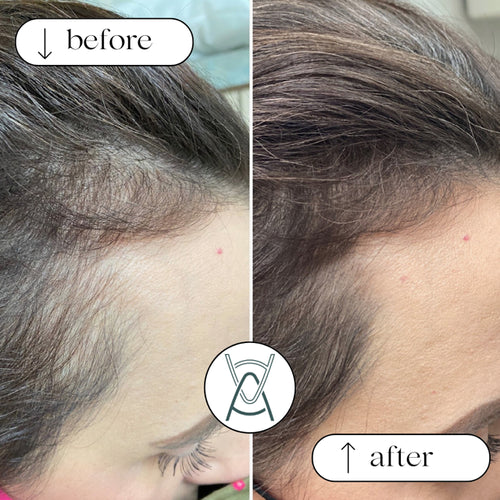
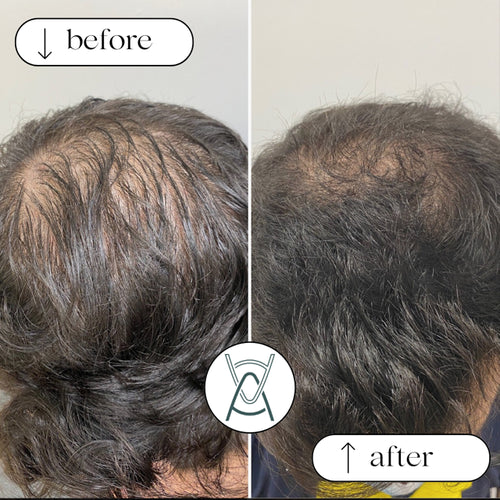
PRP therapy may be considered after a diagnosis, most often for male and female pattern hair loss. It is not FDA approved as a hair loss treatment, and response, protocols, and durability vary from person to person.
It is an additional option used alongside other hair loss treatments, and long-term evidence remains limited.
PRP works best for thinning areas where follicles are still active. Fully bald or scarred areas are less likely to respond. Hair is not expected to regrow where scarring has destroyed follicles, and a bald-appearing area alone does not confirm which is present.
Individual results and duration of results may vary. Outcomes are not guaranteed.

Ready to talk about your skin?
Book a ConsultationWhat Happens at the Visit
We start with your history. Your provider asks when the loss began and whether it is shedding or thinning. We also ask about recent illness, childbirth, stress, weight change, medications, family history, and how you style and care for your hair.
We then examine your scalp, hair shafts, nails, and the pattern of loss. We look for clues such as scaling, redness, broken hairs, a widening part, patches, or smooth areas.
If your hairstyles, extensions, or head coverings place repeated tension on the hair, we ask about tightness, pain, stinging, crusting, and edge care. Repeated tension itself, not ethnicity or any particular cultural style, can cause traction alopecia in anyone. Early changes may improve when tension is reduced, while long-standing traction loss can become permanent.
We raise this respectfully, because hair loss has many contributing factors and the goal is the right diagnosis, not blame.
Depending on your history and examination, your provider may order targeted blood tests. Examples include blood counts, iron studies, thyroid testing, or other tests suggested by your symptoms and risk factors. Additional nutrient or hormone testing is selected case by case, and supplements are recommended based on a documented deficiency rather than routine screening.
A small scalp biopsy may be recommended when the diagnosis is unclear or a scarring type of hair loss is suspected.
Pricing and payment
The visit for a hair loss medical evaluation can be billed to insurance. The treatment of PRP is self-pay only.
Why Patients Choose Advanced Dermatology
01 Physician-led
Dermatologist-Led Care.
Every treatment performed or supervised by a board-certified dermatologist — Dr. Monica Rani, MD (Medical Director) and Dr. Stavonnie Patterson, MD — or Sydney Freedman, PA-C.
02 Skin of Color
Real Expertise.
Providers experienced in melanin-rich skin; we adjust device, depth, and approach to your skin tone. Repeatedly praised in patient reviews.
03 Earned trust
Earned, Not Claimed.
- Voted Best Dermatologist Chicago, 4 Years in a Row
- 4.8 Zocdoc · 1,100+ Reviews
- 4.6 Google · 200+ Reviews
- 1,000+ Five-Star Reviews
- Northwestern Medicine Physician Network
04 South Loop
Easy to Reach.
- 850 S Wabash Ave · Suite 200
- Roosevelt
- Metra Electric · Museum Campus
- Bike racks at building entrance
- Same-day & same-week often available
What Patients Say.

4.8 / 5
Zocdoc · 1,100+ verified reviews

4.6 / 5
Google reviews

Northwestern
Medicine Physician Network

4 Years in a Row
Voted Best Dermatologist Chicago

Frequently Asked Questions
It depends on the cause and how early it is evaluated. Shedding from a trigger, such as telogen effluvium, often improves once the trigger is addressed, though recovery can take months.
Male and female pattern hair loss is chronic and needs ongoing management. Alopecia areata may regrow on its own or with treatment, though hair loss can recur and some patients do not regrow hair.
Scarring types like CCCA can cause lasting loss once follicles are destroyed. This is why early evaluation matters.
Not everyone does. Your provider may recommend a small scalp biopsy when the diagnosis is unclear or a scarring type of hair loss is suspected.
READY WHEN YOU ARE
Ready to book?
It takes under 60 seconds.
New and existing patients can book on Zocdoc.
Book Appointment
Or call (847) 802-9667
We participate with select insurance plans.
View Accepted Insurance
Not for medical emergencies. For urgent medical concerns, call 911 or go to your nearest emergency room.