Treatments to calm your hand eczema vary by what's aggravating it. They always include moisturizers and, when skin's inflamed, sometimes a prescription treatment.
What Does Hand Eczema Look Like?
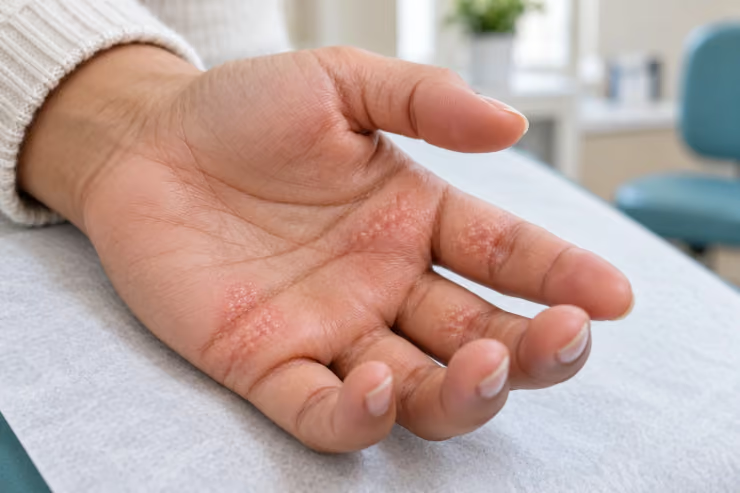
It can itch or burn. It's dry or scaly. It can crack, bleed, or thicken.
It may weep or blister. It can affect children, in whom we tailor treatment to age.
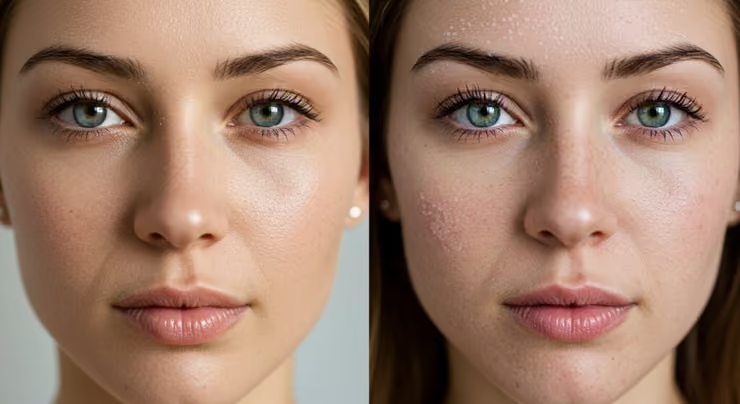
In brown and Black skin, it may be brown, purple, or gray rather than red, and dry skin may be gray or "ashy." If your skin's rougher than usual, swollen, warm to the touch, itchy, or just not your usual color, it may be inflamed. Sometimes inflamed skin is not red.
After it flares, the area may stay darker for months or years. It may also stay lighter, but eventually may return to your usual color. Neither by itself means it's still active, but if a lighter spot lasts, ask a dermatologist.

Causes and Triggers
Hand eczema has a few different causes, sometimes more than one. It's important to find out what's causing yours.
- Irritation from what your hands touch (irritant contact dermatitis): It's non-allergic irritation from things like water, soap, detergents, solvents or friction.
- An allergy that develops over time (allergic contact dermatitis): It's a delayed reaction to what your hands are touching, like fragrance, preservatives, nickel, hair dye, or chemicals in rubber gloves.
- Eczema-prone skin (atopic dermatitis): It's long-lasting, very itchy eczema that tends to recur; people with this form can also have irritant and/or allergic forms.
Hand eczema is more common if you work in healthcare, food service, hairdressing, cleaning, dishwashing, or any job in which your hands are often wet or in contact with irritants. But it can happen to anyone who often washes their hands. Cold, dry weather (especially in Chicago) and low indoor humidity can aggravate hand eczema.
Your eczema may be on the palms or on the finger side of your hands. Sometimes it's thick, scaly, and cracked on the palms. Sometimes tiny blisters form under the skin.
When deep, intensely itchy blisters form on the palms, sides of the fingers or soles of the feet and later peel or crack, it's called dyshidrotic eczema. The pattern doesn't always tell us the cause.
Protecting Dry, Cracked Hands
Do wash your hands, but do it this way:
- Washing: Use a gentle, fragrance-free cleanser, run your hands under clean water, scrub for at least 20 seconds, rinse well, and pat dry. Cool or lukewarm water removes germs as well as hot water, which can make hand dryness worse.
- Moisturizing: Apply a fragrance-free moisturizer, preferably a cream or ointment, right after hand washing. This helps dry skin without undoing the washing. If you've used hand sanitizer, wait until your hands are completely dry before moisturizing.
- Gloves for wet work: Wear waterproof gloves for "wet work," but make sure your hands are completely dry before putting gloves on. If needed, wear cotton gloves under waterproof gloves, and change cotton gloves if they become damp. Be sure to take breaks to let your hands breathe, since covered, sweaty hands can irritate skin. Not all chemicals can be blocked by gloves. If you're allergic to the rubber in some latex or nitrile gloves, ask your doctor about trying other types.
- Rings: Remove rings before doing "wet work."
- Cold weather: Wear gloves to help keep your hands warm when you're outside in cold weather.
If you work in a job that has hand hygiene and glove-wearing rules, those rules are the most important. Never substitute gloves for cleaning your hands.
At many healthcare jobs, an alcohol-based hand cleaning rub is preferred, unless your hands are visibly dirty. If you work in healthcare, choose hand moisturizers that are safe to use with your gloves and your hand cleaning rub. Some oily moisturizers affect the rubber in gloves and the action of the cleaning rubs.
When your hands are very dry, a simple ointment like petrolatum under a cotton glove at night can help, but it's optional and has no set schedule. Don't cover any prescribed medicine with a glove unless your prescriber specifically tells you to do so. Many prescription skin medicines come with instructions not to cover the treated area.
Finding the Cause
To figure out what is causing your hand eczema, we'll ask you to tell us about your work, home and hobbies. We'll also check out your whole skin, to make sure your hand eczema isn't another kind of skin problem.
Hand eczema that lasts for more than 3 months or that comes back 2 or more times a year is called chronic hand eczema.
If you have chronic or hard-to-treat hand eczema, if your hand eczema might be caused by an allergy, or if you may have work related hand eczema, patch testing may help find the cause. We'll start treating your hand eczema right away, while we are figuring out if you need patch testing.
Patch testing is not the same as an allergy skin prick test. The prick test finds allergies that happen right away. Patch testing finds delayed allergies.
Patch test substances go under a patch, usually on your back. You come back a few times so that a dermatologist can see if you have a delayed allergy to the substances. Don't get the area wet until your patch testing is done.
Finding an allergy matters most if you are, or have been, really coming in contact with the substance that you are allergic to. If you aren't sure where you'd touch it, we'll still go over where it turns up so you can avoid it. Patch testing doesn't check for irritation and may not include the substances that you are exposed to at work or at home.
How Is Hand Eczema Treated?
We'll work together to create a "step up" treatment plan for your hand eczema. We'll start slowly and carefully, with a base treatment of protection and a moisturizer cream that you use every day. We'll see you regularly, right away, to see how you are doing and to adjust your treatment plan carefully and thoughtfully, working together.
When your hand eczema flares up, the first thing we'll usually do is prescribe you a steroid cream or ointment. We'll tell you how much to use, where to put it, how long to use it for, and if you should cover it or not.
Different strengths of steroid creams work best in different places, for different severities of hand eczema. For example, stronger steroid creams may work better on the thick skin of your palms. All steroid creams can thin your skin, but the risk of thinning depends on where you put it, how strong it is, and other things.
Nonsteroid creams and ointments are another prescription choice. If your hand eczema is really bad, and even the steps above aren't helping it, your dermatologist may prescribe you a medicine that works on your whole body.
Some of these medicines, and some of the nonsteroid creams and ointments above, are not approved for treating hand eczema, but are approved for treating other kinds of eczema or other problems. We'll tell you before we give you a medicine that isn't approved for your condition.
All of these medicines, as well as the nonsteroid creams and ointments, have things that you need to watch out for. Some of the medicines have things that need to be checked before and after we give them to you. We'll go over all of these things with you, before we give you these medicines.
If you have a skin infection that we know is caused by bacteria or fungus, we'll treat it based on its cause and how severe it is. If you don't have an infection, we usually won't give you antibiotics or antifungal medicine, since eczema can carry bacteria or weep and crust without needing them.
Keeping Hands Calm
Even when your hand eczema looks healed on the outside, the outer layer of your skin is still healing and resealing itself, like a roof after a storm. Keep protecting your hands with gloves and moisturizing them, even when they look healed.
Hand eczema can keep coming back if you keep getting the thing that is causing your eczema on your hands. Catching and treating hand eczema early can help keep it from becoming chronic, though it can still last or come back.
When to See a Dermatologist
These signs are reasons to come in rather than wait, since early diagnosis helps limit ongoing exposure.
Get same-day medical care, without waiting for a routine appointment, for any of these. Call emergency services for severe or rapidly worsening illness, such as confusion, fast or difficult breathing, fainting or collapse, cold and clammy skin, a racing or weak pulse, or extreme or quickly worsening pain. For an eye sign, go to an emergency department when same-day specialist care is not available.
- Clusters of painful blisters or punched-out sores, which can be a herpes infection spreading through skin with eczema (eczema herpeticum)
- A blistering or sore rash that spreads quickly
- Painful redness, darkening or swelling that spreads quickly
- Fever along with a hand rash
- Feeling seriously ill along with a hand rash
- Sores near the eyes, eye pain, blurred or reduced vision, light sensitivity, a new or worsening red eye, or any other eye symptoms along with such a rash
Contact us promptly for any of these, and get same-day care if a fever comes with one. Get same-day care even without a fever if your hand is getting hotter, more painful or more swollen, or the color change is spreading.
- Cracks that hurt
- Cracks that look infected
- Honey-colored crusts
- Pus
- Redness, darkening or another new color change that is spreading
- Warmth
- Pain that is increasing
- Swelling that is increasing
- Trouble using your hands at work or at home
- Itch or pain that disrupts your sleep
- A rash that comes back each time you return to work
- Hand eczema that keeps coming back
- Hands that are not improving with protection, moisturizer or treatment
Tell us what your hands touch at work, at home and in hobbies, including gloves, cleaners, chemicals and hair dye. Also tell us everything used on them, prescription or not, and for how long, plus your medicines, known allergies, and any pregnancy or breastfeeding. This article is general education, so it cannot diagnose your hands or replace an examination.
Our Approach
At our practice in the South Loop, we look for the cause and treat based on solid medical evidence and what we find. All of our dermatologists are board certified, and we always start with medical evaluation when treating medical dermatology conditions.
Questions Patients Often Ask
Will Hand Eczema Ever Go Away for Good?
It varies. Some cases of hand eczema are triggered by a contact irritant or allergy and can clear when you know what to avoid.
But chronic hand eczema or eczema that develops if you’re genetically prone to eczema may flare up repeatedly. The good news is that even these forms of hand eczema can be controlled.
Can Something Else Look Like Hand Eczema?
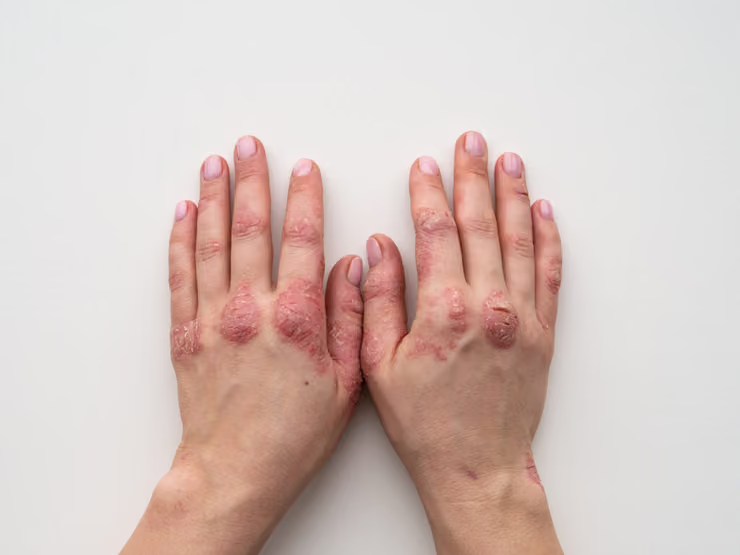
Yes. Psoriasis can look just like a thick, scaly type of hand eczema, even under the microscope. By examining your skin and possibly running other tests, your dermatologist can tell the difference.
Also, a fungal infection can sometimes cause scaling on one palm, especially if you have athlete’s foot. Simple tests, like scraping the skin or doing a culture, can diagnose a fungal infection, which is important to do first, since a steroid cream can make it worse.
An infestation with a tiny mite (called “scabies”) can cause extremely itchy bumps, often worse at night, between your fingers or on your wrists and sometimes cause itchy burrows. This problem, unlike eczema, is contagious and can be diagnosed by an exam or scraping of the skin. Finally, a recurring peeling problem of the palms may or may not start with tiny air-filled blisters but it usually doesn’t itch as much as hand eczema.
Is a Vitamin Deficiency Behind My Dry, Cracked Hands?
Not necessarily. A nutritional deficiency, diabetes, thyroid or kidney problem can add to dryness, and your other symptoms and health history help us decide whether to check for them.
Cracked hands alone do not diagnose these problems, and supplements can’t replace finding the cause. But if you think you have a deficiency, get checked.
Is Hand Sanitizer Harder on Eczema Than Soap and Water?
Not necessarily. In fact, some alcohol-based hand sanitizers contain added moisturizers and may be better for your hands than repeated hand washing. The sanitizers may sting if your hands are cracked, and the additives may irritate the skin or cause an allergic reaction in some cases.
If your hands are visibly dirty or greasy, washing with soap and water is still the best choice. But if soap and water aren’t available and your hands aren’t visibly dirty or greasy, use a sanitizer with at least 60% alcohol and rub your hands until they’re dry. Just don’t wash and then sanitize your hands back-to-back unless there’s a good reason.
Is a Thick Cream Better Than Lotion for Eczema on the Hands?
Often, yes. A lotion, cream or ointment can work, but if your hands are dry and prone to eczema, a cream or ointment may be better. Ointments are generally greasier than creams and often work better at night.
The best choice is one that works for your skin and that you’ll use consistently. Ideally, the product should be labeled “fragrance free,” not just “unscented,” but even that doesn’t guarantee that you won’t be allergic to an ingredient.
Glycerin, petrolatum and mineral oil are all good ingredients in hand moisturizers. Glycerin helps bring water into the skin, and petrolatum and mineral oil help seal moisture in. Some products also contain ceramides, which are fats that are naturally present in your skin.
None of these are necessarily better than the others. On the other hand, ingredients like urea or exfoliating acids may sting if your hands are cracked or very inflamed. Products that contain “natural” ingredients or essential oils may irritate your skin or cause an allergic reaction.
Talk With Us About Your Next Step
If you’re not finding relief from creams and gloves, consider making an appointment to see our team. We’ll help you find the cause of your problem and work with you to develop a treatment plan that fits your lifestyle. Please contact us to request an appointment or ask any questions you may have.
Individual results and duration of results may vary. Outcomes are not guaranteed.