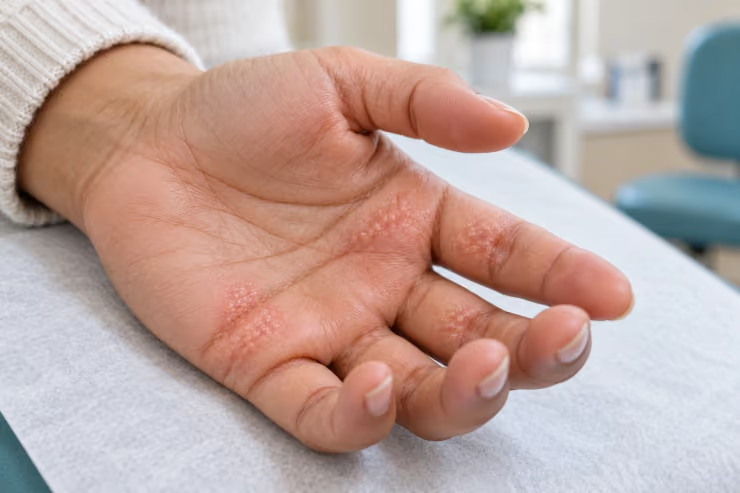
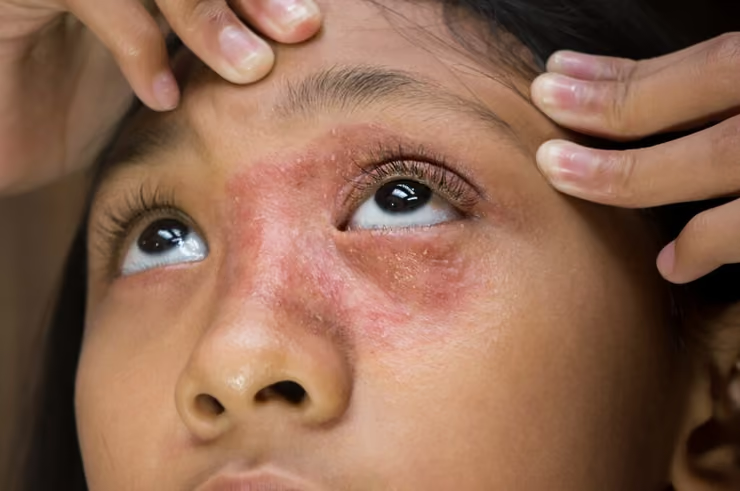
Many skin conditions can leave your skin itchy, dry, flaky and even cracked in Chicago winter. Some are more serious than others and need to be evaluated by a doctor to determine what’s causing the skin to get dry.
Why Winter Dries Your Skin
Your outer layer of skin works to keep water in and things you don’t want in your skin, out. Cold temperatures, low humidity, dry indoor air, wind, long hot showers and other skin washings can strip your outer skin layer of water and fat. Then it can become dry, rough, tight, flaky and even itchy and crack.
Your outer layer is like a brick wall with your skin cells as the bricks and the mortar as your skin’s natural fats. When the mortar is stripped away, you lose water and things can get in that shouldn’t.
Who Feels Winter Dryness Most
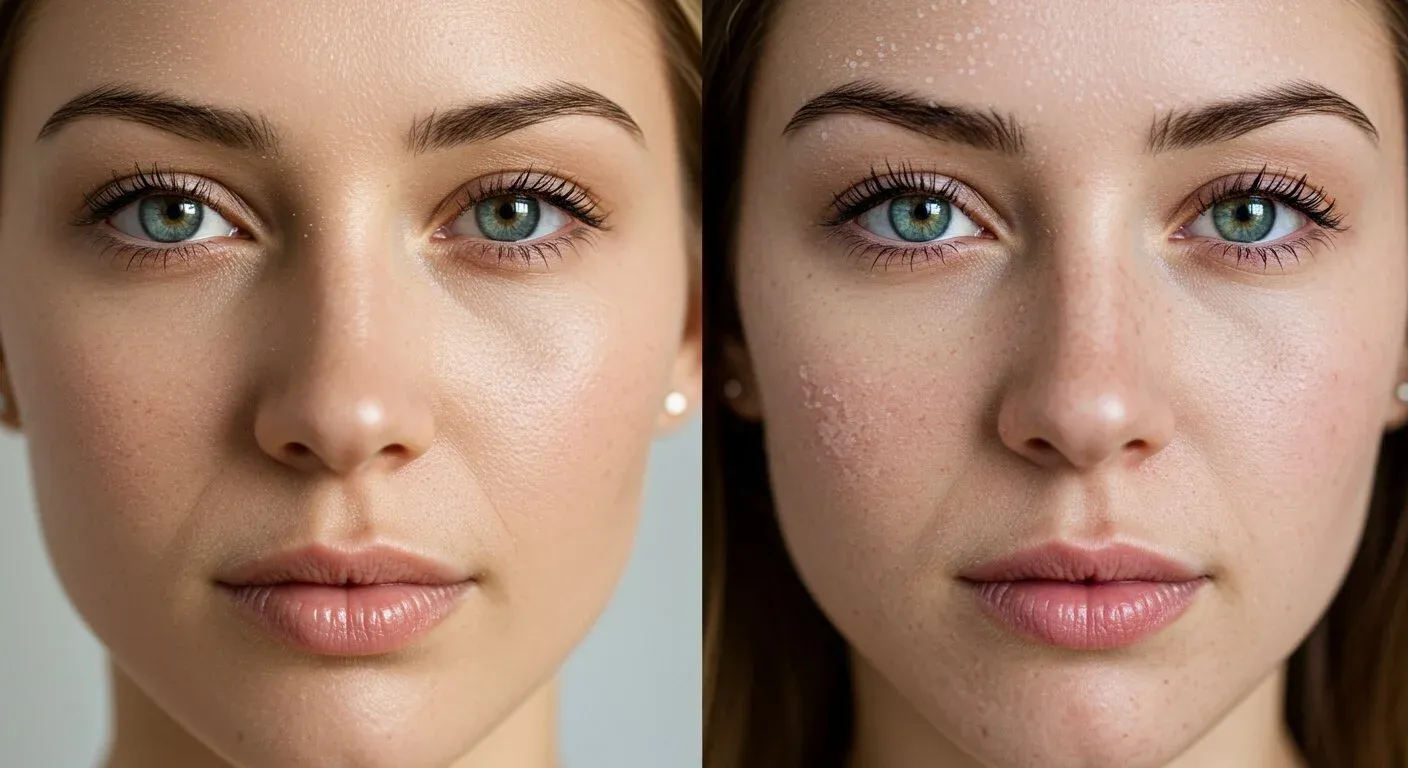
This happens more in older patients who don’t make as much oil as they used to and who are slower to replace their outer skin layer. It’s also a problem for kids and adults prone to eczema because their skin already loses water more easily and is more prone to things getting in it that it shouldn’t. Winter makes it worse.
Wet work and hand washing also makes your hands more prone to dryness and cracking.
Is It Dry Skin or a Winter Rash?
- Plain dry skin: This can lead to itching and even cracking without the inflamed patches of eczema. Some people just have seasonal itching, called winter itch.
- Dry, cracked eczema: Also called asteatotic eczema, this is inflammation of dry skin that can crack up in a criss-cross pattern, typically on the shins of older people but can happen in other locations in different ages.
- Long-lasting, intermittent eczema: Also called atopic dermatitis, this can flare up in the winter with oozing, itchy, thickened patches from scratching.
- Nummular eczema: This occurs as round and oval patches that itch, often on the arms, legs or hands. It can look like a fungal infection so it needs to be evaluated by a doctor.
- Contact dermatitis: This can be irritation from repeated exposure to water, soaps, detergents and other irritants, even if you’re not allergic to them. Or, it can be delayed allergic reaction to things like fragrance and nickel.
- Cold hives (cold urticaria): Hives can form in response to cold or when you warm back up after cold exposure.
- Chilblains: This causes itchy or burning, discolored swellings on your fingers and toes from a reaction in your blood vessels to cold.
Other conditions include psoriasis, which often forms thick, raised, scaly patches on your scalp, elbows, knees and other places and may include changes in your nails. Fungal infections can form scaly patches, often in the shape of rings. There’s also a type of eczema that forms tiny, deep, very itchy blisters, often on your feet and hands.
Many of these can flake, scale and peel so it can be hard to tell what it is without being seen by a doctor.
On Brown and Black Skin
Dry scaling may look more gray or ashy in deeper skin types and can stand out more. Inflammation can look brown, purple or even gray so you may not see much red in your rash even if it’s inflamed and isn’t feeling good. When you’re seen, we will not only look at the color change but also roughness, swelling, warmth and whether it’s itchy.
You may also notice that when the rash goes away, it can take a long time, sometimes months or even years, for the dark marks to go away. Or, with lighter patches, it can take a while for your skin to get back to its normal color after a rash is gone. If the pale area doesn’t go away, you should get a diagnosis for why you got it.
What Helps at Home
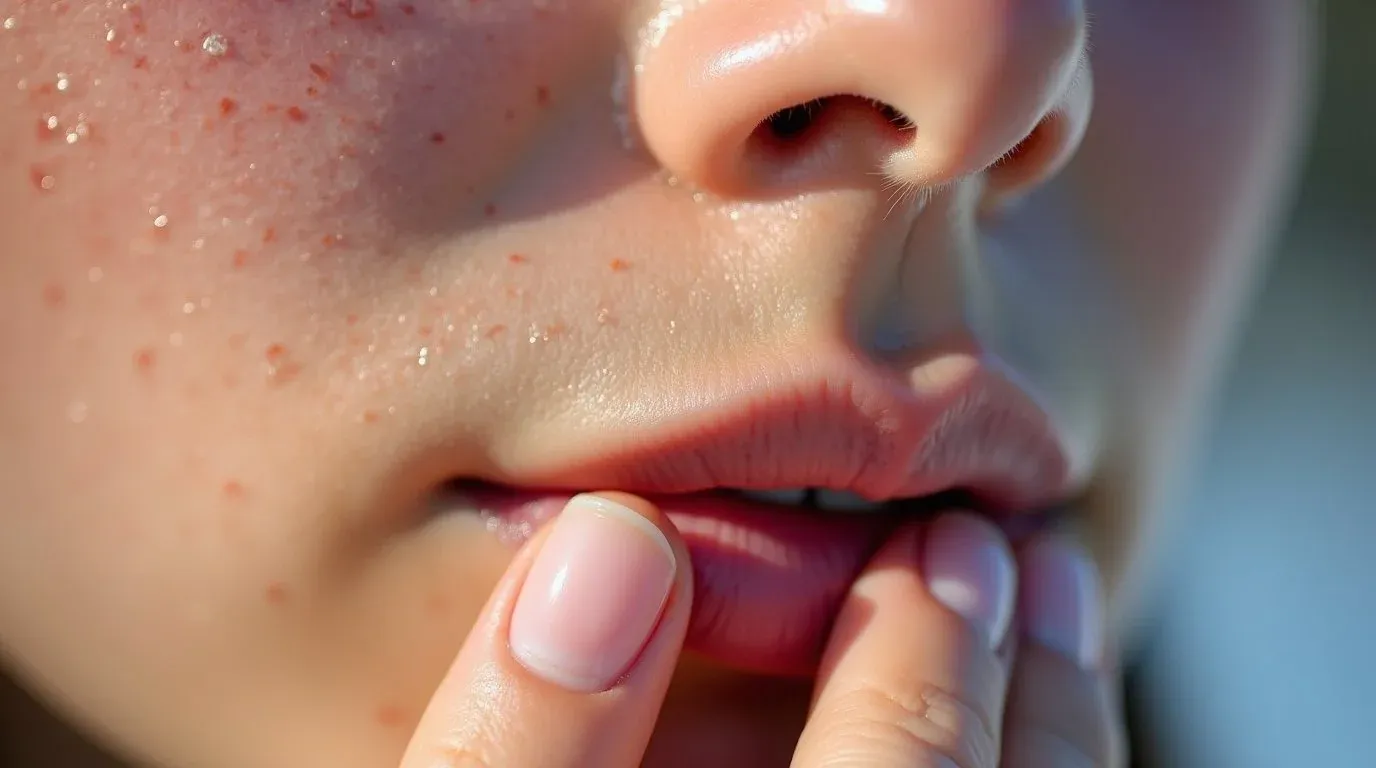
The American Academy of Dermatology recommends these skin care tips for winter: Take warm, not hot, baths or showers for about five to ten minutes.
Use a gentle, fragrance-free cleanser and don’t scrub your skin. Pat your skin dry and apply moisturizer when your skin is still a bit wet.
If you use a humidifier, the Environmental Protection Agency recommends maintaining humidity levels between 30% and 50% but no more. Empty, clean and refill the humidifier as directed by the manufacturer. If you are seeing condensation (moisture) forming, decrease the humidifier output.
Wear insulated gloves when you go outside, and use waterproof gloves to protect your hands when they are wet. Wear a soft cotton or other smooth layer under wool or other rough gloves. If you develop minor skin cracks, clean them gently, then seal them with plain petrolatum and cover them as needed.
Choosing a Moisturizer for Dry Winter Skin
Find a moisturizer that doesn’t contain fragrance, works for your skin, and that you will use consistently. If your skin becomes inflamed and/or starts to weep, your choice of moisturizer is more individualized; please discuss this with us.
- Ointments: may seal water into your skin better than creams. They can help with very dry skin, but can feel too greasy for some people.
- Creams and lotions: Creams are thicker than lotions and can be more helpful for dry winter skin.
- Fragrance-free labels: Products that say “fragrance free” are preferable to “unscented” products because “unscented” products may have a smell added to mask another smell. Note that neither type may be free from all potential allergens.
- Helpful ingredients: Certain ingredients in skin creams may be helpful, including glycerin (which helps pull water into the skin), petrolatum (which helps seal water into the skin) or ceramides (fats naturally found in the skin barrier). However, there are no studies demonstrating that one type of moisturizer or one ingredient within a moisturizer is better for everyone.
When Home Care Is Not Enough
If your dry skin persists despite these gentle skin care measures, it is possible that you may have another condition, such as eczema, psoriasis, a medication side effect or something else. If you have an eczema flare-up and your skin becomes inflamed, you may need a prescription cream or ointment to decrease the inflammation. This is because moisturizers alone do not always calm the inflammation.
When you come to our office for a medical dermatology visit, we will ask you about what you are putting on the rash and what may be coming into contact with your skin. We will examine your skin closely, and, if necessary, perform additional tests, such as checking for fungus in scaly rashes.
We may also recommend patch testing for possible skin allergies or other tests such as a skin biopsy (removal of a small piece of skin that we send to a laboratory for evaluation).
We will start you on prescription medications, if necessary, and move you through them gradually depending on what your skin needs. We will also see you regularly beginning at the start of treatment so that we can monitor you closely.
When to See a Dermatologist
The signs below are reasons to get care rather than wait out the season.
Get same-day medical care for any of these signs, without waiting for a routine appointment. Call emergency services right away for swelling of the lips, tongue or throat, trouble breathing, or feeling faint or collapsing. For an eye sign, see an eye specialist that day, or go to an emergency department if none is available, and go right away if the eye is red, painful and sensitive to light.
- Clusters of painful blisters or punched-out sores, which can be a herpes infection spreading through skin with eczema (eczema herpeticum)
- A blistering or sore rash that spreads quickly
- Fever along with a rash
- Feeling markedly unwell along with a rash
- Sores near the eyes, eye pain, blurred or changed vision, light sensitivity, or any other eye symptoms along with painful blisters or punched-out sores
- Welts after cold exposure with swelling of the lips, tongue or throat
- Trouble breathing after cold exposure
- Feeling faint, or collapsing, after cold exposure
- Skin that turns numb, firm or waxy after cold exposure, which may be frostbite and needs care right away
- Skin that turns unusually pale, gray or yellowish after cold exposure, which also needs care right away
Contact us promptly for any of these signs, and get same-day care if a fever comes with any of them. Get same-day care even without a fever if a rash is getting hotter, more painful or more swollen, or its color change is spreading.
- Honey-colored crusts
- Pus
- Redness, darkening or another new color change that is spreading
- Warmth
- Pain that is increasing
- Swelling that is increasing
- A rash that lasts or keeps coming back despite gentle care
- Cracks that hurt or bleed
- Itch or a rash that disrupts your sleep
- A rash that interferes with work or daily life
- New blisters
- Welts after cold exposure without the emergency signs above
- Chilblains that keep coming back or do not settle
If cold brings on welts, avoid testing yourself with ice or cold water, since plunging into it can cause a serious reaction. If frostbite is possible, get out of the cold and get care right away, without rubbing the area or warming it with direct heat.
When you come in, tell us what you put on the rash, including nonprescription creams and home remedies, and for how long. Tell us which soaps, detergents and other products touch the area, and whether work or hobbies keep your hands wet or cold. Mention your medicines, including any started recently, and any history of eczema.
This article is general education, not a diagnosis, and it does not replace an examination.
How We Approach a Winter Rash
Our care is based on the evidence and your specific skin findings. Our physician-led team includes board-certified dermatologists who perform medical evaluations and care for skin conditions like eczema, psoriasis and other rashes for both children and adults as part of our medical dermatology offerings.
Questions Patients Often Ask
Can the Wrong Product Make a Winter Rash Worse?
Yes. Avoid using any products with fragrance or scrubs while you have a rash. Also, ingredients like exfoliating acids and urea can sting when your skin is raw or cracked.
Finally, essential oils and other “natural” or botanical remedies can irritate skin or cause an allergic rash, just because something is “natural” doesn’t mean it is safe for your skin.
Skin care products that contain high concentrations of drying forms of alcohol can irritate skin (note: this type of alcohol is different from “fatty” alcohols like cetyl alcohol that are used in skin care products). Proper use of alcohol-based hand sanitizers is okay. Nonprescription antibiotic ointments aren’t usually necessary to treat cracked skin and can cause an allergic rash.
Does Peeling on My Hands in Winter Mean Eczema?
Not necessarily. Peeling and cracking of the hands can be caused by repeatedly washing your hands, doing “wet work” or being exposed to cold, dry air. If your hands continue to peel and crack, it’s possible you may have hand eczema, and we can help evaluate that for you.
Can I Use Nonprescription Hydrocortisone on a Winter Rash?
It varies. Nonprescription hydrocortisone cream can be used on a minor rash by people two years or older as directed on the label and kept out of the eyes. For a younger child, ask a clinician first.
However, you should check with a clinician before using it on your face, genitals, areas of broken skin, in the diaper area or if you plan to cover the area. Stop and ask a clinician if your rash doesn’t clear up after a week of using the hydrocortisone cream, gets worse or comes back soon after you stop using it. Don’t switch to another hydrocortisone product instead.
Also, steroid creams like hydrocortisone can make certain rashes like fungal infections worse and harder to diagnose. So it’s best to get an accurate diagnosis for a scaly rash of uncertain cause before using a steroid cream on it.
Does Drinking More Water Help Dry Winter Skin?
Not necessarily. Drinking additional water hasn’t been shown to help dry skin, but staying hydrated is important for your overall health.
Will My Skin Clear Up When Winter Ends?
It varies. Winter dry skin or a winter rash can last for different lengths of time depending on the cause and how well your skin responds to treatment. Be sure to get care if you experience any of the symptoms listed above under “When to See a Dermatologist.”
Talk With Us About Your Next Step
If you’re not sure whether you have dry skin or a rash, it’s best to get an examination so we can review your skin care options and help you develop a skin care plan.
Request an appointment or, if you have any questions, please contact our team.
Individual results and duration of results may vary. Outcomes are not guaranteed.