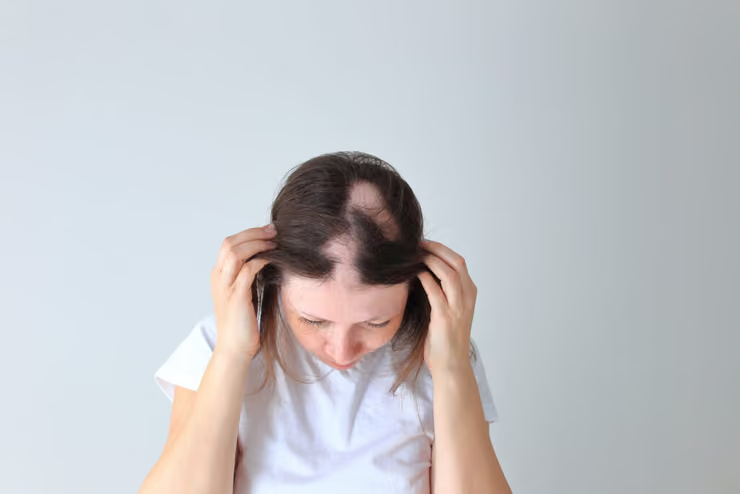
If your hair is thinning, we start by finding out why, then decide whether PRP fits. Platelet-rich plasma (PRP) works on follicles that are still active, so the evaluation that finds the cause decides whether treatment is worth booking. That order protects you from paying for a series that was never going to help.
Why the Evaluation Comes First
The first appointment is a medical visit, and nothing is injected at it. We look at the pattern of your thinning, your health history, the medications you take and the scalp itself. Several conditions thin hair, and they do not all respond to the same treatment.
Male and female pattern hair loss is the condition PRP is meant for. Other causes look similar from across a room and behave differently up close. A shed that follows an illness, a new medication or a pregnancy often recovers on its own once the trigger has passed.
Two conditions more common in Black patients with tightly curled hair can overlap with or mimic pattern hair loss. One is a scarring hair loss that starts at the crown (central centrifugal cicatricial alopecia) and spreads outward. Hair loss from tension on the hair (traction alopecia) may be reversible early and can scar if it continues.
Think of the hair loss evaluation as the roadmap for everything that follows. It tells us which of these is present, and that answer decides whether PRP belongs in your plan at all.
Who Tends to Benefit From PRP?
PRP is most effective for thinning areas where the follicles are still active. For most people that means a widening part or thinning temples, where the hair has grown finer but has not stopped.
It is unlikely to help areas that are completely bald or scarred, where active follicles are absent. If your evaluation shows that picture, we talk through the options that fit it instead. We cannot guarantee regrowth for every patient as each person's response to treatment varies.
What Happens at a PRP Visit
Treatment visits are shorter and simpler than the evaluation, and everything happens in one room at our South Loop dermatology practice.
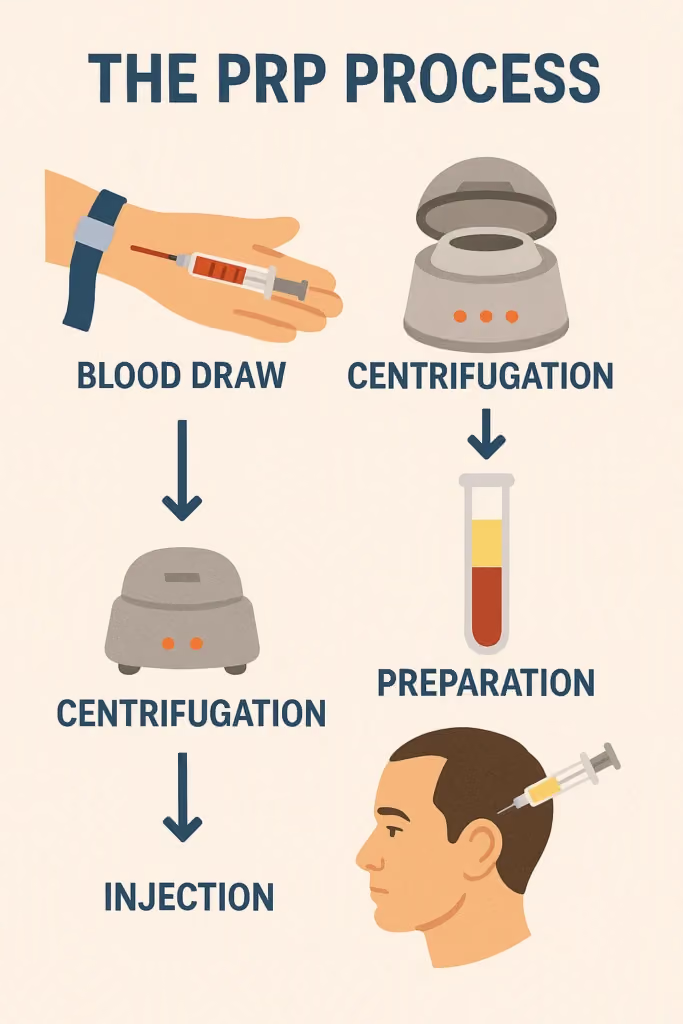
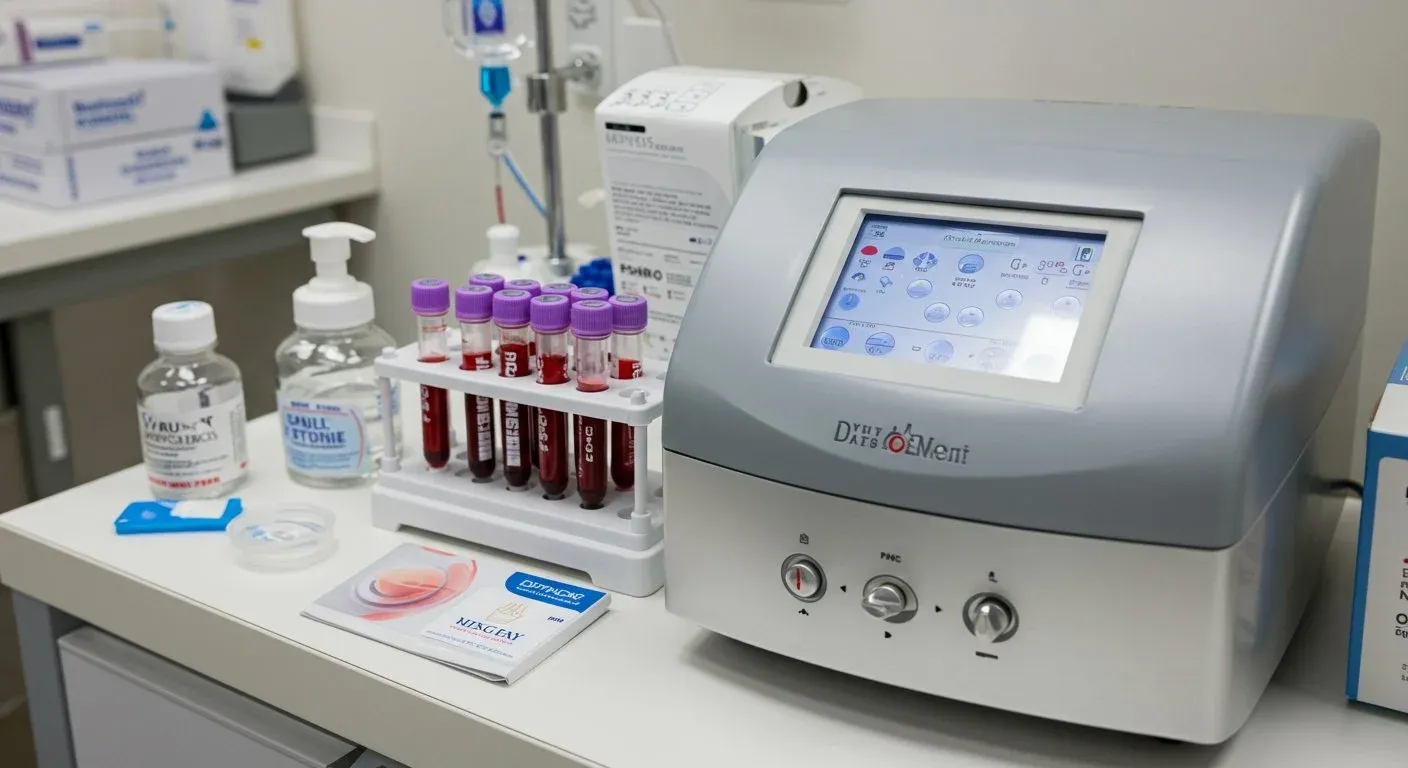
- Blood draw: We draw a small sample of blood from your arm, the same way a routine lab test is drawn.
- Processing: The sample is processed to concentrate the platelets, and that concentrated portion is what we use.
- Preparation: Your scalp is cleaned and numbed before any injection is placed.
- Injections: We place the PRP into the thinning areas with a fine needle, and this part takes a short time.
- The rest of the day: You return to your routine the same day, and most patients head straight back to work or errands.
The concentrated platelets carry growth factors that stimulate hair follicle stem cells and support the hair growth cycle. In appropriate candidates that may encourage new hair growth, increase thickness and improve follicle health, and it works best where follicles remain viable. The fuller explanation of how PRP works has its own article.
The Series and the Follow-Up
PRP is planned as a series, and the schedule below is the one our dermatologists use.
- The series: Four treatments, spaced one month apart.
- The assessment: A hair regrowth assessment six months after starting, when we compare your scalp against where you began.
- Maintenance: Maintenance treatments every 3 to 6 months, based on how you responded and what you want from the result.
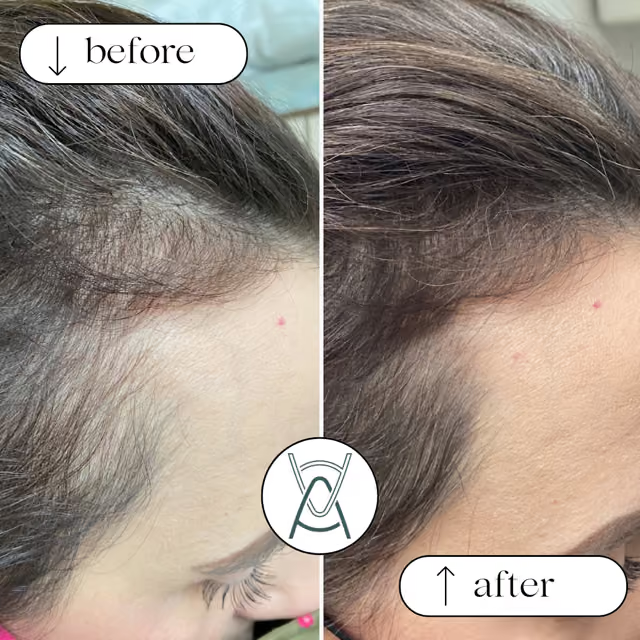
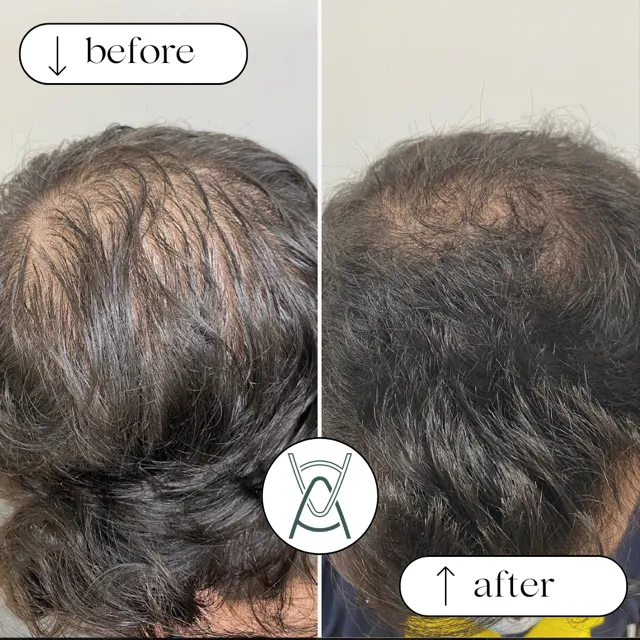
Close follow-up from the start. We see patients regularly, to monitor your progress, answer questions, and make thoughtful adjustments, partnering with you until you achieve the best possible outcome. What that change looks like over the months is covered in our before and after article.
How PRP Fits With Hair Loss Medications
PRP is an additional option used alongside minoxidil, finasteride or spironolactone in a comprehensive, personalized hair restoration plan. It is not a replacement for any of the three, because they work differently from PRP.
When a medication is part of your plan, we start it carefully and step it up gradually, with frequent follow-up in between. A medication you were prescribed continues while you have PRP, and any change to it comes from the clinician who prescribed it.
How Is PRP Paid For?
The visit for a hair loss medical evaluation can be billed to insurance, and the treatment of PRP is self-pay only. The split follows the medicine: the evaluation diagnoses a condition, while PRP is an elective treatment for it.
Four visits a month apart means four short trips, so it helps to pick a start month when you can keep the spacing. The PRP therapy page carries the payment detail and the treatment-plan specifics.
Before You Book
Tell us about every medication and supplement you take, and about any bleeding or clotting problem. Tell us too if you are pregnant or planning to be, or if a spot on your scalp is new or changing. Bring the list with you, since the dose and the reason for each one both matter.
Aspirin or a prescription blood thinner is never stopped except by the clinician who prescribed it. Separately, our dermatologist may ask you to pause over-the-counter anti-inflammatory pain relievers briefly around treatment.
Expect temporary tenderness, redness, swelling and pinpoint bleeding at the injection sites, which settle quickly. A headache for one to three days is less common.
Rarely, an injection site becomes infected. In people prone to the dark marks that follow a pimple or a scrape, the treated skin can darken temporarily after inflammation (post-inflammatory hyperpigmentation).
We defer or avoid PRP for an active scalp infection, or for certain bleeding or platelet disorders. The same holds for pregnancy, and for an untreated or suspicious spot on the scalp.
The same holds for an infection anywhere in the body, a significant uncontrolled illness, or a low platelet count. It also holds for a significant clotting problem, or a liver problem that affects clotting.
Contact our office promptly if you notice any of these after a treatment:
- pain, redness, warmth or swelling that is getting worse instead of better
- fever or chills
- pus or foul-smelling drainage from an injection site
- a headache that does not settle within a few days
This article is not a diagnosis and does not replace an evaluation of your own scalp.
Physician-Directed Hair Loss Care
Advanced Dermatology and Aesthetic Medicine is a physician-led practice in Chicago's South Loop and part of the Northwestern Medicine Physician Network. Our board-certified dermatologists evaluate every case of hair loss before any treatment is chosen. PRP is directed by a dermatologist from the first visit through maintenance.
Questions Patients Often Ask
Does PRP Hurt?
Not necessarily. Your scalp is numbed before the injections, and most patients describe pressure and brief stinging rather than pain.
When Will You Notice a Change?
It varies. Hair grows in slow cycles, which is why we judge regrowth at the six-month assessment.
Can You Keep Taking Minoxidil During PRP?
Often, yes. PRP is planned around the medications you already take, and a prescribed hair loss medication continues unless the clinician who prescribed it changes it.
What If the Cause Is Not Pattern Hair Loss?
It varies. Some causes settle once their trigger passes, and some need a different treatment than PRP, which the evaluation sorts out first.
Is One Treatment Enough?
No. PRP is planned as a series of four, and your response is judged after the series is complete, at the six-month assessment.
Talk With Us About Your Next Step
If you are still weighing your options, the evaluation is the next step, because it settles the cause of your thinning. You can request an appointment or contact our office with questions before you book. We will tell you plainly whether PRP fits your plan or whether something else fits better.
Individual results and duration of results may vary. Outcomes are not guaranteed.