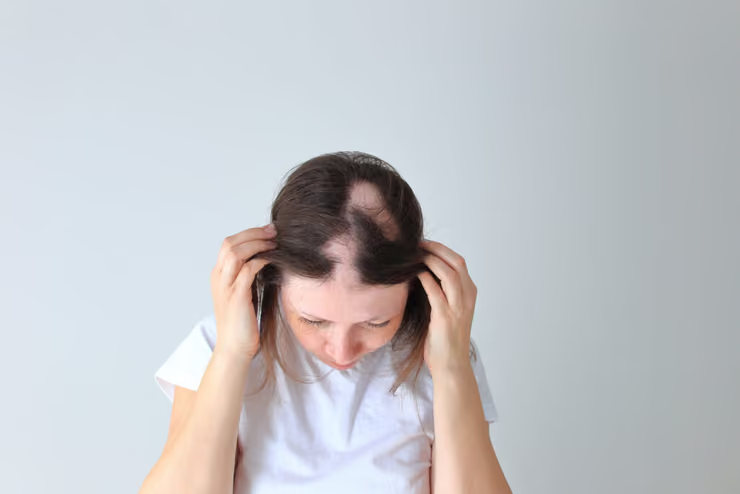
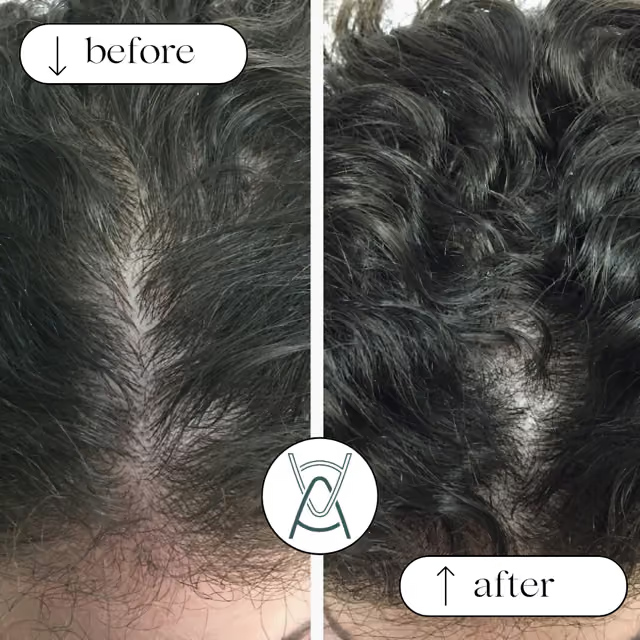
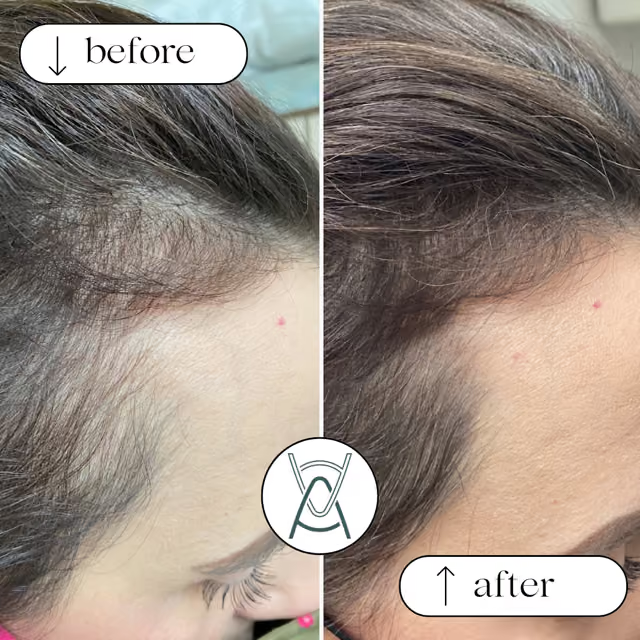
PRP aims to thicken your thinning hair rather than bring back follicles that are gone. It works best in thinning areas where the follicles are still active. Platelet-rich plasma (PRP) is your own blood, drawn from your arm, concentrated, and injected into the thinning areas of your scalp.
If you are seeing more scalp along your part or at your crown, you want to know whether PRP is worth your time. The answer turns on how much active hair remains in the areas that bother you, and on what else belongs in your plan.
How PRP Works, Step by Step
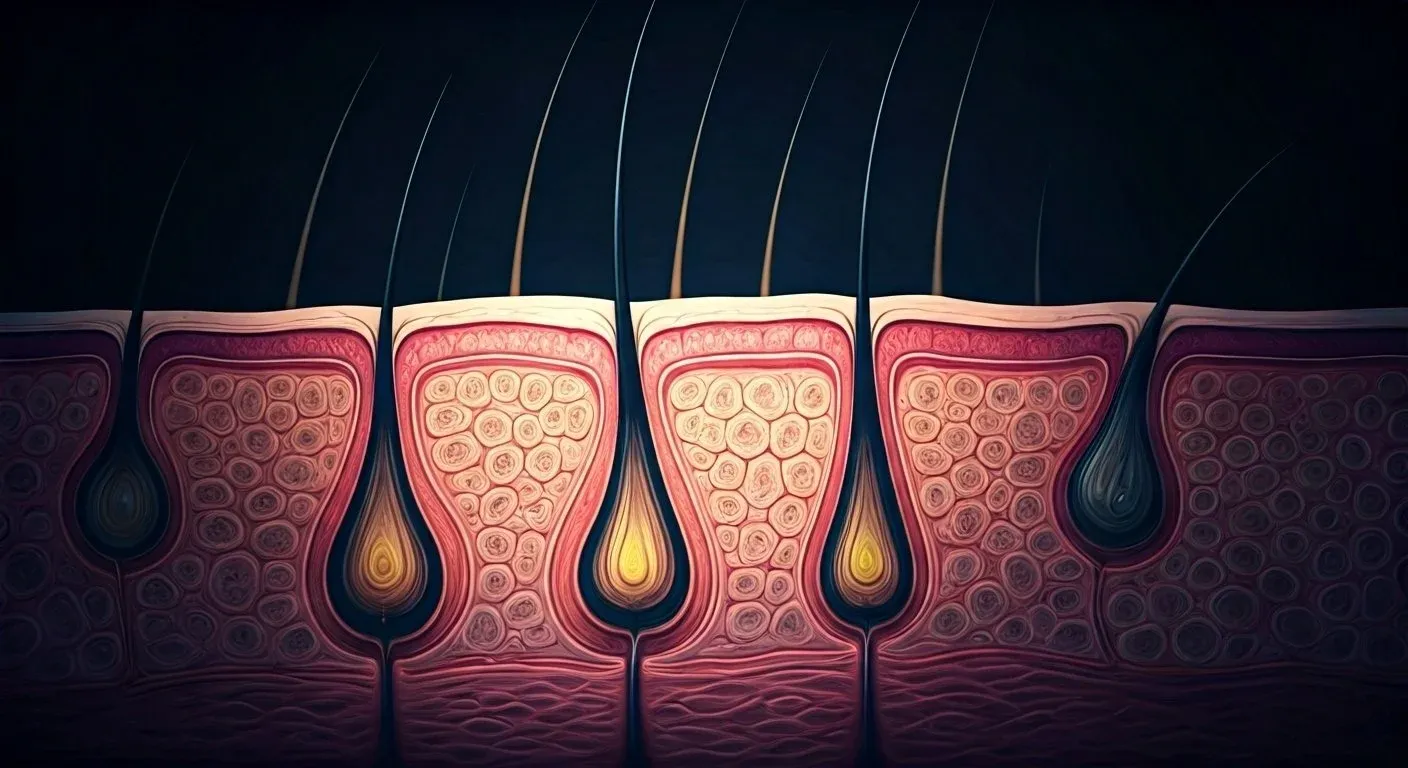
Think of a thinning follicle as a plant that is still rooted but sends up a finer stalk each season. PRP feeds those roots rather than planting new ones, so the condition of your follicles matters more than how much hair is already gone.
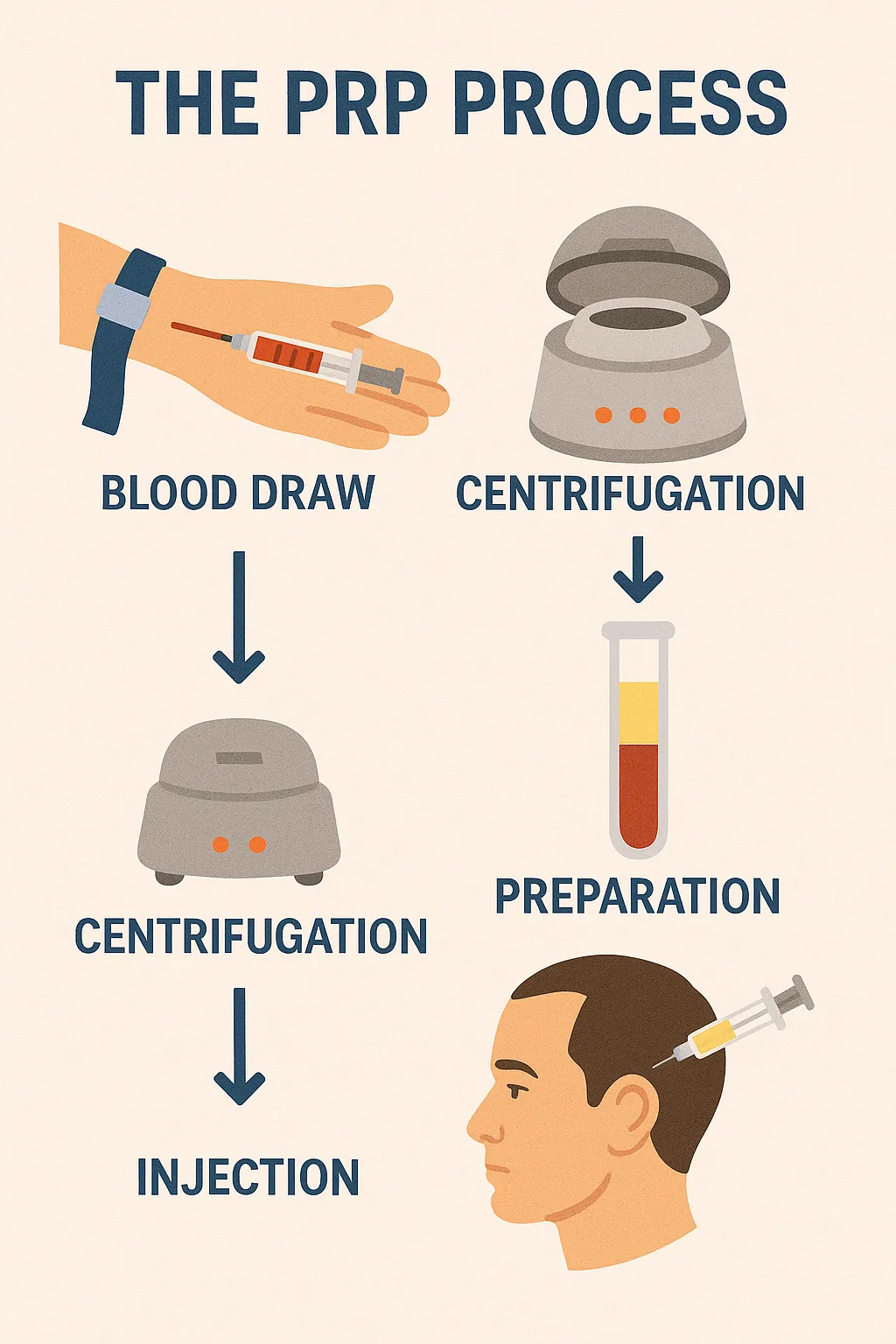
- The draw: We draw a small amount of blood from your arm, the starting material for everything that follows.
- The processing: We process the sample to concentrate the platelets, the blood cells that carry your body's growth factors.
- The injections: We inject the concentrated platelets into the thinning areas of your scalp. Their growth factors stimulate hair follicle stem cells and support the hair growth cycle.
- The response: In appropriate candidates, that may encourage new hair growth, increase thickness and improve follicle health.
Every step depends on one condition: the follicles in the treated area must still be viable, meaning alive and able to produce a hair.
Where PRP Fits in a Hair Loss Plan
PRP is an additional option used alongside minoxidil, finasteride and spironolactone in a comprehensive, personalized hair restoration plan, not a replacement for them. Those medicines work in different ways from PRP, which is why a plan can include both. When a medicine is part of your plan, we start it carefully, step up gradually, and see you regularly to check your progress.
The choice comes after the evaluation, because thinning has more than one cause and the treatment follows the cause. We encourage you to read our hair loss evaluation page alongside the PRP therapy page, since the evaluation decides which combination fits you.
Who Is a Good Candidate for PRP?
PRP is most effective for thinning areas where follicles are still active. We cannot guarantee regrowth for every patient as each person's response to treatment varies. It is unlikely to help areas that are completely bald or scarred, where active follicles are absent.
PRP is used for male and female pattern hair loss, the gradual thinning at the crown, the temples or along the part. Thinning has more than one cause, and your evaluation is where we tell them apart.

The Treatment Schedule and How It Is Billed
A course of PRP follows a set calendar, so you can plan around it.
- The series: You receive four treatments spaced one month apart.
- The assessment: Six months after your first treatment, we assess your hair regrowth and decide what comes next.
- Maintenance: After that, we schedule maintenance treatments every 3 to 6 months, depending on your response and your goals.
The visit for a hair loss medical evaluation can be billed to insurance, and the PRP treatment itself is self-pay only. Those are two different visits with two different payment paths, and it helps to know that before you plan the series.
What Does a PRP Visit Feel Like?
A visit begins with a blood draw from your arm, no different from a routine lab test. You wait while we process the sample, and then a clinician injects the concentrate into the thinning areas of your scalp. The injections themselves are quick, and most patients return to their usual activities the same day.
PRP injections at our practice are physician-directed. Preparation instructions and the consent details live on our PRP therapy page, so the appointment itself holds few surprises.
Before You Book
Before your first treatment, tell us about every medicine and supplement you take, any bleeding, clotting or liver problem, and whether you are pregnant. Never stop aspirin or a prescription blood thinner on your own; that decision belongs to the clinician who prescribed it. Our dermatologist may ask you to pause over-the-counter anti-inflammatory pain relievers briefly around a treatment.
We defer or avoid PRP during pregnancy and during an active infection on the scalp or anywhere in the body. The same holds for a significant illness that is not under control, and for a bleeding or platelet disorder, including a low platelet count. A significant clotting problem, a liver disease that affects clotting, or an untreated or suspicious spot on the scalp also means we wait.
Expect tenderness, redness, swelling and pinpoint bleeding at the injection sites, which usually settle quickly, and possibly a headache for 1 to 3 days. Less often, an injection site becomes infected, or the skin there darkens for a time in people prone to pigment change. PRP for hair loss is not an FDA-approved treatment, and the evidence behind it is still developing.
Contact our office promptly if you notice any of the following after a treatment:
- Increasing pain at the injection sites
- Redness that is spreading
- Warmth at the injection sites
- Swelling that is increasing instead of settling
- Drainage from an injection site
- Fever
- A headache that lasts beyond a few days
- Darkening of the skin at the injection sites that is not fading
Reading this does not diagnose your hair loss or replace an evaluation with our dermatologists.
Our South Loop dermatology practice is physician-led and part of the Northwestern Medicine Physician Network. Our dermatologists build every hair loss plan on a medical evaluation and on the evidence behind each option. We stay with you through each step of the series.
Questions Patients Often Ask
Do I Keep Taking My Hair Loss Medicine During PRP?
Often, yes. The medicines you already take work in a different way from PRP, so we combine the two rather than swapping one for the other. We decide that with you at your evaluation, and nothing changes without that conversation.
How Soon Will I Notice a Change?
It varies. Hair grows slowly, and the six-month assessment exists because that is when we can judge regrowth fairly. Our PRP before and after article shows what a result looks like over time and how to read the photos.
Will I Need Time Off Work?
Not necessarily. Most patients go straight back to their day once the injections are done. Plan for the visit itself, which includes the blood draw and the processing time before the injections begin.
Is PRP the Same as a Hair Transplant?
No. A hair transplant is surgery that moves follicles from one part of the scalp to another. PRP works on the follicles you already have in the thinning area and moves nothing.
Does PRP Work for Women as Well as Men?
Yes. Women's thinning often shows as a widening part rather than a receding hairline, and PRP is used for both. Your evaluation tells us whether the follicles in your thinning areas are still active.
Talk With Us About Your Next Step
If you are still weighing your options, that is reasonable, because the right next step depends on what your scalp shows. Book an appointment for a hair loss evaluation, or send our Chicago office the questions this article did not answer. We will build the plan around what we find, with PRP as one option among several.
Individual results and duration of results may vary. Outcomes are not guaranteed.