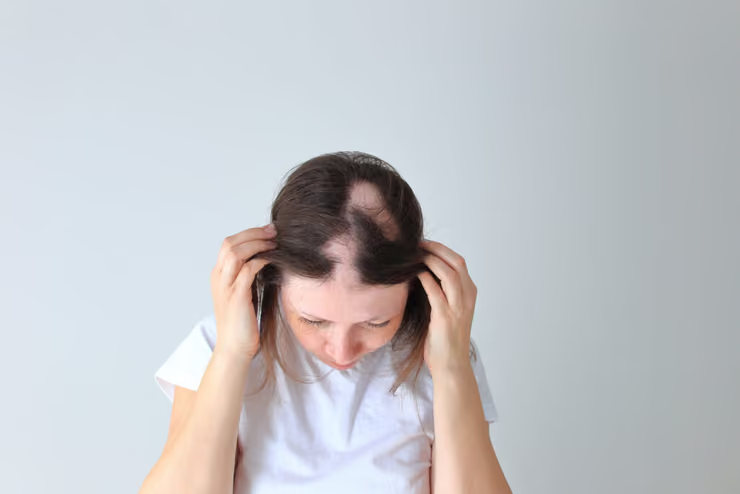
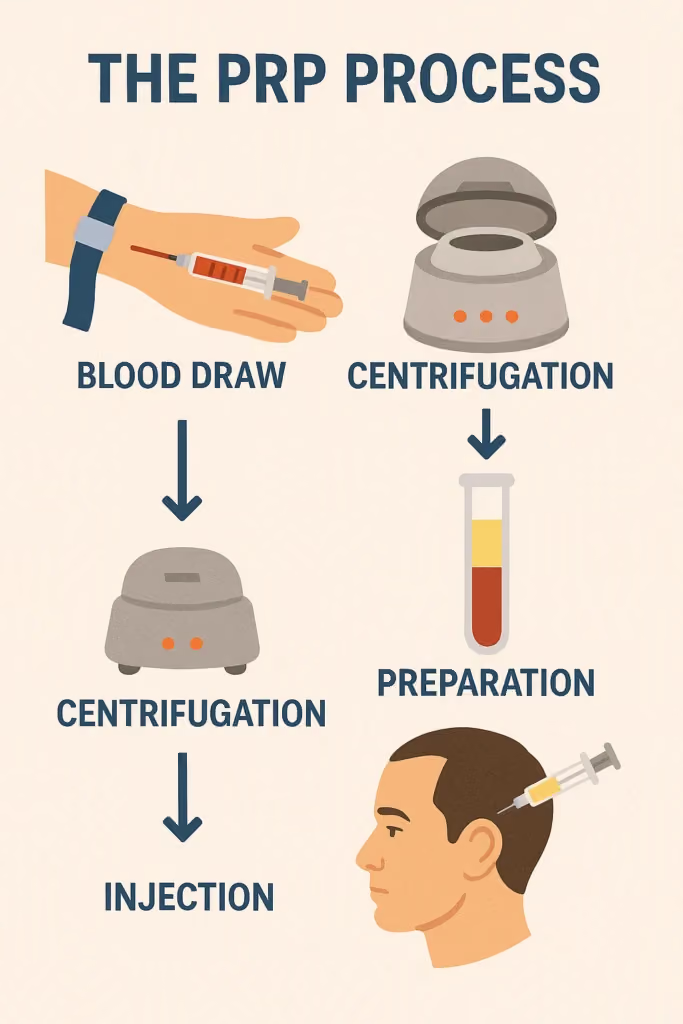
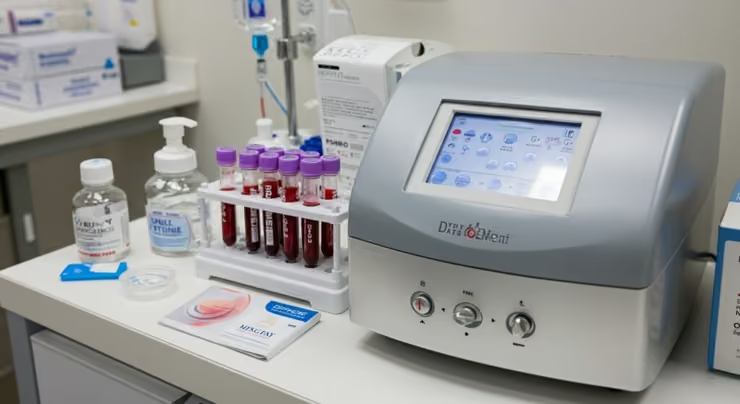
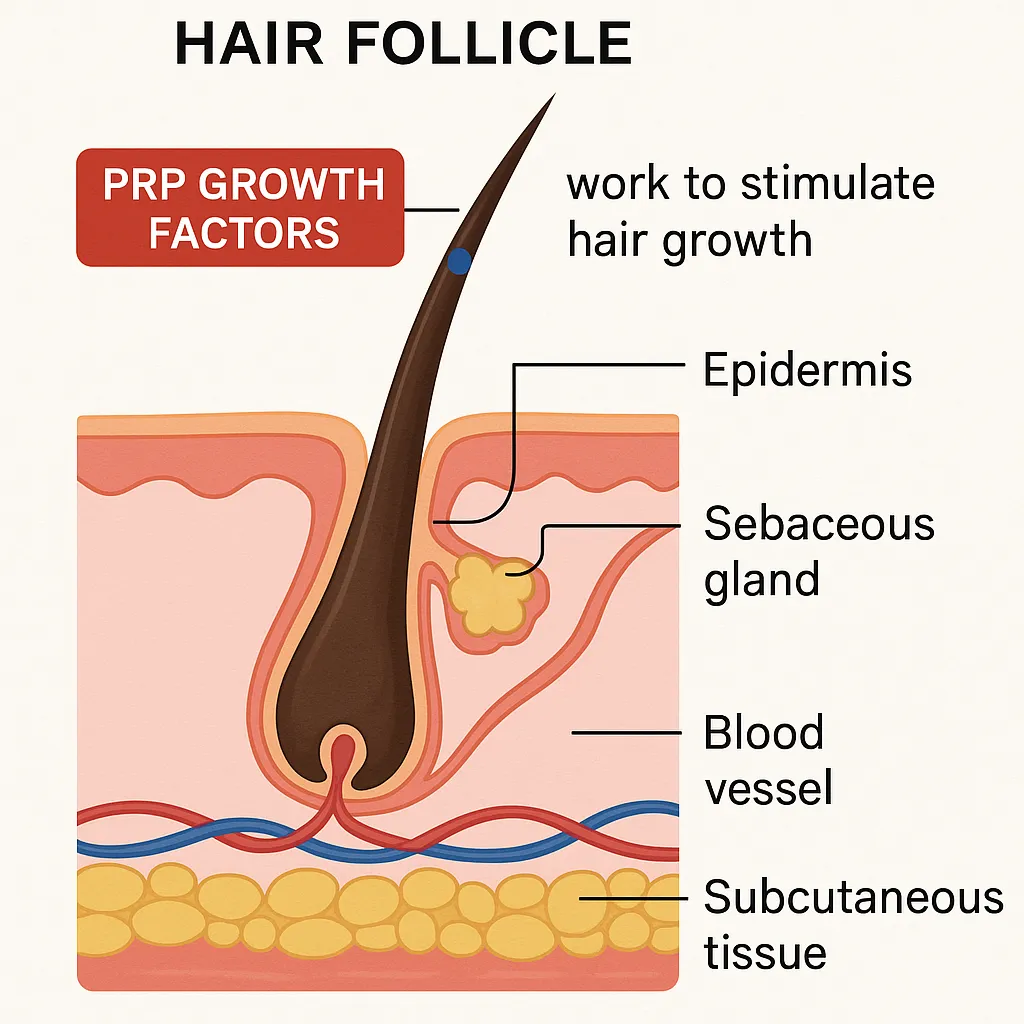
Whether PRP can help you depends on the type of hair loss you have. Platelet-rich plasma (PRP) treatment means drawing a bit of blood from your arm, processing it to concentrate the platelets, and injecting that portion into the areas where your hair is thinning. PRP therapy is mainly for people who have pattern hair loss, either male or female pattern.
What Does the Evidence Support?
Research is still developing and results vary, but in studies of pattern hair loss PRP has improved hair density for some patients. PRP is not specifically FDA approved for treating hair loss.
PRP works best when you still have active hair follicles in the area where you’re thinning. If you are completely bald in an area or there is scarring in the area you want to treat, PRP is less likely to work there. We cannot guarantee regrowth for every patient as each person's response to treatment varies.
Four things are important when considering PRP:
- The kind of hair loss: Knowing the type of hair loss you have
- How early treatment starts: Knowing the stage of your hair loss when you start PRP
- How many active follicles remain: Knowing how many active hair follicles you have in the areas where you’re thinning
- Completing the full series: Getting the whole series of PRP treatments
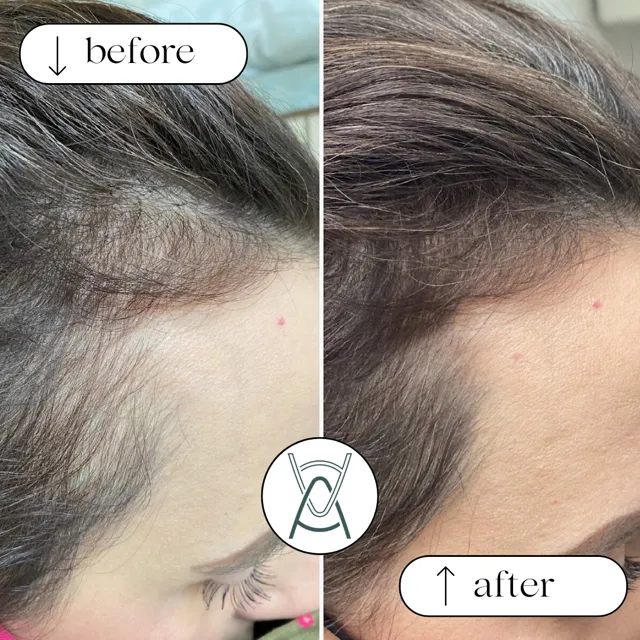
Like many treatments for hair loss, the results are not permanent, so maintenance treatments are needed based on how you respond. Before and after photos can be seen here.
Where PRP Fits Among the Kinds of Hair Loss
Male and Female Pattern Hair Loss
This is the inherited type of hair loss where men get a receding hairline and/or thinning on the top back of their head (crown) and in women, thinning on top or a widening part. This is the type of hair loss where PRP is most often used. This is also the type of hair loss where early treatment is important.
PRP is one tool that can be used in addition to other treatments, such as Minoxidil, Finasteride, and/or Spironolactone, depending on the patient. Each of these treatments works in a different way so PRP should not replace them.
A comprehensive plan, tailored to each patient, is important to give the patient the best chance for success. We start patients on medications carefully and slowly and then see them on a regular basis to adjust the plan as needed for each patient.
Shedding After a Stressful Event
If you had a period of heavy hair shedding after a stressor like an illness, surgery, childbirth, etc., you may have this type of hair loss. This is a very different type of hair loss that often resolves over several months and is treated by finding out what caused the shedding and correcting it, if possible. PRP is not an established treatment for this type of hair loss.
Patchy Hair Loss
If you are losing patches of hair, you may have a type of hair loss caused by your immune system called alopecia areata. PRP has been studied in very small studies in this type of hair loss, but it is not the first treatment of choice for this type of hair loss. Treatment for this type of hair loss depends on your age, whether it’s active, etc.
Scarring Hair Loss
One type of scarring hair loss starts on the crown of the head. When a scarring type of hair loss is active, it needs to be diagnosed quickly, and treatment begins by treating the underlying inflammation.
PRP will not work where scarring of the scalp has left no hair follicles. It’s important to know that hair will not grow back once hair follicles have been destroyed.
Hair Loss From Tension
This type of hair loss is caused by repeated tension on the hair. It can be reversed if caught early and the tension is relieved, but can become scarring if the tension continues.
In Black patients with tightly curled hair, this type of hair loss and scarring hair loss on the crown of their head can also occur with pattern hair loss or look like it.
Why Does the Evaluation Come First?
Some of these types of hair loss can look similar or a patient can have more than one type of hair loss going on at the same time. This is why a hair loss evaluation is so important. Knowing the type of hair loss you have is the first step in a treatment plan, whether PRP is a good treatment or if another treatment should be used.
The evaluation visit can be billed to insurance; the platelet rich plasma treatment is self-pay only.
Before You Book
Before treatment, tell us your medical history, allergies, every medicine you take, any condition affecting healing or bleeding, and whether you are pregnant. If you take aspirin or a prescription blood thinner, change it only if the clinician who prescribed it says it is safe. Our dermatologist may ask you to avoid over-the-counter anti-inflammatory pain relievers around treatment when that is appropriate.
We postpone or avoid PRP during an active scalp infection, an infection affecting your whole body, or a significant uncontrolled illness. We do the same with a bleeding or platelet disorder, including a significantly low platelet count or platelets that do not work properly. The same caution applies to a severely low red blood cell count (severe anemia) and unstable blood pressure or circulation.
It also applies to a significant clotting problem, liver disease that affects clotting, and a condition or medicine that makes bleeding too risky. We defer PRP during pregnancy, since it has not been studied in pregnant patients. We evaluate any suspicious or untreated spot in the treatment area before any PRP injection.
Expect temporary tenderness, redness, swelling and pinpoint bleeding at the injection sites that settle quickly, along with some soreness afterward. Some people also get a headache for 1 to 3 days. Infection at an injection site is rare but serious.
Contact our office promptly if you notice any of these:
- Redness that is getting worse
- Warmth that is getting worse
- Swelling that is getting worse
- Drainage from an injection site
- Pain that is increasing
Seek urgent or emergency care for any of these:
- Symptoms that are spreading rapidly
- Severe pain
- Fever
- Feeling ill throughout your body
This article cannot diagnose your hair loss or take the place of an evaluation.
How Our Team Approaches Hair Loss
Our dermatologists use evidence-based medicine to develop a hair loss treatment plan for you. Platelet rich plasma treatment at our South Loop dermatology practice is physician-directed, meaning your dermatologist will direct your treatment and work with you to develop your treatment plan. Our dermatology practice is part of the Northwestern Medicine Physician Network.
Questions Patients Often Ask
Does PRP Cause Lasting Hair Loss?
No, PRP is not expected to cause hair loss, nor is temporary increased hair shedding a known common side effect of platelet rich plasma treatment. You may continue to experience hair loss after your platelet rich plasma treatment if the underlying cause of your hair loss is still active.
If you are noticing increased or ongoing hair shedding after treatment, please contact our office so we can evaluate if your underlying hair loss is pattern hair loss, stress-induced hair shedding or from another cause.
Is There a Success Rate You Can Rely On?
No, published studies do not share one success rate or one standard schedule, as they have included a variety of hair loss conditions and methods of preparing and injecting platelet rich plasma. Your dermatologist can provide an honest assessment during your hair loss evaluation.
Should You Wait to See Whether Your Shedding Settles?
It varies. Your dermatologist can help you determine if there was a specific trigger for your hair loss, if the trigger has passed and if it makes sense to pursue treatment or to wait. They can also help you determine if there is another type of hair loss occurring.
Does Starting Earlier Make a Difference?
Often, yes. Pattern hair loss can progress, so earlier treatment may allow your dermatologist to treat areas of thinning while more hair follicles can still respond. An earlier evaluation may also help you determine sooner if your type of hair loss requires a different treatment.
Talk With Us About Your Next Step
If you are not sure of the type of hair loss you are having, it may be time to schedule an appointment for evaluation. Your dermatologist can discuss your condition and treatment options, including platelet rich plasma treatment. Please request an appointment or contact us if you have any questions.
Individual results and duration of results may vary. Outcomes are not guaranteed.