Whether you should get microneedling or a chemical peel depends on what you’re trying to treat. It also depends on your skin tone and how much downtime you can manage. Sometimes the answer is both.
How Each Works
Think of a chemical peel as improving your skin from the outside in, while microneedling works from the inside out. With the alpha hydroxy acid (AHA) or salicylic acid (BHA) peels we provide, as well as our medium-depth blend, we essentially remove damaged layers of your skin. Deeper peels can also stimulate your skin to rebuild itself.
With microneedling, by contrast, your skin stays mostly intact as we pass fine needles through it to create microscopic channels. Over the next few weeks or months, as those “injuries” heal, your skin generates new collagen. We have three microneedling options: one that uses hyaluronic acid, one that uses platelet-rich plasma (PRP) from your own blood, and radiofrequency microneedling, which generates heat through the needles.
To receive either microneedling or our medium-depth peel, you first meet with a dermatologist, who examines your skin and puts together a treatment plan. Under dermatologist direction, our licensed aestheticians perform any peel or microneedling.

Which Fits Your Concern?
Both procedures can help with:
- Acne scars: If your breakouts are under control, either can be an option, depending on the type and depth of your scars. Studies comparing the two don’t show a clear winner. Studies suggest microneedling can help with indented (“pitted”) scars, while lighter chemical peels mainly help shallow ones. For deep, narrow scars or some wavy (“rolling”) scars, you may need a combination of treatments or a laser.
- Dark marks: Always use sun protection, but if you struggle with dark marks left by breakouts (post-inflammatory hyperpigmentation), a lighter peel can help. Evidence is less robust, but microneedling may also help if your skin is darker in some spots than others. Neither option will reliably clear all your marks.
- Patchy pigmentation: If you have brown or gray-brown patches linked to sun exposure and hormones (melasma), microneedling or a peel may help as part of a regimen that includes daily sunscreen and prescription creams. But be careful: Melasma can flare with skin irritation, and it often comes back.
- Skin texture and fine lines: Deep wrinkles, jowls, or sagging skin aren’t fixed by a chemical peel, but both it and microneedling can help with rough skin and fine lines.
Deeper Skin Tones
Microneedling is thought to carry a lower risk of dark or light patches than many skin-resurfacing treatments, though it can cause darkening. If you have deeper skin, a lighter peel can suit your skin, but our medium-depth option needs great caution.
Deeper peels carry greater risk of lasting pigment changes and abnormal scarring in deeper skin, but we can take steps to reduce that risk, including treating your skin beforehand and trying a small spot first. Everyone reacts differently, though, and sun protection afterward is key.
It doesn’t hurt to ask us how much experience we have with skin like yours.
Downtime After Each
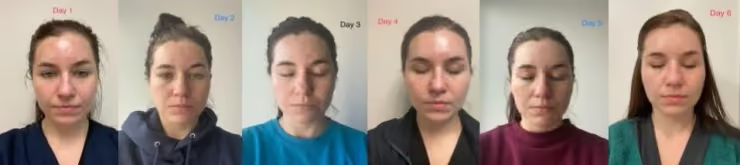
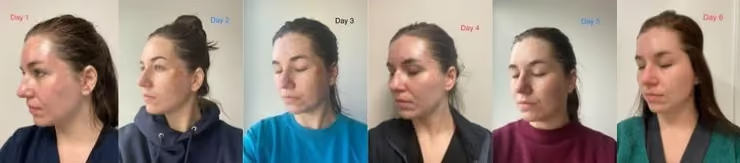
After microneedling, your skin will be red, warm, and tight for a few days, like a sunburn. It can take up to a week to resolve, but you can usually go to work.
Healing after a peel takes 1 to 10 days, depending on the peel. Your skin will be red, may sting, and will scale and peel as it heals. Even after it stops peeling, it can stay red for a while.
With either option, you’ll need to protect your skin strictly from the sun as it heals.
Can You Combine Them?
Studies, albeit small, suggest that some acne scars and post-breakout dark marks respond better to a combination of the two procedures. We’d do them at separate office visits, weeks apart, in the order your treatment team sets.
We don’t do both on the same day because the acid could go deeper than we want it to through the channels in your skin. (Some people with deeper skin tones who had both on the same day developed dark spots.)
Before You Book
Tell us if you get cold sores or take, or recently took, a prescription acne pill (isotretinoin). Either treatment waits for an active infection, cold sore, open wound, active rash, sunburn or recent tan in the area. Microneedling also waits until painful, pus-filled or deep pimples in the area clear.
During pregnancy or breastfeeding, microneedling waits, and a peel waits for an evaluation of its ingredients and any creams used with it. Our medium-depth peel waits until after pregnancy and breastfeeding, while some lighter peels can suit you during breastfeeding.
A history of raised scars (hypertrophic scars or keloids) needs review first, and keloids, slow healing or a weakened immune system rule out microneedling. Bleeding disorders and allergies to metal, numbing cream, peels or skin products need review too. Tell us about medicines that thin your blood or weaken your immune system, including injections or infusions, and don’t stop them on your own.
Our microneedling and chemical peel pages list more reasons to wait, including health conditions and medicines.
Less common effects include darkening or lightening, cold sore flares, infection, bruising after microneedling, and acne flares or white bumps (milia) after peels. Rare but serious risks include scarring, lasting color change and eye injury from a peel solution. A reaction to products on needled skin can leave firm lumps; radiofrequency microneedling can cause burns, fat loss under the skin or nerve injury.
Get emergency or urgent care right away, without waiting for our office, for:
- an irregular heartbeat, a seizure or trouble breathing after numbing cream (call 911)
- trouble breathing, wheezing, tongue or throat swelling, trouble swallowing or a sudden hoarse voice after either treatment, even without hives (call 911)
- fainting, collapse, confusion or quickly feeling very ill (call 911)
- peel solution in your eye (rinse it with plenty of clean water right away, for at least 20 minutes, while getting emergency care)
- severe eye pain, or new blurred or reduced vision (emergency care)
- any severe or fast-worsening symptom (urgent care)
Contact our office the same day after either treatment for these, and go to urgent care if we can’t see you that day:
- worsening redness (on deeper skin, it may look purple or darker)
- worsening pain or burning
- spreading redness or warmth
- pus or other drainage
- fever
- blistering
- an open wound or skin not healing as expected
- a new cold sore, or tingling or blisters around your lips
- new or fast-worsening dark patches
- severe or worsening swelling
- redness lasting past the first week (after microneedling)
- swelling lasting longer than a week (after microneedling)
- bleeding that won’t stop with firm, steady pressure, or keeps coming back (after microneedling)
- an itchy rash after a product goes on treated skin, or any reaction if you are allergic to nickel (after microneedling)
- firm red bumps weeks to months later (after microneedling)
- aching joints or tender lumps on your shins (after microneedling)
- a sore or lump appearing weeks later or healing slowly (after microneedling)
This general guide cannot diagnose you or replace an evaluation.
Our Approach
When you come in for an evaluation at our South Loop practice, we will help you decide on the best treatment for your particular skin concern and skin tone. We base our treatments on published data and all care is physician-directed. We will work with you to alter your treatment as needed in order to obtain the best results.
Questions Patients Often Ask
Which Hurts More, Microneedling or a Chemical Peel?
It varies. Some studies comparing the two treatments found that microneedling (after numbing cream has been applied) was more uncomfortable during the treatment. Peels can sting or burn while the solution is on, and your skin can burn and peel afterward.
Can Either Treatment Help Active Breakouts?
It varies. For mild to moderate breakouts lighter strength peels can be helpful (salicylic acid peels suit oily skin). For marks that breakouts have left on the skin, microneedling can help.
Do I Need a Series of Either Treatment?
Often, yes. We will plan a schedule around your timeline, but with microneedling and lighter peels, results build over 3 to 6 treatments. Both are typically done 4 to 6 weeks apart, while our medium-depth peel has its own schedule, repeated only after healing and a recheck.
Can Either Treatment Shrink Large Pores?
Not necessarily. Salicylic acid peels (oil soluble) can help unclog your pores, but neither treatment will change the size of your pores for good. Microneedling can help make your pores appear smaller after a few treatments.
Talk With Us About Your Next Step
If you’re still wondering if microneedling or a peel is better for you or if you want to do both, please make an appointment or contact us so we can discuss your options.
Individual results and duration of results may vary. Outcomes are not guaranteed.