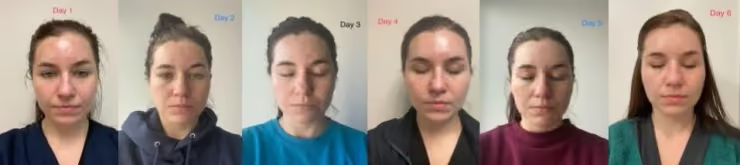
After your microneedling treatment, take care of your skin for the first week to promote healing. It will take a few days (sometimes up to a week) before your skin looks “healed.”
How Your Skin Heals
In microneedling, we create tiny channels in the skin using fine needles. Your skin then heals by creating new collagen, and this takes several months.
Because we don’t remove the surface of the skin, downtime is often limited, and the channels we create begin to close on their own within about the first day. The first day after your treatment is the most important day in terms of your care, since your skin will be able to take in products deeper than normal.
We perform microneedling treatments three different ways; the first involves microneedling with hyaluronic acid. The second involves microneedling with platelet rich plasma (PRP), which is prepared from your own blood. The third method is radiofrequency microneedling, which incorporates heat.
A dermatologist will examine your skin and create your treatment plan, but the treatments will be performed by our licensed aestheticians under the direction of a dermatologist. Numbing cream will be used before your treatment.
Recovery Day by Day
Many patients go back to work or school right away.
- The first day: Your skin will be red, like a mild-to-moderate sunburn. If you have a deeper skin tone, your skin may appear more dark than red. It will feel warm, tight or tender to the touch, and may have some swelling. If your procedure involved brief, pinpoint bleeding from the tiny needles, this is normal and often doesn’t require dressing.
- Days 2 and 3: Your swelling can last for two to three days, and your skin will feel tight, dry and rough with some light flaking.
- Days 4 to 7: Your skin may still be red, dry and flaking, but most people appear relatively normal by the seventh day.
- The weeks after: Over the next three to six months, your results build gradually. You will likely undergo a series of three to six treatments spaced four to six weeks apart, always customized to your timeline.
Does PRP or Radiofrequency Change Aftercare?
Each of the three types of microneedling follows this general pattern, though deeper or more intensive treatment can need different instructions and longer recovery:
- Microneedling with hyaluronic acid: Follow the above plan for the first week.
- Microneedling with PRP: The plasma will be applied immediately after your treatment, and you’ll receive instructions on when to first wash it.
- Radiofrequency microneedling: Cooling your skin after treatment is common. You may see some small “grid-like” marks from the needles or some light crusting, but these often fade as your skin heals.
Skincare for the First Week
Use only the products given to you by your treatment team, and a bland moisturizer once they say it's okay. After the first 24 hours or so (longer if your team says or your skin is still raw), use a mineral, broad-spectrum sunscreen of at least SPF 30 every day. Until then, stay in the shade and wear a hat.
Avoid retinoids and exfoliating acids until your skin is no longer red or raw, which may take about a week. Vitamin C serums, benzoyl peroxide and other “active” ingredients should wait until your treatment team recommends restarting them. Also avoid alcohol-based products or any that burn, tingle, warm or cool the skin.
What Should You Avoid?
Avoid tanning or deliberate sun exposure for about two weeks. Do not pick, scratch or otherwise pull at your skin as it flakes, and it’s a good idea to avoid smoking to help protect your new collagen. Do not get peels, laser treatments, waxing or facials on the treated area until your treatment team says it’s okay.
Sun exposure on freshly-treated, inflamed skin can cause the skin to darken, especially in those with deeper skin tones. This often fades over months and can sometimes be treated with a lightening cream. Using products that burn or sting can also cause dark spots to deepen.
Before You Book
Before each session, tell us if you get cold sores or had recent treatment on the area. Mention any prescription acne pill (isotretinoin), current or recent, and allergies to numbing medicine or metals such as nickel. Name any blood thinner, including low-dose aspirin, but never stop a prescribed one on your own.
For radiofrequency microneedling, also tell us about a pacemaker, defibrillator or other electronic implant, and any metal implants or piercings in or near the area.
We postpone treatment for an active infection, a cold sore, sunburn or a recent tan, an open wound, or significant inflammation in the area. That includes inflamed breakouts or a rash; we also wait during pregnancy and breastfeeding.
Slow healing, a history of raised scars (keloids), a weakened immune system, uncontrolled diabetes and bleeding or clotting disorders need a medical review first. So do cancer treatment, skin cancer in the area, and medicines that weaken your immune system, whether pills, shots or infusions. Our microneedling page lists other reasons to wait.
Less common effects are darkening or lightening, bruising, a cold sore flare, infection, and an itchy rash from a product or needle metal. Rare but serious ones are lasting darkening, scarring and firm lumps from reactions to products on treated skin. Radiofrequency microneedling adds risks of burns, fat loss under the skin and nerve injury, which can last and may need further treatment or surgery.
Go to an emergency room or call for an ambulance right away, without waiting to reach our office, for:
- a racing or irregular heartbeat
- a seizure
- trouble breathing or swallowing
- fast swelling of your lips, tongue or throat
- fainting or collapse
- new confusion or trouble speaking
- ringing in your ears or a metallic taste
- blue or gray lips or skin
- heavy bleeding you can't control, or bleeding with weakness or faintness
- redness or swelling that spreads fast, with fever or feeling very ill
- feeling very ill and getting worse fast
- severe pain far worse than expected
- a large or deep burn
Contact our office the same day, or go to urgent care if you can't reach us that day, for:
- worsening redness
- bleeding that won't stop with firm, steady pressure, or keeps coming back
- blistering
- severe or growing swelling
- worsening pain
- spreading redness or warmth
- pus
- fever
- an open wound on treated skin
- a new cold sore, or tingling or blisters around your lips
- numbness or weakness that lasts after the numbing wears off
- any other symptom that is severe or getting worse fast
Contact our office promptly, without waiting for your next session, for:
- redness that lasts past a week, even if fading
- swelling that lasts past a week
- a sore or lump that appears weeks later or heals slowly
- firm red bumps weeks to months later
- aching joints or tender lumps on your shins
- swollen neck glands that hurt, grow or don't improve
- an itchy rash after a product touches treated skin (stop using it)
- any skin reaction if you are allergic to nickel
- grid marks that don't fade, get worse or change your skin's texture
- new dents or hollows in treated skin
- new dark patches
This article is general education and cannot diagnose you or replace an evaluation.
How We Approach Microneedling
Our South Loop dermatology practice provides evidence-based, physician-directed care. Let us evaluate your skin and provide you with a plan. We'll provide you with instructions after your treatment, but always feel free to contact us if you have any questions about how your skin is healing.
Questions Patients Often Ask
Can I Wash My Face After Microneedling?
Yes. Gentle washing helps prevent infection. Please refer to your specific aftercare instructions for when you can start to wash the treated area of skin.
Can I Wear Makeup Right After Microneedling?
No. It is best to wait about 24 hours, or more if the skin is still raw or crusted. Please refer to your specific aftercare instructions for more information.
When Can I Exercise After Microneedling?
It varies. Please refer to your specific aftercare instructions for the minimum wait. Avoid sweaty workouts, pools, saunas, and hot water until then, and until redness, swelling and any raw, oozing or crusted spots have cleared.
Is It Normal to Break Out After Microneedling?
Yes. Minor skin breakouts, tiny white bumps (milia) or mild neck gland swelling can happen in the first few weeks after treatment. If any of these hurt, get worse or are still present, please let us know without waiting for your next appointment.
Talk With Us About Your Next Step
If you have any questions about the healing process or upcoming treatments, feel free to request an appointment or contact our office to plan your next treatment.
Individual results and duration of results may vary. Outcomes are not guaranteed.