You want a peel done safely, and that starts with a dermatologist evaluating your skin. The peel itself is then performed by our licensed aestheticians, working under the dermatologist's direction. Searching "chemical peel near me" is a search for a place that keeps those two steps in that order.
A good place begins with a dermatologist looking at your skin, taking your history, and deciding whether a peel is the right tool. That same visit settles which peel, at what strength, and on what schedule. Everything else you will read here depends on that evaluation happening first.
Who Evaluates Your Skin and Who Performs the Peel
At our South Loop dermatology practice, a dermatologist evaluates you and sets the plan. Licensed aestheticians perform chemical peels under dermatologist direction after an individualized medical evaluation. The dermatologist decides what your skin can take, and the aesthetician applies the peel with that decision in hand.
Which Peels Do We Offer?
Chemical peels are grouped by how deep they work, from light to medium to deep. Our menu runs from light to medium depth, and each peel family is chosen for a different job.
- AHA (alpha hydroxy acid) peels: These light peels loosen dull surface skin and are chosen for uneven tone, rough texture, and fine lines.
- BHA (beta hydroxy acid) and salicylic acid peels: Salicylic acid dissolves in oil, so these peels reach into pores. They suit breakout-prone skin and the dark marks breakouts leave behind (post-inflammatory hyperpigmentation).
- VI Peel®: This medium-depth peel uses a proprietary formula. It is chosen when tone, texture, sun damage, and fine lines call for more than a light peel delivers.
Deep peels are a different category altogether, a surgical-setting procedure performed elsewhere, and they are not part of our menu. If you have read about deep peels, that is the setting they belong to.
What Should a Consultation Cover?
Think of the consultation as the roadmap for everything that follows, because a peel is only as good as the plan behind it. A consultation for a peel covers five things.
- A skin and history review: We look at your skin in person and go through your history, medications, and current skincare first.
- A plain statement of reach: You hear what a peel can and cannot do for your concern before anything is booked.
- The peel type and the schedule: We will customize the peel type and schedule for you based on your goals and personal timeline.
- Pigment planning: Patients with highly pigmented skin can be candidates for carefully selected peels, particularly light ones. Deeper skin tones carry a higher risk of darkening or lightening afterward, so planning is more conservative and deeper peels are often avoided.
- Aftercare explained first: You leave the consultation already knowing how to care for your skin afterward.
If a visit skips these steps, the evaluation the peel depends on has not happened yet.
What a Peel Can Reach, and What It Cannot
The peels we offer work on the surface layers of skin, so their results live there too. Tone evens as sun spots (solar lentigines) and dark marks fade, texture improves, and fine lines soften. Those dark marks are discoloration rather than scars, and they respond to a peel in a way true scars do not.
Deep wrinkles and sagging are beyond what these peels reach. Deeper pitted or rolling acne scars are better matched to other procedures, such as microneedling or laser treatments. The evaluation is where that call is made.
What to Expect Around Your Appointment
Your aesthetician cleanses your skin, applies the solution, and times it, and you leave with aftercare instructions and a plan for what comes next.
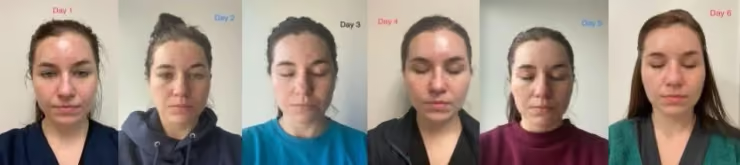
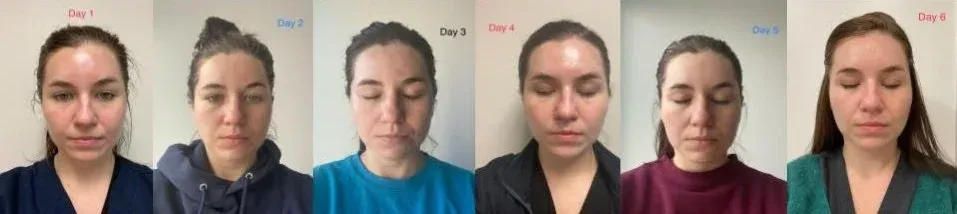
Healing takes 1 to 10 days depending on the peel and your skin, and redness can last beyond the visible peeling. The number of peels and the spacing between them are individualized to your peel, your skin type, your goal, and how your skin heals. How the skin looks stage by stage, and what the photographs show, is covered in our before and after article.
Before You Book
Tell us about your medical history, the medications you take, and every skincare product you use. Recent sun exposure or tanning matters too, because each of these can change the plan.
Tell your dermatologist about any history of cold sores (herpes simplex), because preventive antiviral medication may be recommended for some peels. Cold sores can reactivate even when no sore is present.
Treatment is postponed for active infection, open wounds, sunburn, or an active herpes outbreak anywhere on the treatment field, including cold sores. It is also postponed for uncontrolled inflammatory skin conditions, such as eczema or psoriasis, in the treatment area. If you are pregnant or breastfeeding, we defer the VI Peel and medium-depth peels.
Each peel has its own list of medical conditions and medications that change the plan, and our chemical peels page carries that peel-by-peel detail. Afterward, expect redness, flaking, tightness, and temporary sensitivity. Less common effects are prolonged redness, darkening or lightening of treated skin, chemical burns, infection or cold sore reactivation, delayed healing, and scarring.
Keep the skin moisturized, and do not pick or pull at peeling skin, which can cause scarring and uneven results. Use a broad spectrum SPF 30 or higher every day, because fresh skin is especially vulnerable to sun damage. Restart retinoids, exfoliating acids, and other actives when your dermatologist confirms the skin has healed, rather than when the visible peeling stops.
Contact the office promptly if you notice any of the following:
- worsening pain or burning
- marked or increasing swelling
- blisters
- spreading redness
- drainage
- fever
- cold sore like lesions
- rapidly worsening pigment change
- skin that is not healing as expected
This article is a guide to the decision rather than a diagnosis, and it does not replace an evaluation with a dermatologist.
How We Approach Peels
Our Chicago dermatologists are board-certified, our cosmetic care is physician-directed, and a medical evaluation comes before any peel. We lean on evidence rather than marketing when we choose a peel. We pair medical, cosmetic, and maintenance care, so your skin has one plan behind it.
Questions Patients Often Ask
Does a Chemical Peel Hurt?
Not necessarily. Light and medium-depth peels bring a warm or stinging feeling while the solution is on the skin. It settles once the peel is neutralized or removed.
Your aesthetician tells you what your specific peel feels like before it goes on.
Can I Wear Makeup After a Peel?
It varies. Makeup timing is peel-specific, and makeup is never applied over raw, blistered, crusted, or open skin. Your aftercare instructions give the timing for your peel.
Are Peels an Option for Highly Pigmented Skin?
Often, yes. Carefully selected peels, particularly light ones, are an option. The pigment planning in your consultation is how we decide which one is right for you.
How Many Peels Will I Need?
It varies. Your dermatologist sets the number and spacing at your consultation, and we adjust as we see how your skin responds. We see patients regularly, to monitor your progress, answer questions, and make thoughtful adjustments, partnering with you until you achieve the best possible outcome.
How Long Do Results Last?
It varies. How long a result holds depends on sun protection and the skincare you use afterward. Your dermatologist can tell you what to expect for your peel and your skin.
Talk With Us About Your Next Step
If you are still weighing your options after reading this, that is the right moment for a consultation. If the choice between a peel and another procedure feels overwhelming, the consultation is where it gets sorted out.
Bring your questions and your goals, and we will build the plan around them. You can request an appointment or contact our office with a question first.
Individual results and duration of results may vary. Outcomes are not guaranteed.