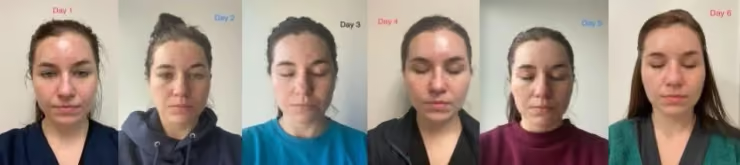
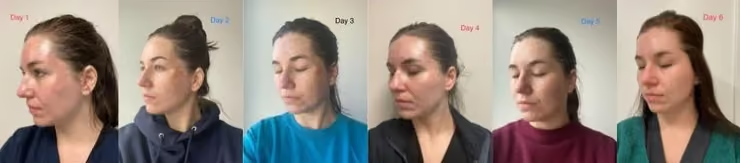
Sun spots and rough texture on your skin fade gradually with fractional laser resurfacing. Fraxel is a family of fractional lasers, so what a session changes depends on the concern and the skin.
How Fractional Resurfacing Works
A fractional laser treats thousands of narrow columns of skin and leaves the skin between them alone. Think of a lawn being aerated, with small plugs pulled out and the turf between them left alone. The healthy skin around each column closes it within days, and the collagen it builds keeps forming for months.
Non-ablative means the laser heats those columns without removing the surface, so the outer layer stays largely intact. Recovery is shorter than after fully ablative resurfacing, which removes it, though you still see and feel the healing.
Two Wavelengths, Two Depths
Non-ablative Fraxel treatment uses two wavelengths, each reaching a different depth. The deeper one reaches the lower layers of skin and works mainly on texture and scars. The shallower one stays near the surface and works mainly on surface pigment.
Which one a plan uses follows the concern and the skin. A dermatologist examines your skin and sets the plan, and our licensed aestheticians then perform fractional laser resurfacing under dermatologist direction.
What Can Fraxel Help With?
The concern decides the plan. For some people a chemical peel, microneedling or a prescription routine is the better fit, and the evaluation settles that.
- Fine lines and sun-damaged texture: Fine static lines, including those around your eyes, and rough, sun-damaged texture can soften gradually.
- Brown spots and freckles: Sun spots (solar lentigines) and freckles a dermatologist has examined can lighten, and they can return with more sun.
- Selected acne scars: Some depressed scars, particularly rolling and broad shallow ones, can improve, while deep narrow scars call for other or combined procedures.
- Precancerous spots: Rough precancerous spots (actinic keratoses) can be treated this way and still need a dermatologist's diagnosis and continued skin cancer checks.
A dermatologist examines any brown or changing spot before cosmetic treatment, because lasering a spot for its color can hide a skin cancer. Lines that deepen when you frown or squint come from muscle movement, and the tool for those is Botox or Dysport.
Patchy brown discoloration driven by hormones and sun (melasma), and the dark marks left after acne or injury heals (post-inflammatory hyperpigmentation), call for caution. Laser here may improve the pigment, do nothing, or make it darker. Sun protection and topical treatment are the foundation, because those patches return.
Acne scar plans follow the scar type, and active acne is brought under control first. Our acne scar laser article covers scar types and what before and after photographs show.
On the Neck, Hands and Chest
Fractional resurfacing is used on the face and also on the neck, hands and chest. Skin there is thinner and heals differently, so the settings are adjusted and the treatment is set more gently.
What Recovery Looks Like
- The first hours: Your skin feels warm and tight, looks sunburned, and swelling builds.
- The first several days: Redness and swelling continue, and the surface turns bronzed and rough like fine sandpaper.
- A week or more: Flaking finishes and redness settles, while pigment change and lingering redness can take weeks or longer.
- The following months: Pigment change shows after early healing, and texture change builds for months as collagen forms, so judge the result then.
How long each stage lasts depends on the wavelength, the settings, the area, your skin type and how you heal. Flaking is not proof the treatment worked, and healing skin is never picked, scrubbed or exfoliated. Use only a bland cleanser and moisturizer until your clinician clears you to restart acids, retinoids and scrubs, and keep strict sun protection throughout.
Some patients benefit from a series with several weeks between sessions. The number and the interval depend on the concern, the settings, your response and your healing. We see you regularly through the series to check healing and adjust the plan.
Does Fractional Laser Work on Deeper Skin Tones?
Fractional treatment can be used in medium to deep skin, and the risk of dark marks after healing is higher. So settings are gentler, intervals longer, a test spot may come first, and a different device or mix of procedures may fit better.
Those choices change how far the improvement goes as well as the risk, and we talk that trade through with you at the evaluation.
Before You Book
Tell us about every prescription and over-the-counter product, since retinoids, exfoliating acids and benzoyl peroxide may need a pause. Never stop a prescribed medication without your prescriber's instruction.
An active herpes outbreak anywhere on the treatment field, including cold sores, defers treatment. With a history of cold sores or facial herpes, a preventive antiviral may be prescribed. Current treatment with a strong prescription acne medication (isotretinoin) defers lasers, and the interval after stopping is individualized.
Steroid pills or injections that act throughout the entire body, or a condition or medication that weakens whole-body immunity, need individualized planning. So do a history of raised scars (hypertrophic scars or keloids) and pigment or texture change from a past procedure. Elective treatment waits until after pregnancy because safety evidence is limited, and nursing decisions are individualized.
Recent sun or tanning may delay a session. Active skin infection, open wounds, and an active rash (dermatitis) or significant inflammation in the area defer it too. The full caution list and the device detail are on our laser treatments page.
Expect redness, swelling, warmth, tenderness, dryness, bronzing, a sandpaper feel and flaking, often with more swelling around the eyes. Less common are blistering or burns, infection including a cold sore flare, breakouts or small white bumps, delayed healing and prolonged redness. Also uncommon are lasting texture change, lasting darkening or lightening, scarring including raised scars, and eye injury.
Protective eyewear matched to the wavelength stays on throughout, because stray laser energy reaching the eye can cause lasting vision problems.
Contact our office promptly for:
- severe or increasing pain
- blistering or a suspected burn
- bleeding, oozing or open skin that persists
- swelling that is getting worse quickly
- spreading redness, warmth, pus or fever
- new grouped blisters that suggest a cold sore flare
- skin that is not healing on the expected schedule
- unexpected, marked, worsening or persistent darkening or lightening
- scarring
Seek urgent medical care right away for:
- eye pain
- new sensitivity to light
- any change in your vision
This article is a guide, not a diagnosis, and it does not replace an evaluation of your skin.
Physician-Directed Care in the South Loop
Our South Loop dermatology practice is physician-led and part of the Northwestern Medicine Physician Network. Led by our dermatologists, our aestheticians complement medical treatment with physician-curated services and skincare for enhanced results. Treatments and settings are chosen on evidence.
Questions Patients Often Ask
Does Fraxel Work?
It varies. Fractional resurfacing can partially improve sun-damaged texture, fine static lines, examined brown spots and selected acne scars, and some people see little change.
Is Fraxel Laser Treatment Painful?
It varies. Numbing cream and cooling take the edge off. What remains is heat and prickling that varies with the area, the settings and your sensitivity.
Does Fraxel Laser Tighten Skin?
No. Fractional resurfacing improves texture, and any change in firmness is subtle, varies from person to person, and does not compare with a surgical lift.
Is Laser Treatment Safe for Medium to Deep Skin Tones?
Yes. Many laser treatments can be safely performed on medium to deep skin tones with the right device, settings and approach, individualized by skin type. Gentler settings, longer intervals and a test spot are how we manage the higher risk of dark marks in deeper skin.
Will I Need Fraxel Again?
Not necessarily. A touch-up may be considered later, and because treatment does not stop future aging or sun damage, sun protection is what protects your result.
Talk With Us About Your Next Step
If you are still weighing your options, talk with us. Request an appointment and a dermatologist will examine your skin, say what fractional resurfacing can and cannot change, and build a plan. If you would rather ask a question first, contact our office and we will help you with the next step.
Individual results and duration of results may vary. Outcomes are not guaranteed.