Laser treatments can gradually make your acne scars shallower and less noticeable over several months. Choosing which laser to use depends on what types of scars you have, your skin tone, and how much downtime you can take for your skin to heal. While photos from other patients' healing help, what you need to know is how your skin is likely to heal.
What a Before and After Photo Can Tell You
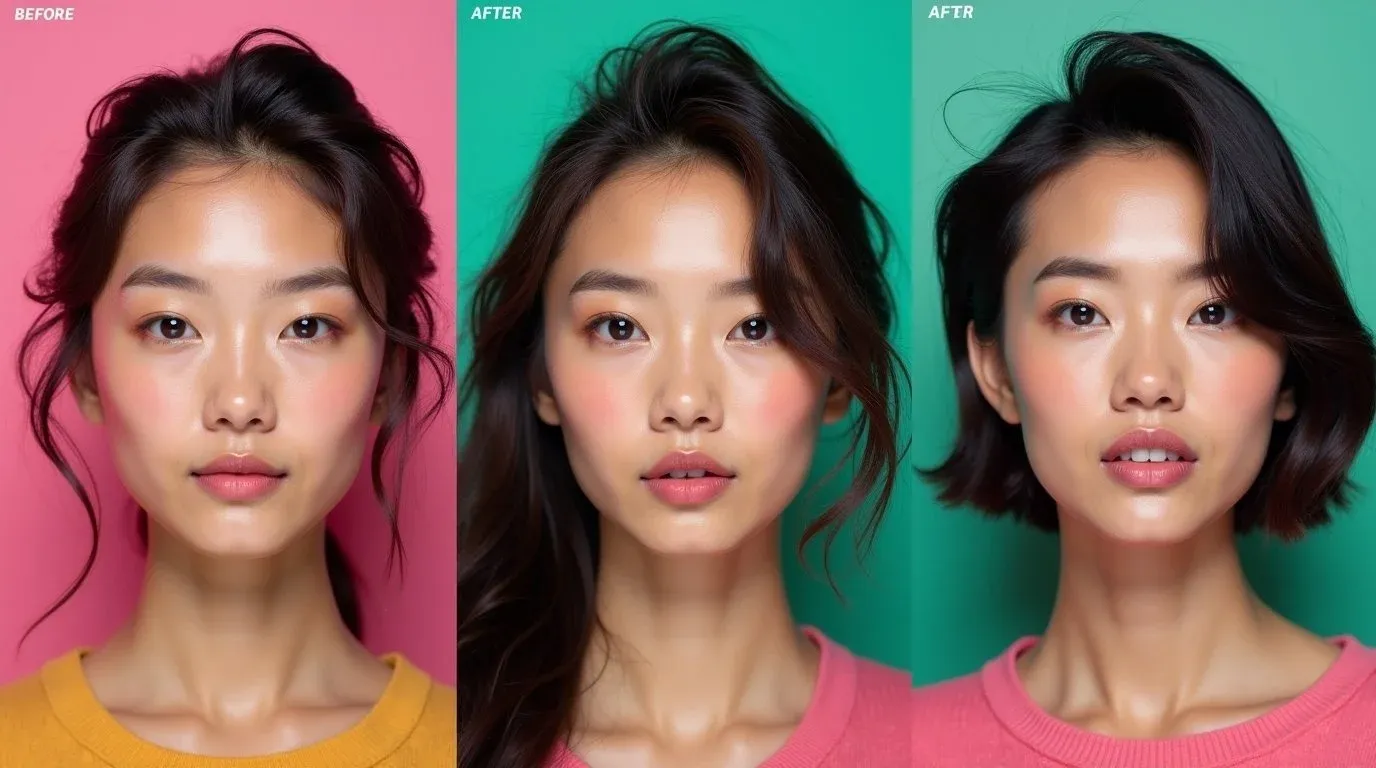
Before and after photos should be taken with the same lighting, angle, distance from the camera and facial expression, with no makeup, filters or beauty settings. Change any one of those, and the photos can show a difference that isn't there or hide one that is.
Improvement in smoothness of depressed acne scars is mostly from making the scars shallower so there are fewer shadows in them. If you have flat, red or brown marks where your acne was, those are not acne scars but discoloration, and are treated differently.
Why Does the Change Take Months?
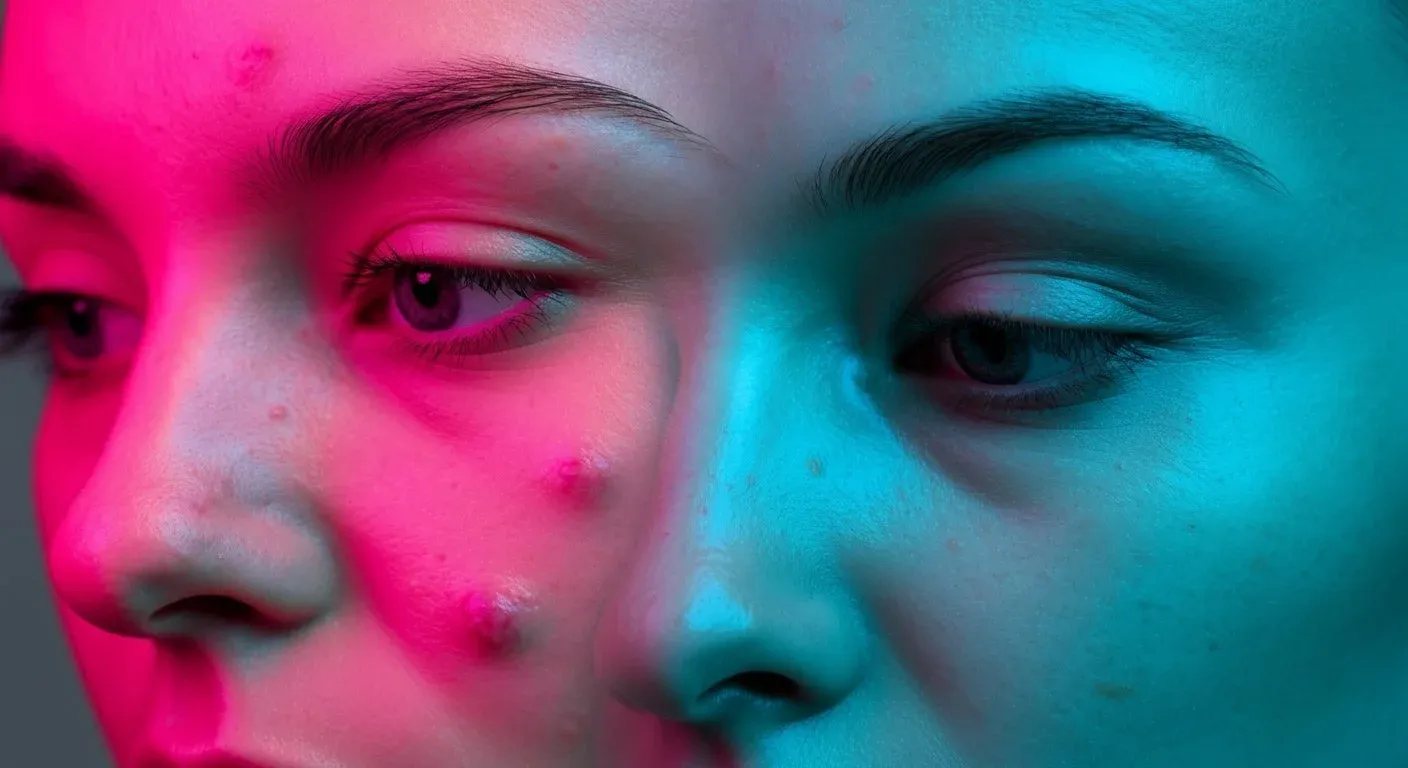
Think of the laser as starting the process of acne scar improvement by making a controlled injury to your skin. Your skin then heals by making new collagen in the scars, and this process continues for several months after your last treatment. So if you look at your skin a week after your treatments, not much will have changed yet.
If you still have active acne breakouts, we will start treatments to control those first so you don't continue to make more acne scars. Some lasers for redness can help treat acne breakouts. There are several lasers and lights that can help with breakouts when used in conjunction with medications, but they rarely clear breakouts by themselves.
Treating breakouts and resurfacing scars are separate goals, so a scar treatment course doesn't replace ongoing acne care.
Your Scar Type Decides the Plan
Most acne scars are depressed below the level of the skin rather than raised. Laser resurfacing can make some types of depressed scars shallower, but can't fill them in.
Deep or tethered scars may respond less to laser resurfacing. So the shape of each scar decides the best tool to treat it.
- Broad, shallow scars (superficial boxcar scars): these can sometimes be treated with laser resurfacing alone
- Broad, shallow scars with tethering underneath (rolling scars): these often need a minor procedure to release the tethers under the scars as well as laser resurfacing
- Deep, narrow pits (ice pick scars) or deep narrow depressions with sharp edges: these often need treatments directed at the individual spots, either with strong acid or minor surgery
- Raised scars (hypertrophic scars or keloids): these need to be treated differently, but some lasers for redness may be part of the treatment
Since most people have a mixture of different types of scars, plans often combine different treatments for acne scars.
The Laser Options for Acne Scars
These are the main laser types used for acne scars in general, and your consultation shows which ones suit your scars and which we offer. An ablative laser removes the surface of the skin, while a non-ablative laser heats the skin underneath without removing the surface.
"Fractional" refers to how the laser is delivered, not what type of laser it is.
Fully ablative resurfacing that removes all of the skin surface at once can show change after a single treatment. But its surface takes weeks to heal, the new skin stays pink for months after that, and it carries a higher risk of side effects, so fractional lasers have largely replaced it.
- Ablative fractional lasers: compared with non-ablative fractional lasers, these usually bring more change per treatment and may need fewer treatments, but they ooze and crust, take one to two weeks to heal, and have a higher risk of pigment changes
- Non-ablative fractional lasers: these take more treatments over a longer period of time to get a more gradual, less dramatic improvement, but heal quickly and have a lower risk of pigment changes
- Gentle, non-ablative lasers without a fractional pattern: these can provide moderate improvement for shallower boxcar and rolling scars, and may be done as a series. Some of these lasers are absorbed weakly by pigment in the skin, so are considered some of the safer lasers for deeper skin tones
- Lasers for redness: these target blood vessels, and can treat flat post-acne redness, and the redness in scars, including raised ones, generally in a series of treatments. There’s limited data on their role in treating raised scars, so they’re generally done in the context of an overall treatment plan.
- Lasers for brown marks: these can at least partially lighten flat brown marks, but there is inconsistent success, and the marks can sometimes get darker. Flat brown marks often fade on their own over a period of months.
Choosing the Right Laser for Your Scars
There is not one best laser for treating acne scars. Treatment begins with looking at what type of scars you have, then your skin tone, your history of healing from prior procedures, your expectations and tolerance for downtime, discomfort, upcoming events, and your goals.
For moderate to severe depressed scarring, combining laser treatments with other procedures often gives better results than doing laser treatments alone. In particular, minor surgical procedures for the deepest pits are often done first, followed by laser resurfacing to help blend the edges of those pits with the surrounding skin.
The release of “tethered” scars can be done in the same treatment plan. Other treatments that can be combined include microneedling to improve the depressed texture of scars, and chemical peels to help with discoloration and surface texture of the skin. The plan is sequenced so different treatments handle the depressed scars and any red or brown marks.
What Changes for Medium to Deep Skin Tones?
Many laser treatments can be done safely on medium to deep skin tones, with a suitable laser and settings chosen for your skin. Deep skin tones are at higher risk of developing dark marks after the skin heals from a procedure (post-inflammatory hyperpigmentation).
To help reduce your risk, the plan may use lower energy settings, space a fractional laser's columns further apart, wait longer between treatments and cool the skin surface carefully, depending on the laser. The plan may also swap an ablative laser for a gentler one or change the mix of procedures.
Gentler settings can mean less change per session and a longer course for some people, and the tendency of deeper skin tones to darken may limit the degree of change. Dark marks can still appear even with careful choices. Microneedling may be a good option for deeper skin tones since the microneedling device does not emit a light that is absorbed by skin pigment.
What Happens on Treatment Day
We’ll clean your skin before treatment. If numbing cream is part of your plan, use only the product, amount and timing your treatment team gives you. Store-bought numbing products can affect your heart, brain and breathing, especially on irritated or broken skin, over a large area, for too long, or under a covering.
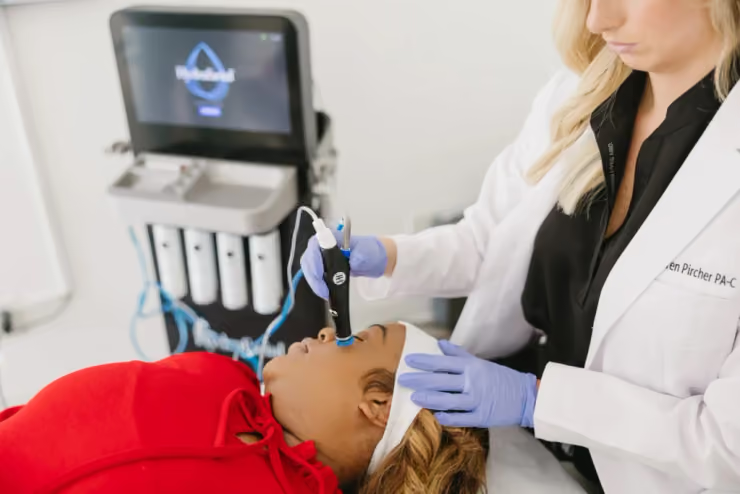
You'll wear eye protection made for the laser being used, and it stays in place for the whole session, because laser light can injure your eyes. A dermatologist examines your skin and sets the treatment plan, and our licensed aestheticians perform each laser treatment under dermatologist direction.
Non-ablative laser treatments produce heat and stinging during the procedure and can feel like a mild sunburn afterward, for a few hours to a few days depending on the laser. Ablative laser treatments are considerably more painful.
Cooling the skin during and after the procedure can ease the discomfort, which varies from person to person.
After ablative laser treatment you’ll have swelling and itching, and a protective ointment, sometimes with a dressing, protects your skin while it heals. After non-ablative laser treatments you may have swelling and skin discoloration for a few hours to a few days, and cool packs can help.
The Timeline, Stage by Stage
The First Few Days
Your skin will look temporarily worse after laser treatment before it looks better. After non-ablative treatment, your skin may be red, swollen, and warm to the touch for hours to a few days, depending on the laser.
After ablative fractional laser treatment, your skin will have pinpoint areas of bleeding, oozing, and crusting. After fully ablative skin resurfacing, you’ll have swelling, itching, stinging, and then your skin will peel.
The First Weeks
Downtime varies from little visible downtime after non-ablative treatments to 1-3 weeks or more after ablative skin resurfacing treatments, and redness may persist for longer.
After non-ablative fractional treatment, you may have tiny dark dots on your skin in the first week, giving you a bronzed appearance. Your skin may feel a little bit like sandpaper, and some very fine “flaking” may occur, but you shouldn't have an open wound. Many people go back to work right away, and makeup can cover the redness once your team says it's fine.
After an ablative fractional treatment, the surface usually heals within one to two weeks, depending on the treatment, and redness can last up to a few months.
Across a Series
Each treatment session builds on the last, so you may see little change after the first one. How many and how far apart they are will depend on your individual needs. We see you regularly from the start, to monitor your progress, answer questions and make thoughtful adjustments with you.
After Your Last Session
New collagen formation continues after the final session so you may see continued improvement for several months. This depends on the type of laser, how intense the treatments were, how many were needed, and how well you healed. You may perceive the results to be better during the first few weeks due to residual swelling, which smooths the skin.
Reading Your Own Progress
To track your progress, take a baseline set of photos before your first session, then photograph the same areas at each visit. Take them from the front and each side, from the same distance, without makeup or filters.
Overhead light shows the shadows in depressed scars well, and whatever light you use, keep it the same for every photo.
Look at them at regular intervals as your perception of them in the mirror may change with different lighting or viewing at different angles. Only by comparing them over a period of months will you get a good idea of the overall improvement. This is the same way that you need to look at any before and after photos including those in our Laser Treatment Gallery.
Caring for Your Skin as It Heals
Clean the treated skin gently, the way your instructions describe, and don't pick or scratch at any crust or flakes. After ablative procedures, use the ointment and any dressing your treatment team prescribes until the skin has healed, and don't add other products or coverings on your own.
After non-ablative procedures, a gentle moisturizer is usually enough. After either kind of laser, follow your team's limits on exercise, heat and swimming, and wait to wear makeup, preferably oil-free, until the skin is intact and your team says it's fine.
Keep treated skin out of direct sun through your whole series and after it, because sun can darken healing skin or even leave new scars. On intact or healed skin, use a broad-spectrum, water-resistant sunscreen with SPF 30 or higher every day; after ablative work, start once the surface has healed and your team says so. Go back to using your retinoid products and acids after the recommended time period.
What Laser Treatment Can and Cannot Do
Laser treatments can help minimize depressed scars but cannot remove them. How much they respond depends on their type. Ice pick scars and those that persist when you stretch the skin taut respond the least to resurfacing alone.
How well your scars respond to treatment cannot be fully predicted. They may respond very well, but this cannot be guaranteed. How well they respond also depends on whether you follow the recommended treatment plan, as well as the post-treatment instructions including sun protection and controlling any ongoing acne.
What Shapes the Cost of Treatment
Laser treatments for acne scarring are considered cosmetic, so they are paid for by the patient. The total cost depends on the type of laser used, the size of the area treated, how many sessions you will need, and whether other procedures are combined. Your plan and its cost come out of the consultation.
Before You Book
Your visit starts with a medical evaluation of your scar types, skin tone, goals, history, medicines, supplements and skincare. Tell us about every acne treatment you used in the past two years and any blood thinners among your medicines. Mention recent sun exposure or tanning and any history of cold sores.
Include the retinoids and acids in your skincare, and our instructions will tell you when to pause them. Tell us if you take or recently took prescription acne medication (isotretinoin). The timing depends on the procedure: fully ablative resurfacing is not done while you take it, and is usually postponed after you stop, on an individual schedule.
After a recent peel, laser treatment or other procedure, the gap before your session depends on its depth and on full healing. We postpone treatment for an active skin infection, open wounds, pregnancy or nursing. The same applies to an active herpes outbreak anywhere on the treatment field, including cold sores.
Ablative treatment on the face often calls for preventive antiviral medicine, even if you have never had a cold sore. For other lasers, a history of cold sores helps decide whether you need it.
Steroid pills or injections that act throughout the entire body, or a condition or medicine that weakens whole-body immunity, call for individualized planning. A history of keloids or other raised scars may rule out laser treatment or change the plan.
Recent sun exposure or tanning may delay your session, and a tan or sunburn on the day means waiting until it fades. Our laser treatments page lists the device details and every condition that rules treatment out or delays it.
Expected reactions include redness, swelling, warmth, discomfort or stinging, itching, crusting, peeling and temporary pigment change. After ablative work, pinpoint bleeding and oozing are expected too.
Less common complications include blistering or burns, bacterial or viral infection including cold sore reactivation, delayed healing and prolonged redness. They also include acne flares or tiny white bumps, scarring, and lasting darkening or lightening that can appear months later.
Get emergency care right away for any of these:
- An irregular heartbeat after using a numbing product.
- A seizure after using a numbing product.
- Trouble breathing after using a numbing product.
- Eye pain during or after treatment.
- Blurred, dimmed or lost vision during or after treatment.
- Bleeding that does not stop after 10 minutes of firm, steady pressure.
Contact our office the same day if you notice any of these after a session. If you can't reach us that day, go to an urgent care center.
- Pain, redness, warmth or swelling that is getting worse instead of better.
- Fever or chills.
- Pus or foul-smelling drainage from the treated skin.
- New grouped blisters or cold sore symptoms.
- Significant blistering.
- Skin that is not healing on the schedule we described to you.
- Pain that the aftercare you were given does not control.
This article is general education rather than a diagnosis, and it does not replace an evaluation of your own skin.
Physician-Directed Scar Care in the South Loop
Our South Loop practice is part of the Northwestern Medicine Physician Network, and our physicians are all board-certified dermatologists. We will tailor the most appropriate laser treatment, or combination of treatments, for your scars and skin, based on the most current evidence.
Questions Patients Often Ask
Is There One Best Laser for Acne Scars?
No. The right laser depends on your scar types, your skin tone, the downtime you can take and how your skin heals.
How Many Laser Sessions Will My Acne Scars Need?
It varies, as some patients only require one treatment while others need a series. Ablative lasers often need fewer treatments than gentler ones, though the count depends on the plan and how your skin responds. Some people with deeper skin tones need a longer course at gentler settings, though skin tone alone doesn't set the number.
Can Laser Treatment Remove Acne Scars Completely?
No. Laser treatments only improve the appearance of your scars by making them shallower and less noticeable. Lasers can be combined with other procedures to further improve the scars that don’t respond well to lasers alone.
Do Laser Results for Acne Scars Last?
Often, yes. The improvement from the laser skin resurfacing can last for years, but your skin will continue to age, and if you continue to break out, you may develop new acne scars.
Some patients choose additional treatment down the road.
Is Laser Treatment Safe for Medium to Deep Skin Tones?
Yes. Many laser treatments can be performed safely on medium to deep skin tones with a suitable laser and settings chosen for your skin. Dark marks can still appear afterward, so the plan is individualized and your skin is watched between sessions.
Talk With Us About Your Next Step
If you’d like to discuss your options or to schedule an appointment, please contact us. We’ll be happy to evaluate all of your scars, even if you’re unsure whether they’re acne scars or not, and help you decide on the best plan to meet your needs.
Individual results and duration of results may vary. Outcomes are not guaranteed.