Facial laser treatment can improve the redness associated with rosacea, including visible blood vessels and a background of redness. While there is much more evidence supporting the use of laser for the visible blood vessels, it can also be used as part of a treatment plan for the underlying skin condition of rosacea. (Please read about what rosacea is, if you are unsure if you have rosacea or not).
What Laser Can Change, Feature by Feature
The laser light is preferentially absorbed by the blood in the dilated, superficial blood vessels, and the heat that is produced closes those vessels. The skin itself absorbs much less of the laser light.
Some of the signs of rosacea respond better to laser treatment than others:
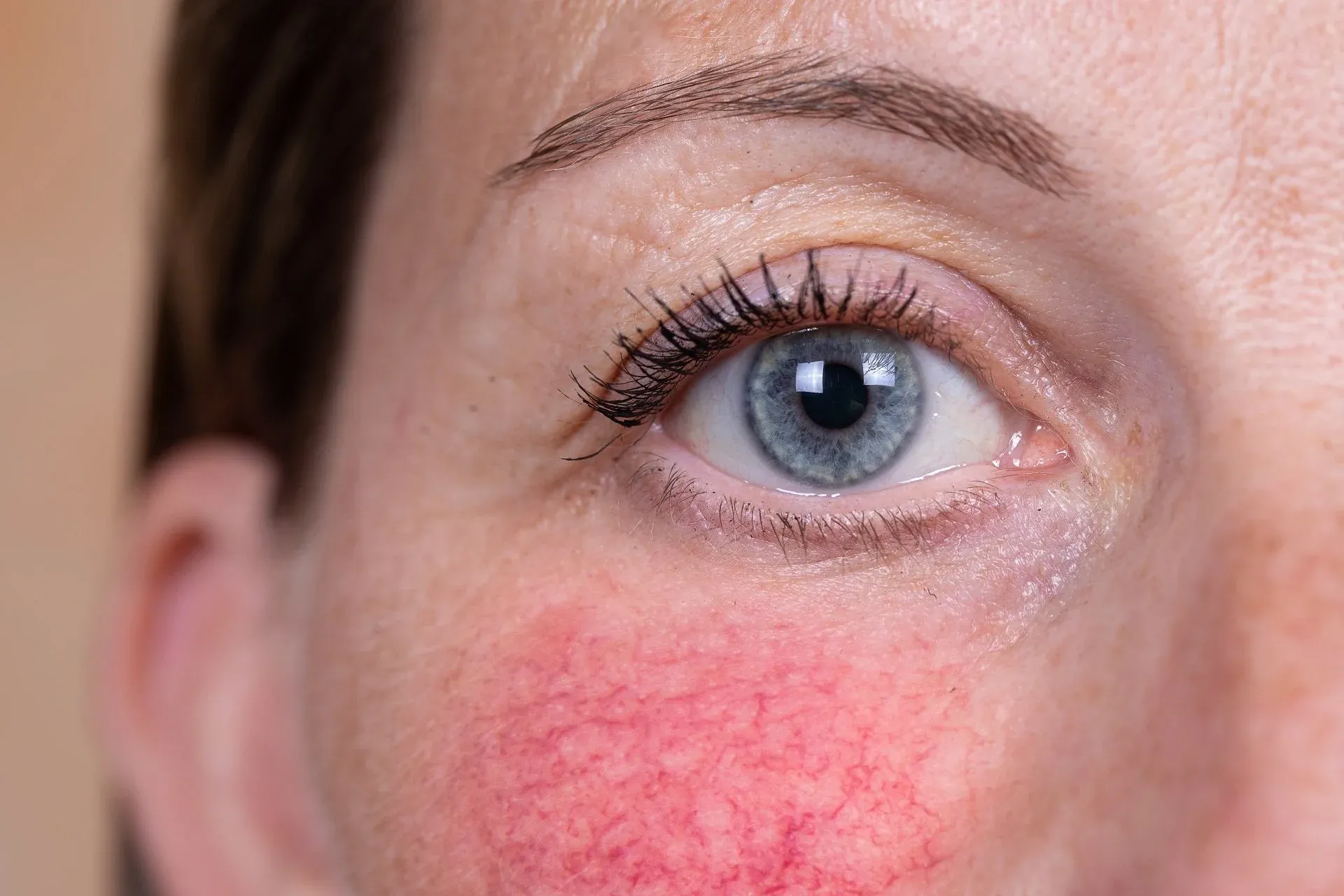
- Visible small blood vessels: Laser treatment works best for visible small blood vessels
- Lasting background redness: Laser treatment can also help persistent background redness, but it is more variable
- Inflammatory bumps: Laser treatment is used in conjunction with prescription treatment, which manages inflammatory bumps
- The eyes: Laser treatment on your face does not treat rosacea that affects your eyes, which needs its own evaluation and care
We treat the redness and visible blood vessels on the face related to rosacea with laser treatment. Not everyone with rosacea needs laser treatment, but it can be helpful for some.
Laser, Light and Laser Surgery Are Different Tools
There are actually three different types of “laser treatment for rosacea” out there, and the term is often used loosely for all of them. One type of laser treatment for rosacea uses a specific type of laser that is designed to target blood vessels. Another related type of treatment, intense pulsed light (IPL), is similar, but not actually a laser.
The third type of laser “surgery” actually is a surgical procedure where thickened skin is removed and re-contoured, most often on the nose. A fourth type of treatment, fractional resurfacing, can be helpful for issues with skin texture, pigment and scars.
We will recommend what we think will be best for you at your evaluation.
What Does a Course of Treatment Involve?
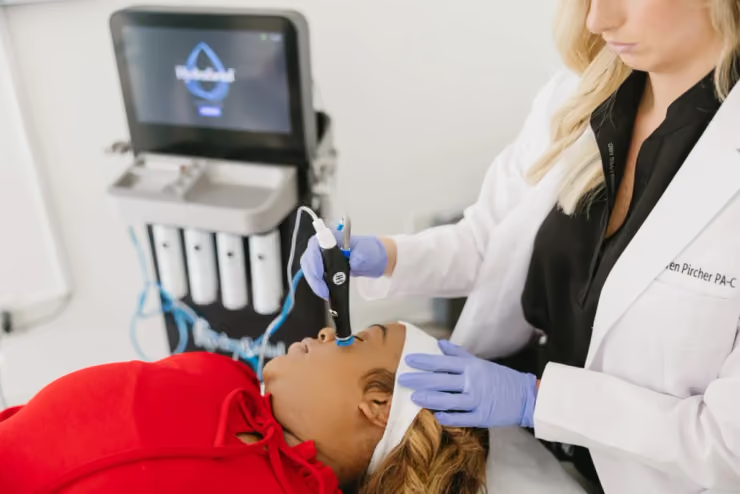
We may recommend laser as part of a treatment plan that also includes prescription treatment. Once a decision has been made to use laser treatment, our licensed aestheticians, who work under the direction of the Dermatologists, will perform the laser treatments for you. It is important to receive laser treatment after an individualized medical evaluation.
Laser treatment feels warm, and many people describe it as feeling like small snaps from a rubber band on their skin. Cooling measures are used to protect the surface of the skin and to help with discomfort.
You may see improvement in blood vessels and redness after one treatment, but many people have a series of treatments spaced several weeks apart. The number of treatments needed varies, and depends on how you respond, what device is used and how prone you are to developing new redness over time. We will see you regularly to follow your progress through your series of treatments.
The Weeks After a Session
Downtime can range from no downtime to up to 1-2 weeks, depending on what type of laser is used and whether or not you bruise. Some laser treatment settings can leave red or purple bruise-like spots that take 1-2 weeks to clear.
After your treatment, you will be given specific instructions on how to care for your skin. They will include gentle cleansing, moisturizing, avoiding picking and scrubbing the skin, strict sun avoidance and daily use of broad-spectrum sunscreen.
You will be able to tell how you responded to the treatment once any swelling or bruising has cleared, and then you may continue to see improvement with each subsequent treatment in your series.
How Long Do the Results Last?
Remember that you will still have rosacea, and over time, you may develop new blood vessels and new redness. Whether or not to get more treatment for new redness is up to you and us.
There are things that you can do to help the improvement last longer. Daily sun protection is very important. There are also triggers that can cause redness to flare, and we have listed them in our article about rosacea.
Planning Treatment for Medium to Deep Skin Tones
Skin pigment can absorb the energy from the laser, and in medium to deep skin tones, there is an increased risk of burning the skin or causing areas of darkening or lightening of the skin. Not all lasers or light based devices are appropriate for every skin tone.
We will choose the device, wavelength and settings that will be most appropriate for your skin. Longer wavelengths are often preferred when they suit the blood vessels being treated, as they are absorbed less by skin pigment on the surface. We will also choose conservative settings, use cooling to protect the surface of the skin and may do a test spot to check how your skin responds.
These particular choices may affect the likelihood of improvement and/or your risk of side effects. Some choices may be better for you than others. See the article about deeper skin tones with rosacea.
Before You Book
At your evaluation, tell us your medical history and every prescription and over-the-counter product you use, including acne medicines. Rosacea can affect the eyes, so eye pain, marked sensitivity to light, persistent eye redness or any change in vision needs prompt medical evaluation.
We postpone treatment until your skin has healed if you have a sunburn or an active infection in the treatment area. The same applies to an active herpes outbreak anywhere on it, including a cold sore.
An active tan, recent sun exposure or self-tanner may mean we postpone or adjust treatment. So may a history of cold sores or certain medicines that make your skin more sensitive to light.
A history of raised scars (hypertrophic scars or keloids) or other abnormal scarring can also delay or change the plan. The laser treatments page lists every caution in full, with device detail.
Tell your dermatologist if you are taking or recently took a strong prescription acne pill (isotretinoin). Timing then depends on the procedure, its settings, your dose, your skin and how you heal. Mention any recent peel, laser or other procedure, since what was done shapes the timing and we wait until your skin has fully healed.
Beyond the expected redness and swelling, and bruising or crusting from some settings, less common effects include blistering, burns, infection and scarring. Darkening or lightening of your skin is also less common, can be temporary or lasting, and may appear weeks to months later.
Eye injury is rare but serious, caused by direct or reflected light when eye protection is missing, slips or does not match the device. Everyone in the room, including you, wears eye protection matched to the device throughout the session.
Because an eye injury can happen without immediate pain, seek eye care or emergency care right away for any of these after treatment:
- New or worsening blurred or reduced vision
- A new blind spot
- Flashes or floaters
- New or worsening eye pain
- Marked sensitivity to light
Contact our office promptly for any of these:
- Blistering
- Worsening pain
- Spreading redness
- Drainage
- Fever
Do not wait for our office to reopen if redness is spreading quickly, pain is severe, or you have a fever and feel unwell. Go to urgent care or an emergency department.
This information is educational, and it does not diagnose your skin or replace an evaluation.
Our Approach to Rosacea Care
Our approach to rosacea treatment includes evidence-based treatments after a complete medical evaluation of your skin. We offer physician-directed laser treatment at our South Loop dermatology practice. We are part of the Northwestern Medicine Physician Network.
Questions Patients Often Ask
Can Laser Help When Prescription Creams Have Not Cleared the Redness?
Often, yes. Laser treatment can help with the blood vessels and the redness that creams may not clear. Treatment for the bumps is medical.
Is Laser Treatment Safe for Medium to Deep Skin Tones?
Yes, with the right device, settings, and approach, many laser treatments can be done safely. See the section about our approach to deeper skin tones with rosacea.
Does Rosacea Medicine Continue After Laser?
Often, yes. Laser treatment can help with the blood vessels and the redness. Treatment for the bumps is medical and can be done at the same time.
Is Laser for Rosacea the Same as Laser Resurfacing?
No. The laser treatment used for rosacea is different than the treatment used for resurfacing.
How Many Sessions Does Treatment Take?
It varies. It will depend on your response, and we will adjust as you go.
Talk With Us About Your Next Step
If you’d like to discuss whether laser treatment might be right for your redness, please request an appointment for an evaluation. You may also contact us if you have any questions. We look forward to discussing your options with you and being your guide toward the best result possible.
Individual results and duration of results may vary. Outcomes are not guaranteed.