You want more than a spa facial, but you are not sure who to see. The title medical esthetician appears often, but it is worth understanding what it means. This article explains how esthetic care works inside our Chicago dermatology practice.
At Advanced Dermatology and Aesthetic Medicine, board-certified dermatologists Dr. Monica Rani, MD, FAAD and Dr. Stavonnie Patterson, MD, FAAD lead the practice.
Here, esthetic care is physician-directed. Led by our dermatologists, our aestheticians complement medical treatment with physician-curated services and skincare for enhanced results.
Is Medical Esthetician a Separate License in Illinois?
No. In Illinois, medical esthetician is an informal workplace description, not a separate state license. The state licenses estheticians, and licensure requires completion of a 750-hour approved esthetics program plus the other state requirements.
A licensed esthetician working in a dermatology practice may provide superficial cosmetic skin services within the esthetics scope. She refers medical concerns to a dermatologist or other qualified clinician. Working in a medical office, holding an employer certificate, or working near a physician does not expand that legal scope.
Training requirements differ by state, so credentials should be evaluated under the law where the service is performed. Hour ranges you read online may not describe Illinois.
Can an Esthetician Work in a Dermatologist’s Office?
Yes, and a dermatology esthetician role is common. In our practice, licensed aestheticians Amaris Moreno and Victoria Garcia work alongside the medical team as skin care specialists. You can read more about the full team on our about page.
The value of the setting is the team, not an expanded license. An esthetician here may support cosmetic skin care, flag reasons to defer a service, and refer medical concerns to the dermatology team. Estheticians do not diagnose skin disease, evaluate suspicious lesions, prescribe medications, or independently manage acne, rosacea, melasma, dermatitis, infections, or treatment complications.
Is an aesthetician a doctor? No. An aesthetician is a licensed skin care professional, not a physician, and the two roles are complementary rather than interchangeable.
Who Performs Each Treatment Here
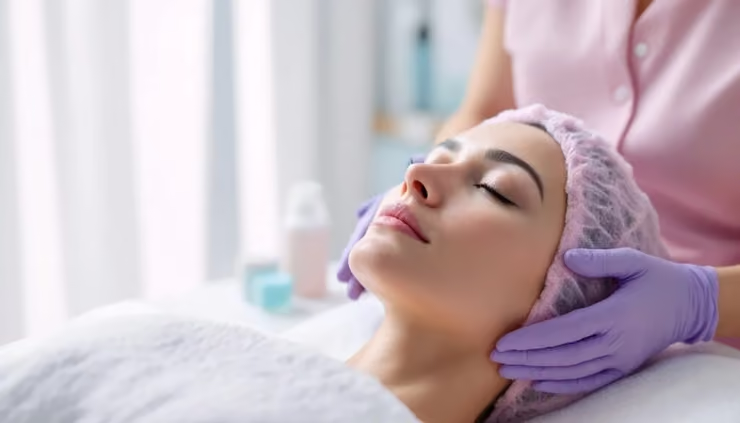
Our dermatologists handle medical evaluation, diagnosis, prescriptions, and treatment planning for medical procedures. Our aestheticians perform facials, HydraFacial® services, and permitted superficial chemical peels within the esthetics scope. The dermatologists do not perform these services themselves.
Microneedling and laser treatments are medical services, not esthetic services. A dermatologist evaluates candidacy and establishes the treatment plan first. Our trained aestheticians then perform the prescribed procedure in a physician-delegated capacity, not under the esthetics license, with the supervision that procedure requires.
That structure matters legally as well as clinically. Under current Illinois guidance, an esthetics license by itself covers only superficial cosmetic services, including superficial chemical peels. Microneedling, deeper peels, lasers, and many light-based or energy-based treatments are governed as medical procedures with their own training, delegation, and oversight requirements.
Injectables are physician services in our practice. Botox® and Dysport® and dermal fillers are administered on the medical side, with candidacy determined by the physician. You can review individual services, including chemical peels and PRP therapy, on their own pages.
What These Treatments Can and Cannot Do
Superficial cosmetic procedures offer targeted benefits, but setting clear expectations is essential for safe, effective skin care.
Superficial Facials and Hydradermabrasion
Superficial facials, hydradermabrasion-style services, and permitted superficial peels offer short-term cosmetic improvements.
- Temporary Results: They can temporarily improve how skin looks or feels.
- Limited Evidence: Published evidence for hydradermabrasion is limited, and individual results vary.
- No Medical Treatment: These services do not treat underlying skin conditions or diseases.
Microneedling and PRP Realities
Microneedling requires an honest framing regarding its clinical scope and regulatory status.
- Specific FDA Approvals: FDA authorization applies only to specific devices for targeted uses, such as facial acne scars, facial wrinkles, or abdominal scars in adults age 22 or older.
- PRP Delivery Limitations: FDA-authorized microneedling devices are not approved to deliver platelet-rich plasma (PRP) into the skin.
- Unknown Risks: The FDA notes that the safety risks of combining microneedling devices with blood products remain unknown, and supporting evidence is incomplete.
Eligibility and Medical Screening
Microneedling is not appropriate for everyone, requiring thorough clinical screening prior to care.
- Immediate Deferrals: Treatment is deferred for active herpes, localized skin infections, substantially inflamed acne, skin cancer in the treatment area, or recent radiation.
- Conditions Requiring Clinician Review:
- Bleeding or clotting disorders, or current use of blood thinners
- Impaired healing, uncontrolled diabetes, or immune suppression
- Active inflammatory skin disease or keloid history
- Ongoing cancer therapy
- Pregnancy or breastfeeding
Procedure Guidelines for Acne
Elective esthetic procedures should not replace standard medical care for acne.
- Academy Guidance: American Academy of Dermatology guidelines find insufficient evidence to broadly recommend chemical peels, laser devices, or microneedling as primary acne treatments.
- Medical Care First: Painful nodular or cystic acne, marked inflammation, or suspected bacterial or viral infections require medical evaluation and treatment before elective services.
Combining Multiple Treatments
Stacking multiple procedures requires careful clinical evaluation rather than assuming more treatments equal better outcomes.
- Increased Side Effects: Combining procedures can increase cumulative inflammation, skin barrier damage, infection risk, pigment changes, and overall recovery time.
- Clear Rationales: If a combination plan is recommended, your clinician will explain the clinical indication, timing, evidence base, any off-label components, and why it is preferable to a simpler plan.
Safety Considerations
These services are elective, and careful screening reduces risk without eliminating it.
Screening and Medical Oversight
Before any service, we ask about health conditions, medications, allergies, prior reactions, recent procedures, tanning, cold sore history, healing problems, and pregnancy when relevant.
For medical procedures, a dermatologist examines you, determines candidacy, and sets the treatment plan, and informed consent comes before treatment. Any delegated team member performs only the prescribed procedure under the required supervision. Screening helps identify risk and guide selection, but complications can still occur and results vary from patient to patient.
Expected Effects and Potential Risks
Expected short-term effects vary by treatment. They may include redness, dryness, peeling, sensitivity, swelling, bruising, pinpoint bleeding, or temporary worsening of acne or rosacea.
Pigment change can be temporary or persistent, depending on the procedure, device settings, treatment area, and skin type. Less common risks include burns, bacterial infection, herpes reactivation, prolonged inflammation, scarring, and eye injury from laser or light exposure.
Considerations for Medium to Deep Skin Tones
Patients with medium to deep skin tones may be candidates for many of these procedures when device, settings, and treatment approach are individualized. Evidence and risk vary by treatment and device.
Peels, energy-based procedures, and microneedling can cause darkening or lightening of the treated skin. Some FDA-authorized microneedling devices were not studied in darker skin types. Provider experience with your skin tone and conservative treatment selection matter.
Hygiene Standards and Aftercare
Our practice follows procedure-appropriate hand hygiene, aseptic technique, skin preparation, single-use supplies, and equipment cleaning or sterilization. A qualified clinician is available to evaluate any adverse reaction.
Aftercare is specific to the procedure, so follow the instructions you receive. Core steps include gentle cleansing, moisturizing, and avoiding picking or exfoliating the treated area. Patients should pause irritating products when instructed, stay out of the sun, and use broad-spectrum sunscreen.
When to Contact Our Office
Contact our office promptly for worsening pain, extensive blistering, or gray, white, dusky, or ulcerated skin. Also contact us for spreading redness or warmth, increasing swelling, drainage, fever, or persistent bleeding. Marked or persistent pigment change without visual or neurologic symptoms also warrants prompt office evaluation.
WHEN TO SEEK IMMEDIATE EMERGENCY CARE
New vision loss or change, eye pain, or double vision after a facial procedure is an emergency. So is facial droop, new one-sided weakness or numbness, confusion, or a sudden severe headache. Call 911 or go to an emergency department, then notify our office.
Difficulty breathing, throat tightness, faintness, or rapidly progressive facial or tongue swelling after a product or procedure also requires emergency care.
When to See a Dermatologist First
Some concerns need medical evaluation before any cosmetic service. A new or changing spot needs a dermatologist first, as does a growth that bleeds, crusts, hurts, or will not heal. The same is true for unexplained pigment change, a persistent rash, severe acne, or complications from a prior product or procedure.
Moving from an esthetician to a dermatologist is built into how we work. If our aestheticians see something that needs medical attention, they defer the service and refer you to the medical team. Patients recovering from surgery, skin cancer treatment, or cancer therapy need individualized clearance from their treating clinicians before any elective esthetic service.
Schedule a Consultation
The right starting point depends on your skin. A consultation lets us discuss reasonable options, expected benefits, limitations, alternatives, costs, downtime, and risks, and a desired result may not always be achievable. Medical concerns go to our dermatologists, and cosmetic skin care questions can start with our aesthetician team.
You can request an appointment online or contact our office with questions. We will point you to the right member of the team from the start.
Frequently Asked Questions
No, an aesthetician holds an esthetics license, not a medical degree, and cannot diagnose or treat skin disease. In our practice, aestheticians provide cosmetic services while the dermatologists handle medical care.
Yes, many Illinois estheticians work in dermatology practices, providing permitted cosmetic services as part of a physician-directed team. The setting supports screening and referral, but it does not expand what the esthetics license itself allows.
Additional training in infection control, skin conditions, and recognizing when to defer a service helps estheticians work well in medical settings. It improves screening and referral, though it does not expand the legal scope of the license.
There is no standard interval that fits everyone, and repeat treatment is not automatically better. Frequency depends on the specific service, your response and healing, any side effects, your goals, and the procedure’s recommended spacing.
Most elective esthetic services are self-pay and not billed to insurance. Coverage for medically necessary dermatology care depends on your diagnosis, plan, and the service performed, so confirm benefits directly with your insurer.
Our insurance page explains which plans we participate with.