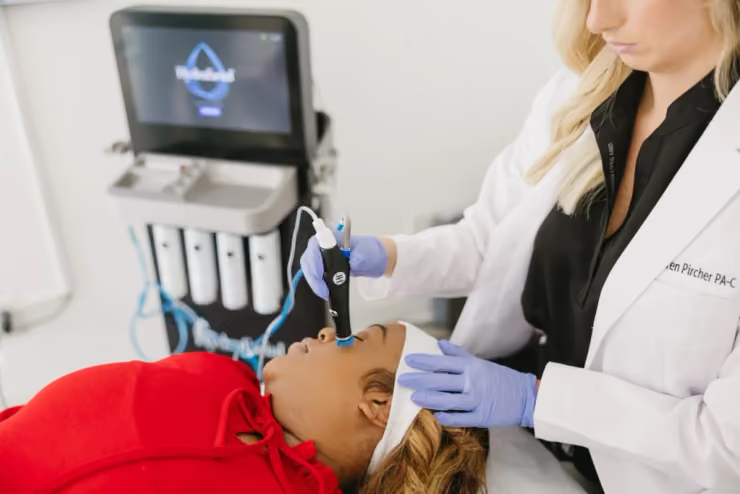
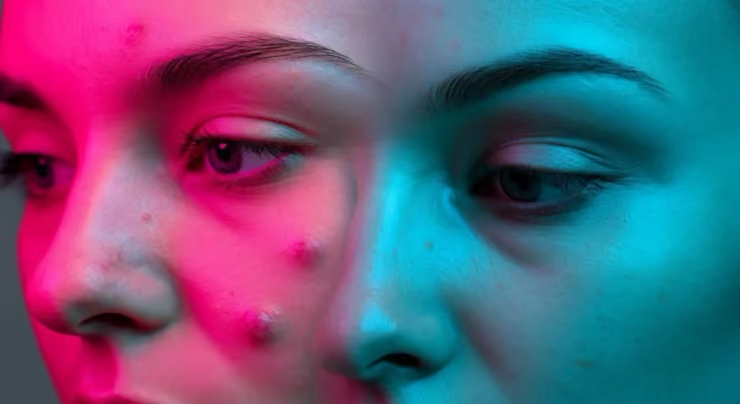
Start your care with medical treatment, and laser can be an added treatment.
In certain cases, laser may help reduce red, inflamed breakouts. It does not replace or delay prescription treatments for your acne.
The goal of treatment is to calm your skin and reduce the number of deep breakouts and new acne scars. Your dermatologist will work with you to develop a treatment plan and will modify it along the way.
What Makes Deep Breakouts Different
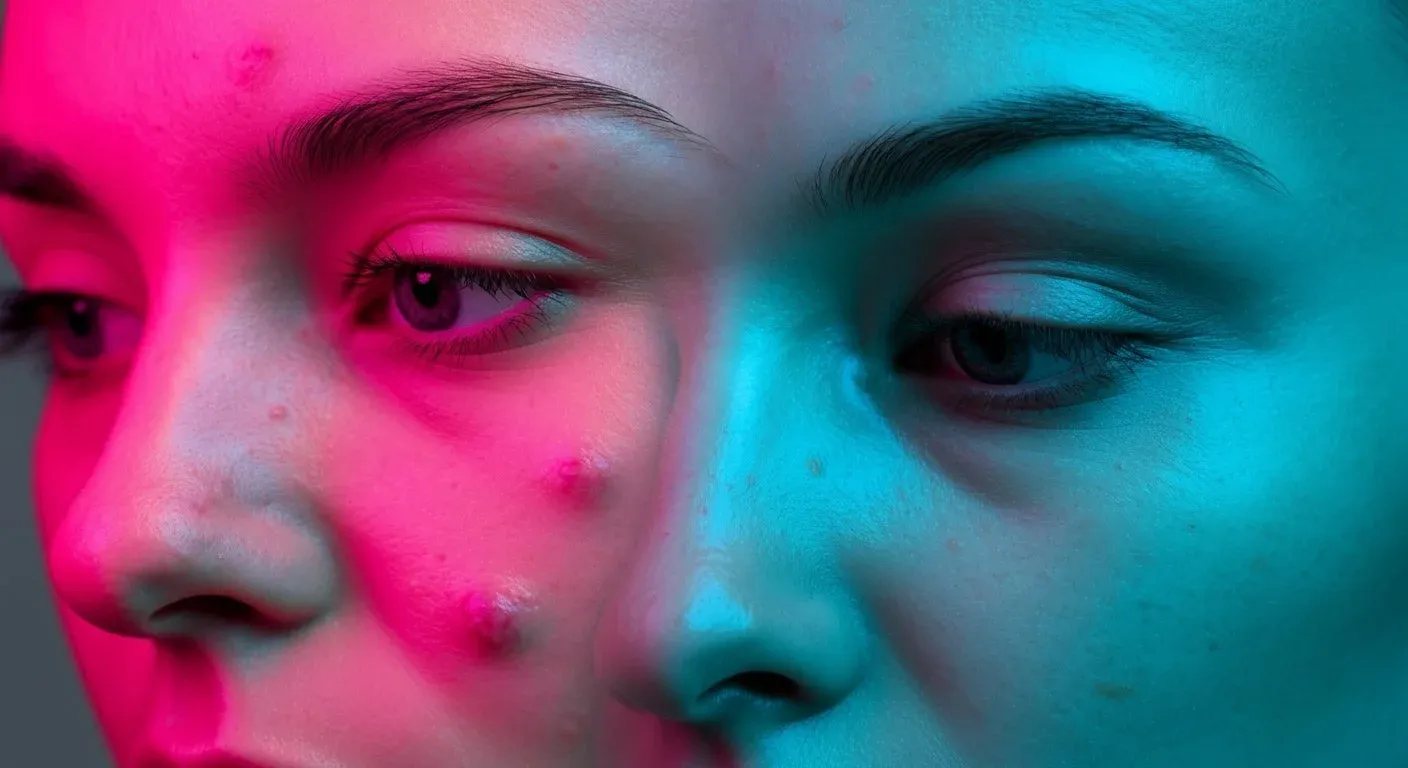
These deep lumps under the skin are also referred to as “nodular” or “cystic” acne. They can be deep, painful, and last for weeks. They can lead to dark marks and scarring.
These bumps start as plugs of oil and skin cells in the hair follicle. The development of inflammation is due to skin bacteria and our body’s response to bacteria.
These may be on the face, around the jaw and neck, and may be triggered by hormonal changes. Similar breakouts can develop on the chest, back and shoulders. Be sure to let your dermatologist know if you are troubled by these breakouts as well during your evaluation.
Why Medical Treatment Comes First
Topical medicine(s) are important as they prevent new breakouts. Severe or scarring acne is often treated with a strong prescription acne pill (isotretinoin). Since deep breakouts can lead to scarring, it is important to seek medical treatment for severe, scarring, or non-responsive acne right away.
The initial prescription treatment may start low and work up. Your dermatologist has access to a broad range of acne medicines and can work with you to find the best treatment plan.
You will see your dermatologist regularly and follow a treatment plan that can be modified along the way. If one medicine is not right for you, your dermatologist can discuss additional medical treatment options with you.
Where Does Laser Fit in Your Plan?
A “ladder” approach can be helpful, with each type of breakout having a leading treatment.
- Mild breakouts: often treated topically, consider chemical peels on a case by case basis.
- Red, inflamed breakouts: in certain cases, laser can help reduce breakouts in addition to medical treatment.
- Deep, painful and/or scarring breakouts: focus on prescription treatment plan, may consider laser in addition to prescription treatment on a case by case basis.
- Dark marks: can often be treated along with your acne.
- Acne scars: treat separately once acne is under control.
Results vary, and a series of treatments is often needed. Laser treatments rarely clear acne on their own. We use laser as part of an overall plan that includes medical treatments as the leading treatment.
What Is a Laser Session Like?
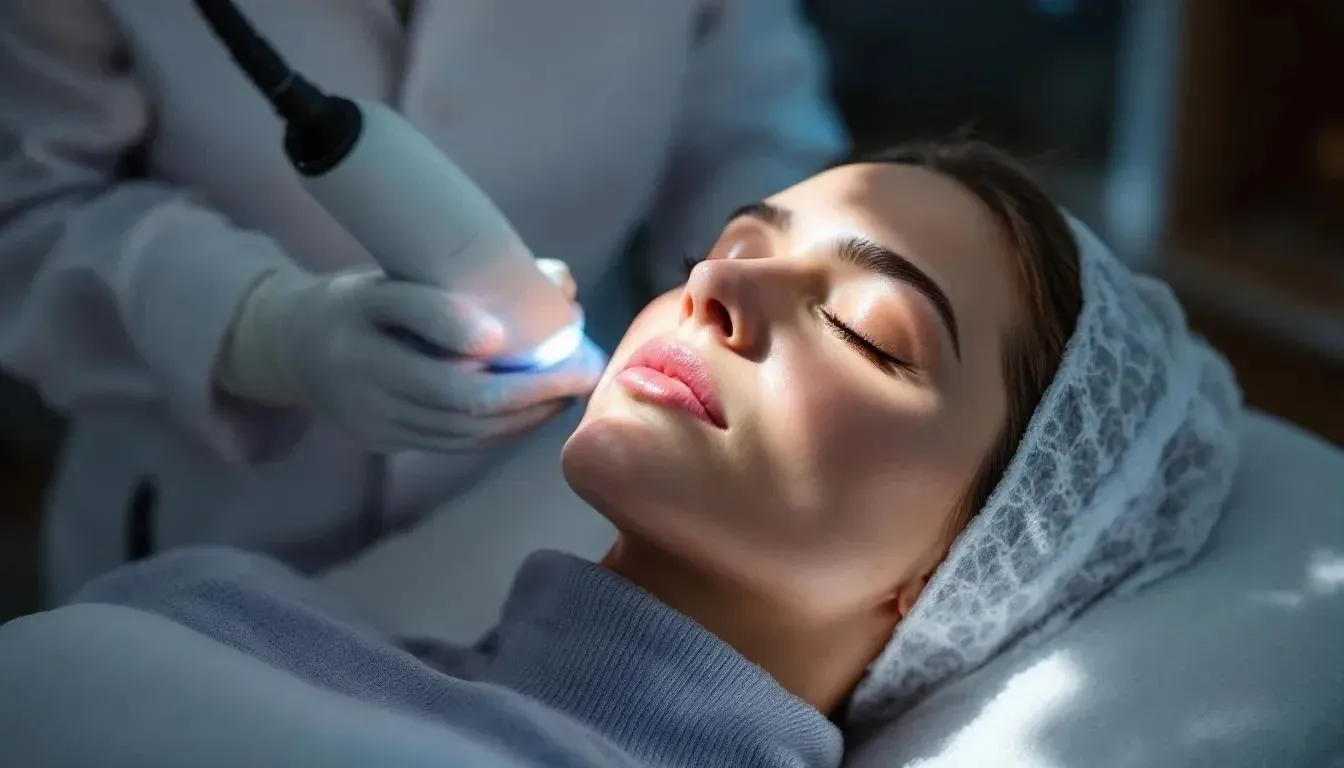
Our licensed aestheticians perform laser treatments under the direction of our dermatologists. You will first need a medical evaluation to determine the best individualized treatment plan for you. Your dermatologist will continue to treat you with medical treatment during your laser treatment series.
- Before: Once your acne has been evaluated by your dermatologist and it has been determined whether or not you will need a numbing cream, you will come in to have your skin cleansed. Your aesthetician will set up the laser based on your skin type, skin tone, and type of breakouts you have.
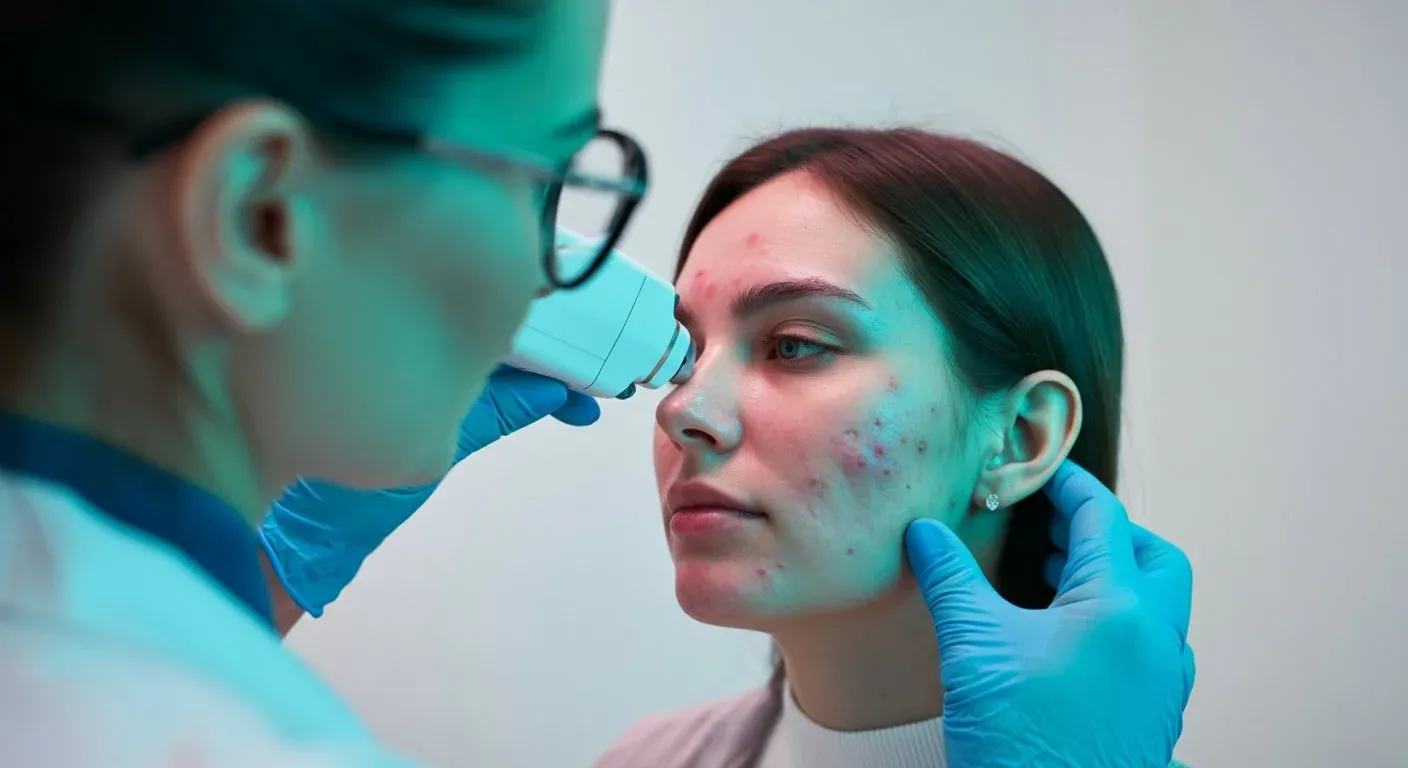
- During: Everyone in the room wears eye protection that matches the laser to be used, for the whole session. The laser will be moved over the treatment area and you may feel slight warmth or snapping for each laser pulse.
- After: Be sure to keep treated areas out of the sun and wear a broad-spectrum sunscreen with SPF 30 or higher. Avoid retinoids or other skin sensitizing products if asked to do so around treatment times.
The number of treatments and time between treatments will depend on the type of laser used, the area to be treated, how you respond to treatment, and other parts of your overall acne treatment plan. You will follow-up with us and together you will evaluate if additional treatments are needed.
Results vary but some patients do notice a calming of inflammation over the course of their laser series. Breakouts may still occur due to hormones or other factors. Acne is often a condition to be managed.
Planning for Medium to Deep Skin Tones
Since deeper skin is more prone to darkening after inflammation, a conservative approach is recommended with regard to the type of laser used and the settings chosen. The “wavelength” of the laser or the type of light emitted is important and depends on the purpose of the laser and what the device has available.
Longer wavelengths may be preferred for deeper skin as long as they are suitable for the purpose of the treatment. This is based on less absorption of longer wavelengths by the pigment in the skin.
You should always protect your skin from the sun. We may need to treat an initial small area to see how your skin responds. People with deeper skin are more prone to developing dark marks after breakouts (post-inflammatory hyperpigmentation), which can be treated differently.
After the Breakouts Settle
Once your active acne is under control, we can help treat acne scars you may be left with. However, the treatment for acne scars (such as laser resurfacing) is different than for active breakouts. Schedule an evaluation for acne scarring to discuss treatment options for acne scars.
Before You Book
Your evaluation covers your skin type, tone, goals, medical history, medications and skincare products. Recent sun exposure or a history of cold sores may change or delay the plan. If you are pregnant or breastfeeding, discuss timing with your dermatologist.
Tell your dermatologist about every acne medication you take or recently took, including isotretinoin. Session timing then depends on the type of procedure, its settings, your dose and how you heal. After a recent peel, laser or other procedure, the wait depends on its depth and whether your skin has fully healed.
We postpone laser until your skin has healed if you have an active skin infection in the treatment area. That includes an active herpes outbreak anywhere on it, such as a cold sore.
An active tan or self-tanner, or certain medications that make your skin more sensitive to light, may mean we postpone or adjust laser. So may a history of raised scars (hypertrophic scars or keloids) or other abnormal scarring, and certain skin conditions need attention first.
Temporary warmth, redness or mild swelling may follow a session, and how long it lasts depends on the settings and area treated. Treated skin can also lighten or darken, which is never the aim, and darkening is more likely in deeper skin tones. Rarely, a session can cause a burn or blistering, infection, scarring, or longer-lasting lightening or darkening that can appear weeks to months later.
Seek eye care or emergency care right away for any of these after a session:
- New or worsening blurred or reduced vision
- A new blind spot
- Flashes or floaters
- New or worsening eye pain
- Marked sensitivity to light
Contact our office promptly if you notice any of these signs after a session:
- Blistering
- Pain that is getting worse
- Redness, warmth or swelling that is increasing
- Pus-like drainage
- Fever
Do not wait for our office to reopen if symptoms are spreading quickly, pain is severe, or you have a fever and feel unwell. Go to urgent care or an emergency department.
This article is general education and cannot diagnose your skin or replace an evaluation.
Our Approach to Your Care
Our board-certified dermatologists base their treatments on sound medical science and provide individualized care to help each patient achieve his or her skin goals. Request an appointment at our South Loop dermatology practice to experience the difference of physician-directed care from a practice that is part of the Northwestern Medicine Physician Network.
Questions Patients Often Ask
Will My Acne Come Back After Laser?
It varies. You will likely need to continue to use topical medications to prevent new breakouts even after your laser treatments are completed. If you continue to have breakouts, your dermatologist will adjust your treatment plan accordingly.
Does Laser for Acne Hurt?
It varies. Some people feel minimal sensation of warmth with brief snapping, whereas other people feel more sensation. If you feel your skin may be sensitive to heat or snapping, we can discuss options for numbing the skin at your evaluation.
Is Laser Treatment Safe for Medium to Deep Skin Tones?
Yes, with the right device, settings, and approach, many laser treatments can be done safely. Your skin tone is one part of that decision, along with your medical history and the type of breakouts you have.
Can a Laser Remove a Cyst Under the Skin?
No. Cysts under the skin are different than cystic acne, and acne laser does not remove them. However, our dermatologists can remove under the skin cysts as a minor surgical procedure in the office.
Do Home Laser Devices Work for Deep Breakouts?
No. Home light devices are not the same as the lasers used in an office and have not been shown to treat deep, painful breakouts. Deep, painful breakouts can lead to scarring, so it is important to be evaluated rather than rely on a home device.
Talk With Us About Your Next Step
If you are experiencing deep, recurrent breakouts and are wondering if laser would be a good option, start with an evaluation of your acne. You can always decide if you want to pursue laser treatment after you have seen one of our dermatologists. They will review all of your treatment options with you and help you determine the best course of treatment, including if laser treatment is appropriate.
Request an appointment or send us your questions today.
Individual results and duration of results may vary. Outcomes are not guaranteed.