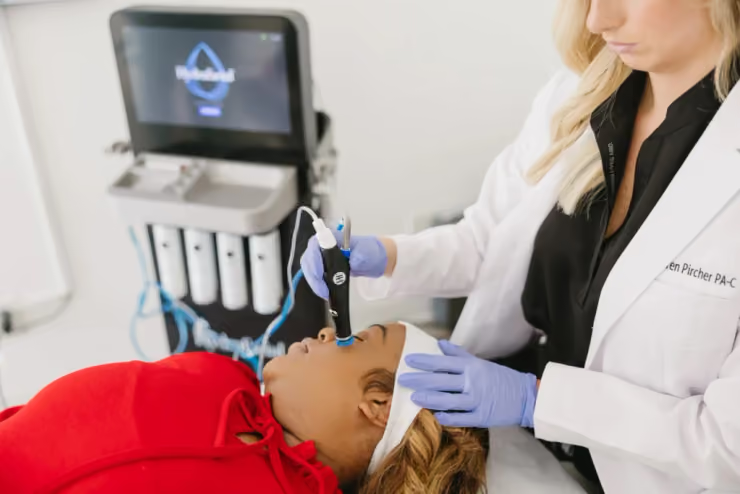
Getting your acne scars to improve starts with a dermatologist working out which kind they are. The evaluation is what decides the plan, because the treatment that helps one kind of scarring does little for another.
Acne scarring is several different problems that share one name. The first useful step is sorting which kinds are on your skin, and in what mix, before anyone chooses a procedure. That sorting is what a dermatologist adds, and everything that follows depends on it.
What a Board-Certified Dermatologist Checks
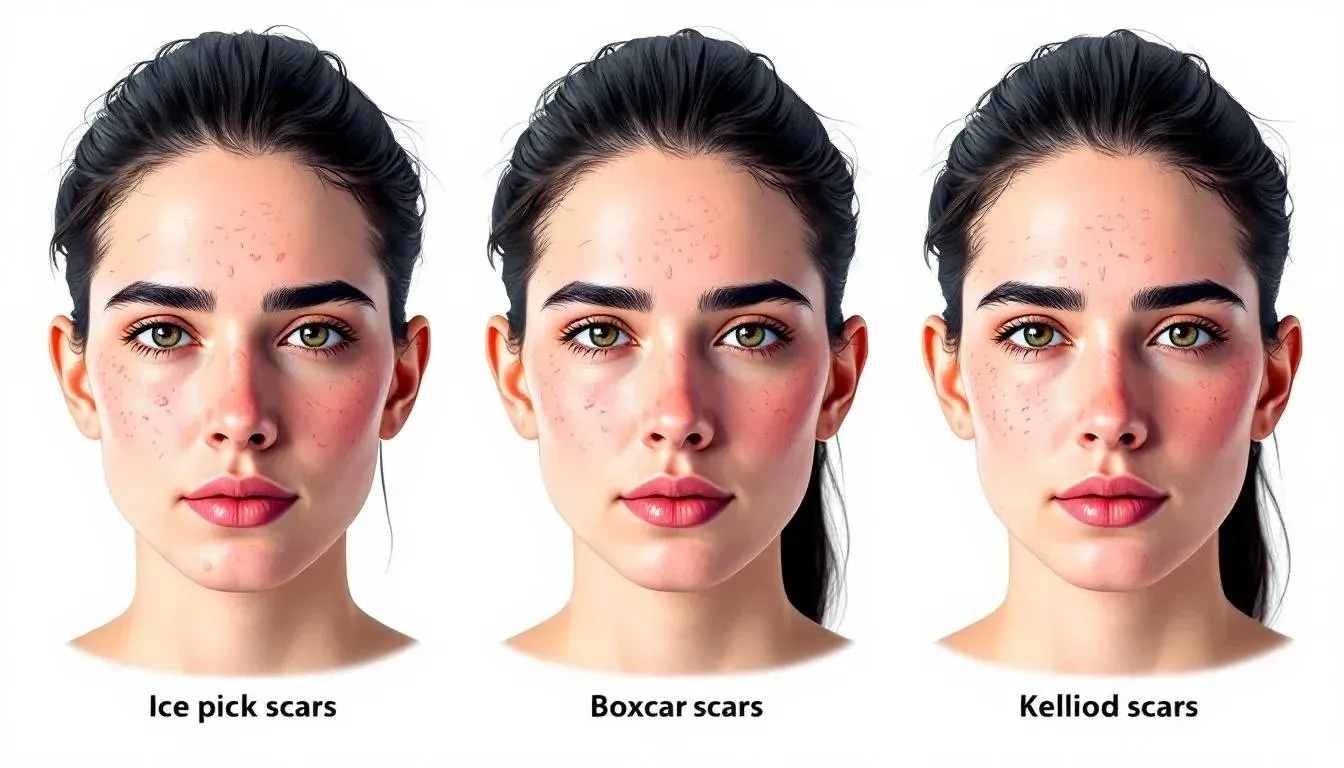
A board-certified dermatologist begins by sorting the scars themselves. Some are broad, shallow depressions, some are narrow, deep pits, and some are tethered scars that pull the surface down from underneath. Raised scars (hypertrophic scars or keloids) are a different problem that needs a different approach altogether.
Most people carry more than one kind, and the mix shapes the plan more than any single scar does. The examination also covers what surrounds the scars:
- Marks or scars: Flat red or brown marks left after acne (post-inflammatory hyperpigmentation) are discoloration rather than scarring, a different problem with a different plan. Telling the two apart is part of the evaluation.
- Active acne: Breakouts that are still appearing are brought under control before scar work, because new lesions make new scars.
- Skin tone and healing history: How your skin is likely to respond, and how it has healed after past breakouts or procedures, shapes which options are chosen.
- Medications and past procedures: What you take or recently took, and what has already been done to your skin, changes the timing of everything that follows.
Which procedure suits which scar is a separate question, and we take it scar by scar in a companion post.
What Happens at Your First Visit?
The visit runs in a set order, and each stage feeds the next one. Bring your questions, because the plan is built from your answers as much as from the examination.
- History and medications: We ask about your acne history, what you take now or took recently, and how your skin has healed before.
- Examination in good light: We look at the scars up close and from an angle, because shadow is what makes a depressed scar visible.
- Your priorities: We ask which scars bother you most and what you want to see change, since that ranks what gets treated first.
- The plan: You leave with a sequence, including what starts first, what waits, and what to expect between visits.

How Your Plan Is Built and Revised
Think of the first plan as a roadmap that we redraw as your skin shows us how it responds. The plan is a sequence rather than a single appointment, and we read the result between sessions before settling the next one. Settings, spacing and the mix of procedures change based on how your skin responded to the last treatment.
Treatment can make certain depressed scars shallower and less noticeable as new collagen forms, without filling them in or removing them. Deep or tethered scars may improve less. The number of sessions and the spacing between them are individualized to your skin and your scar mix.
Between sessions, the surface settles first, and the shadows cast by depressed scars soften more slowly. That slower change is what we read at each check before we set the next step. You will hear what to watch for before you leave each visit.
Those adjustments come out of follow-up visits through the whole series. Close follow-up from the start. We see patients regularly, to monitor your progress, answer questions, and make thoughtful adjustments, partnering with you until you achieve the best possible outcome.

Who Does What at Our Practice
A dermatologist evaluates you and sets the plan. Licensed aestheticians perform laser, microneedling and peel treatments under dermatologist direction after an individualized medical evaluation. The medical evaluation is what makes the aesthetic work safe, because the plan our aestheticians follow was written around your skin.
The device and product detail for each option lives on our laser treatments page and our microneedling page. FDA-authorized microneedling devices have been reviewed for specific uses, including facial acne scars in adults 22 or older. Not every device, treatment area or use has been studied.
Does the Plan Change for Deeper Skin Tones?
Deeper skin tones carry a higher risk of dark marks after treatment, and that changes the plan in several places. We choose a different device, run gentler settings, leave longer gaps between sessions, and often change the mix of procedures. Those choices affect both the pace of improvement and how far it goes.
That is a reason to be evaluated by a dermatologist who treats melanin-rich skin regularly, and our South Loop dermatology practice does. Treatment stays on the table for deeper skin tones. The plan takes a more careful route to it, and the evaluation is where that route is drawn.
Before You Book
Treatment is deferred for an active skin infection, open wounds, or an active herpes outbreak anywhere on the treatment field, including cold sores. It is also deferred for sunburn, recent sun exposure or tanning in the treatment area. It waits too while inflammatory skin disease such as uncontrolled eczema or psoriasis is active at the site.
A history of cold sores calls for preventive antiviral medication first, and pregnancy and nursing are reviewed before any treatment, with deeper options avoided. Planning is individualized for a history of raised or abnormal scarring, poor wound healing, uncontrolled diabetes, or recent radiation or facial surgery. The same holds for steroid pills or injections that act throughout the entire body, and for conditions or medications that weaken whole-body immunity.
Tell your dermatologist about acne medication you take or recently took, including the prescription acne pill (isotretinoin), and any recent peel, laser or procedure. Timing depends on the treatment and whether your skin has fully healed.
Redness, swelling, warmth, discomfort, crusting, peeling and temporary pigment change are expected and settle as the skin heals. Less common risks include blistering or burns, infection including cold sore reactivation, delayed healing, prolonged redness and scarring. Lasting pigment change, including darkening or lightening, is also a less common risk.
Contact our office promptly if any of these appears after a treatment:
- pain, redness, warmth or swelling that is getting worse instead of better
- fever or chills
- pus or foul-smelling drainage
- new grouped blisters or cold sore symptoms
- significant blistering
- skin that is not healing on the expected schedule
This guide is not a diagnosis and does not replace an evaluation.
Advanced Dermatology and Aesthetic Medicine is a physician-led practice in Chicago's South Loop, part of the Northwestern Medicine Physician Network. Our board-certified dermatologists evaluate every patient before any cosmetic plan, and the treatments that follow are physician-directed and chosen on evidence.
Questions Patients Often Ask
Is Acne Scar Treatment Safe for Medium to Deep Skin Tones?
Yes. The plan for deeper skin tones is individualized at your evaluation, and that individualization is what keeps treatment appropriate for melanin-rich skin.
Can a Dermatologist Remove Acne Scars Completely?
No. The aim is to make scars shallower and less noticeable, and how far that goes depends on scar type and depth.
Can More Than One Procedure Be Part of the Plan?
Often, yes. Many plans use different procedures for different scar types, and the sequence is set at the evaluation and revised as your skin responds. You will know the order before the first treatment starts.
When Will I See the Full Result?
It varies. Improvement can continue for several months after the final treatment. What that looks like month to month is set out in our before and after post on laser treatment.
Talk With Us About Your Next Step
If you are still unsure which kind of scarring you are looking at, that uncertainty is what the first visit resolves. Book an appointment with our dermatologists, or contact our office with a question, and we will map the options into a plan with you.
Individual results and duration of results may vary. Outcomes are not guaranteed.