Whether or not your health insurance plan will cover your care depends on three things.
First is whether or not your visit is medical or cosmetic in nature. Second is your plan's own rules for what it pays. Third is what you confirm with your insurer before you book.
The Line Between Medical and Cosmetic Care
Our medical dermatology practice is focused on the diagnosis and treatment of conditions that affect your health. We will bill our participating insurance plans on your behalf for your treatment of medical skin conditions such as acne, eczema, psoriasis, persistent facial redness and flushing (rosacea), rashes and warts. Others include a spot on your skin you are concerned about, skin biopsies, painful or infected cysts and more.
Our cosmetic dermatology practice focuses on cosmetic concerns that are purely elective in nature. Please be aware that some services, especially cosmetic/aesthetic ones, can only be paid for by yourself and are not billed to insurance.
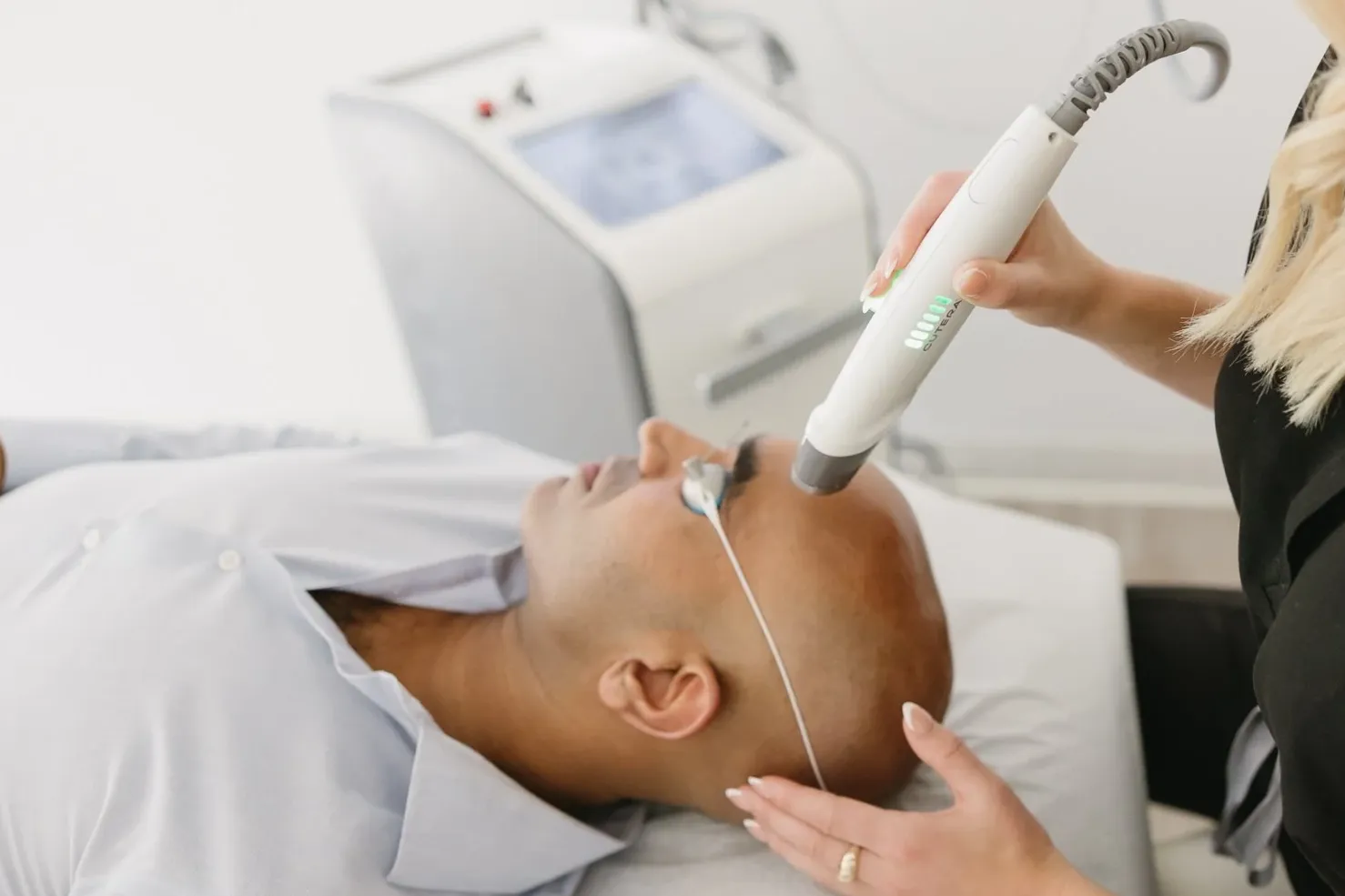
Our cosmetic dermatology practice is focused on cosmetic treatments such as Botox® and Dysport® for the treatment of lines and wrinkles, dermal fillers, chemical peels, laser treatments, microneedling, laser hair removal, and HydraFacial® treatments.
The Same Concern Can Land on Either Side
Remember, your health insurance plan is there to help you with your health, so the reason for your visit is like an address. It will direct us to bill your visit to your health insurance plan or to you.
A lot of the skin concerns we treat can have more than one purpose, which means we will bill your visit in more than one way depending on the reason for your visit. Some examples of this are listed below.
-
Hair loss: We can bill your health insurance plan for the evaluation of hair loss, however treatment for hair loss with Platelet Rich Plasma (PRP) is self-pay only. The evaluation of hair loss is considered medical in nature as we need to find out what is causing your hair loss.
-
Excessive Sweating: We can bill your health insurance plan for medical treatment of excessive sweating (hyperhidrosis), however treatment of excessive sweating with Botox® is self-pay at our practice.
-
Moles: Removal of moles may be covered by your health insurance plan if there is concern that the mole may be a skin cancer. It may also be covered if the mole has caused documented symptoms (such as bleeding, pain, inflammation, infection or repeated physical injury). Removal of moles for purely cosmetic reasons is self-pay.
-
Skin Checks: Your health insurance plan may cover a preventive skin check (full body skin check), and some plans cover it at no cost to you. However, if you are being seen for a specific spot on your body, the visit may be billed to your health insurance plan as a diagnostic visit. The same applies if you require a follow up skin check based on your past skin cancer or other documented risk factors.
If you have a spot you are concerned about, regardless of the above, please come in to see one of our clinicians who will be happy to explain the findings.
How Does Your Plan Decide What It Pays?
During your visit, one of our clinicians will perform an examination and document his or her findings along with his or her recommendations for your care. Your health insurance plan will then look at the information provided and determine if your care meets their criteria for health care deemed necessary for your health (medically necessary).
Each health insurance plan has their own criteria so one plan may make a different decision than another health insurance plan.
The diagnosis that one of our clinicians gives you during your visit will affect how your visit will be billed so no one will be able to tell you for certain prior to your visit. Each person’s diagnosis may be different as each person’s visit will be different.
Certain services require approval from your health insurance plan prior to providing the service (prior authorization). Your health insurance plan decides what services require prior authorization.
Covered Care Can Still Carry a Cost
Your health insurance plan will have documentation that outlines what your out-of-pocket costs will be. There are three words you need to know when it comes to your out-of-pocket costs.
-
Deductible: This is the amount you have to pay for covered medical care in a plan year before your plan will start paying for most services.
-
Copay: This is the fixed amount you pay for a visit. Sometimes you will have a different copay for seeing a specialist vs. seeing your primary care doctor.
-
Coinsurance: After you have met your deductible, you will have to pay a percentage of each covered bill until you have reached your maximum out of pocket. This is the most you have to pay for covered, in-network medical care in a plan year, and it does not count cosmetic or other non-covered services. Original Medicare on its own does not have this yearly maximum.
Each year, your deductible will start over. If you have a plan with a high deductible, it is possible you will have to pay the full cost of your visit(s) until you have met your deductible early in the plan year.
After your visit, you will receive a statement from your insurance company called an explanation of benefits, which will explain how each of these terms has affected your visit. You should compare this to the information you received from your insurance company before your visit to make sure everything is as you were told it would be.
Our Practice and Your Insurance
Our practice participates with select insurance plans. Participation varies not only between different insurance plan networks, but also between the different insurance plans within each network.
When your insurance company says that we are “in network,” they mean that we participate with your plan. Your insurance company may have several different plans, and we may not participate with all of them. Care outside your plan's network can change both what your plan pays and what you owe.
You can view our current list of participating insurance plans and details about payment on our Insurance page. We do not accept HMO patients.
Before You Book
A call to the number on your insurance card can settle the practical questions ahead of time. Ask whether our practice is in network for your specific plan, what your specialist copay is, and where you stand on your deductible. Each answer changes what the visit may cost you.
Ask, too, whether the care you are booking requires your plan's approval in advance. Note the date of the call and the name of the representative, which keeps a record of what your plan told you.
Coverage and benefits vary by plan and product, and it is your responsibility to confirm coverage with your insurer. Any balance your plan assigns to you, including non-covered services, is your responsibility. This article explains how coverage works and does not replace your plan's answer on your benefits or an evaluation of any skin concern.
Our Approach to Care
As a practice in the Northwestern Medicine Physician Network, our board-certified dermatologists provide physician-directed care in Chicago’s South Loop, beginning with a medical evaluation and continuing with evidence-based recommendations designed to help you reach your goals.
Questions Patients Often Ask
Can I Use Medicare for a Dermatologist Visit Here?
Yes. We accept Medicare Part B and select Medicare Advantage plans.
Can I Use Medicaid for a Dermatologist Visit Here?
No. We do not accept Medicaid or Medicaid Managed Care plans, which are Medicaid plans run by private insurance companies.
Will Insurance Pay for Microneedling, a Chemical Peel or a Laser Treatment Here?
No. All three are considered cosmetic in our practice, regardless of your skin concern.
Can I Know Before My Visit What It Will Cost With Insurance?
Not necessarily. It depends on your diagnosis at the time of your visit and how that will be affected by the cost sharing requirements of your insurance plan.
Talk With Us About Your Next Step
If you’re not sure of your next step, the best thing to do is to come in and see us.
You can do so on our Appointments page or by visiting our Contact page.
Individual results and duration of results may vary. Outcomes are not guaranteed.