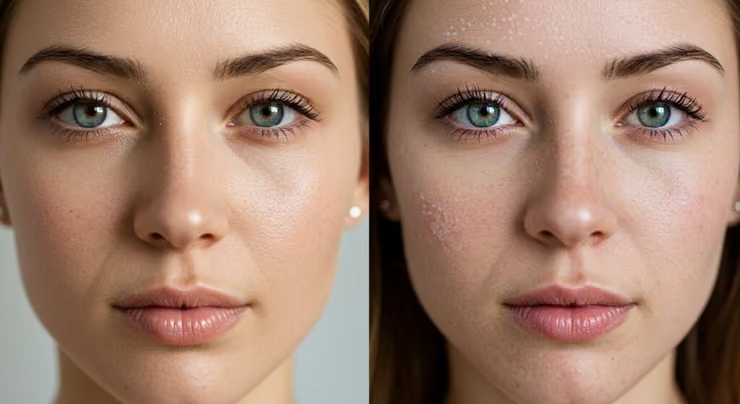
If you have oily skin, the best sunscreen for you is one that you like and will use generously every day. All sunscreens labeled as broad spectrum with SPF 30 or higher are good. If you have oily skin, it can be hard to find a sunscreen that works for you.
Whether your skin is oily or not, using a broad spectrum sunscreen as directed is important to prevent sunburn and to reduce, without eliminating, your risk of skin cancer and early skin aging. Sunscreen is one part of sun protection. You should also seek shade and wear protective clothing, a hat, and sunglasses.
If you have oily skin, sunscreens can leave your skin greasy or shiny, cause breakouts, or make it hard to wear makeup. The most important thing a sunscreen does is protect your skin from the sun. However, you can find a sunscreen that protects your skin and doesn't cause these problems.
Reading the Label for Texture and Finish
Look for sunscreens that are described as oil-free, lightweight, gel, fluid, or matte. Some sunscreens are formulated to be less likely to clog your pores (these are called non-comedogenic sunscreens). Even if a sunscreen is formulated this way, everyone's skin is different and there's no guarantee how your skin will react.
If your skin is oily but tends to also be dry or easily irritated (for example, if you're using treatments for acne), a lotion or moisturizing sunscreen may be better for you.
Some ingredients in sunscreen, such as silica, clays, starches, and certain silicones, can soak up oil on the surface of your skin for a time. However, they don't decrease the amount of oil your oil glands are producing.
The silicone dimethicone is commonly used in sunscreens to help them go on smoothly. Some people find that using products with the ingredient niacinamide makes their face less oily or helps with uneven skin tone, but niacinamide doesn't replace treatments for acne.

Mineral, Chemical or Hybrid: Does the Filter Type Matter?
All 3 types of sunscreen can work well for oily skin. Some people with sensitive skin find that they prefer mineral sunscreens.
- Mineral sunscreens: These sunscreens contain the ingredients zinc oxide and/or titanium dioxide. They can still cause stinging, irritation, dryness, or leave a residue on your skin.
- Chemical sunscreens: These sunscreens contain a variety of other sunscreen ingredients and often rub in easily. Many people find them to be well tolerated.
- Hybrid sunscreens: These sunscreens combine zinc oxide and/or titanium dioxide with other sunscreen ingredients. How they feel on your skin can vary.
Like other sunscreen ingredients, zinc oxide mostly protects your skin from ultraviolet rays by absorbing them. It scatters and reflects a small amount.
It's more important to find a sunscreen formula that works well for your skin than to pick a filter type. Avoid any ingredient you are allergic to. All types of sunscreens should be applied about 15 minutes before going outside (unless the label says otherwise) to let a protective film form on your skin.
Applying It and Keeping It On
Apply a generous, even layer of sunscreen to all the skin that will be exposed to the sun, including your face, ears, hairline, any exposed parts of your scalp, and your neck. For your lips, use a broad spectrum lip balm with SPF 30 or higher.
It can be hard to know how much sunscreen to use, but it's important to use as much as the label recommends to get the SPF protection listed on the label. If that much feels greasy, try a different formula instead of using less.
Reapply sunscreen the same way you would if you didn't have oily skin:
- Outdoors: If you're spending time outside, reapply sunscreen at least every 2 hours.
- Water and sweat: Look for sunscreens that say on the label that they're water resistant for 40 or 80 minutes. Reapply when that time is up if you are still swimming or sweating, and right after toweling off.
- Blotting and rubbing: If you blot or rub your skin heavily, reapply sunscreen.
- Indoor days: If you're mostly inside, reapply sunscreen before you go outside and consider it if you'll be inside near sunny windows or driving for a long time.
If you wear makeup, apply sunscreen as the last step of your skincare routine and let it set before you put on makeup.
Dark Marks and Deeper Skin Tones
Ultraviolet light and even visible light (light that your eyes can see) can make dark marks that remain on your skin after breakouts have healed (post-inflammatory hyperpigmentation) last longer and be more noticeable. If you're prone to post-inflammatory hyperpigmentation, using a tinted sunscreen that contains iron oxides may help protect your skin from visible light. Check the ingredient list, since a tint on its own does not tell you they are there.
Extra protection may be especially useful if you have a darker skin tone. However, depending on your skin tone, the tint may or may not match well or may leave a color cast on your skin. Our team can help you navigate this option regardless of your skin tone.
How Does Sunscreen Fit Alongside Acne Treatment?
In fact, certain acne treatments, rather than acne itself, may cause more irritation. Some topical acne treatments may irritate your skin, and some medications (including some antibiotics) may make your skin more sensitive to burning in the sun.
Use whatever sunscreen you can tolerate best, whether it is mineral, chemical, or hybrid. If you are on any medication for acne, make sure to ask the prescribing clinician if there are any special considerations for your medication.
Additionally, glycolic acid and other exfoliating acids in the same family (called alpha hydroxy acids) can temporarily make your skin more sensitive to burning in the sun. Make sure to wear sunscreen, use other sun protection measures (clothing, limiting time in the sun, etc.) when you use these products as well as for a week after you stop using them.
To learn more about how you can prevent acne in the summer, check out these tips, or schedule a visit so we can help you make a routine that works for you.
When to See a Dermatologist
A reaction that keeps returning as you try different sunscreens is worth a visit, as is a rash persisting after you stop a product. Breakouts that are not settling on your current routine and dark marks that linger are also reasons for a medical evaluation. Before we recommend a sunscreen or adjust acne care, tell us your treatments and medications, past skincare reactions and any history of dark marks.
Sunscreen can cause stinging, eye irritation, an irritant or allergic rash, or breakouts in some people. Keep it out of your eyes and off damaged or broken skin. If it gets in your eyes, rinse them with water right away, and seek care if eye pain or blurred vision continues.
If a rash develops, stop the product, and contact your clinician or our office if the reaction persists.
Call 911 or seek emergency care if a reaction brings any of these signs:
- Difficulty breathing
- Faintness
- Swelling of the lips, tongue or throat
- Trouble swallowing or tightness in your throat
Seek prompt medical evaluation for any of these signs:
- Facial swelling
- Widespread hives
- Significant blistering or skin peeling
For babies younger than 6 months, rely mainly on shade and clothing, and ask a clinician such as their pediatrician before applying any sunscreen. This article is general education, and it is not a diagnosis and does not replace an evaluation.
Sunscreen Advice Built Around Your Skin
Our clinicians in the South Loop will evaluate your skin and recommend specific products and plan of care for you. Our recommendations are tailored specifically to you and based on the available evidence. You will receive a physician-directed plan of care starting with your first visit.
Questions Patients Often Ask
Which Sunscreen Is Best for Oily Skin?
It varies. As long as you find a sunscreen that works for your skin, is “broad spectrum,” and has an SPF of 30 or higher, you can get the protection you need.
Do I Need a Higher SPF When It Is Hot and Humid?
No. Heat and humidity do not change the SPF you need. A “broad spectrum” sunscreen with an SPF of 30 or higher is still the right choice, though sweating means reapplying sooner.
If you are going to spend a lot of time outdoors, a higher SPF (like SPF 50 or higher) may be beneficial, but remember that you still need to use enough and reapply.
Do I Need Sunscreen on Cloudy or Winter Days?
Yes. While the amount of ultraviolet light you are exposed to varies, you are still exposed to ultraviolet light in the winter, even in a cold city like Chicago. Ultraviolet light is present all year, even when it is cloudy.
Certain factors (like snow and altitude) can increase your exposure. It’s best to make using sunscreen every day a habit so you don’t have to remember to start using it in the spring.
Can Powder Sunscreen or Makeup With SPF Do the Job?
Not necessarily. A powder sunscreen can add some protection over your makeup, but a small dusting will not give you the SPF on the label. It does not replace reapplying your sunscreen when you are outdoors.
SPF makeup or primer counts only if you are using as much as the label recommends. It’s usually hard to use enough of these products to get the SPF listed on the package, so it’s best to use a sunscreen underneath in a more generous layer.
Talk With Us About Your Next Step
Navigating the options for sunscreen can be difficult, and there may be some trial and error to find what works for you. We are here to help you figure out what will work best for you, and we will see you regularly to make sure your skin is doing well and answer any questions you may have.
Request an appointment or reach out with any questions.
Individual results and duration of results may vary. Outcomes are not guaranteed.