Not everyone needs a skin cancer screening every year. Some people do, some people need them more often, and some people don't need to come in at a regular interval. We'll talk about it when you come in for your screening.
What the Task Force Found
The United States Preventive Services Task Force says there is insufficient evidence to recommend for or against routine visual examination of the skin by a clinician in asymptomatic (having no symptoms) adolescents and adults. They do not address people who have symptoms, a suspicious spot, a past precancerous spot, or a personal or family history of skin cancer. Those people should be seen either promptly or at an interval set by a doctor.
They also do not set an interval for people who are at higher risk for skin cancer, so the decision is one made individually. If you have symptoms, if you have a spot you're concerned about, you should make an appointment to be seen promptly.
Who Might a Regular Check Suit?
Your dermatologist might recommend regular check-ups if you have any of these risk factors:
- Your history: Personal history of melanoma or other skin cancers
- Your family: Strong family history of melanoma or inherited conditions that put you at risk for skin cancer
- Your moles: Many moles, or if you have atypical moles
- Your skin and sun: Skin that is sensitive to the sun, a history of sunburns especially blistering sunburns, high sun exposure, or indoor tanning
- Your immune system: A weakened immune system because of an organ transplant, a blood condition, or long term medications
Your risk for skin cancer increases as you get older, though age alone does not set the schedule. If you've been treated for melanoma, follow the instructions provided by your dermatologist or cancer treatment team, based on the stage of your melanoma and your individual risk.
We see children in our practice. Whether a child needs regular skin checks depends on their risk factors. Melanoma is not common in young children, and it is normal for children to develop moles that change over time.
You might have a family history of melanoma, especially multiple relatives who've had melanoma or people who had it at a young age, or an inherited condition that predisposes people to skin cancer. If so, it's worth talking to a skin cancer doctor about when and how often you should come in.
It is also worth talking to a doctor if you have a large mole from birth, several moles from birth, or other risk factors.
Checks for Every Skin Tone
Skin cancer can happen in people of all skin colors, although melanoma is less common in people with darker skin. It can also be diagnosed later in darker-skinned people, at a later stage, so it's important to know that darker-skinned people do get melanoma.
In Black patients, melanoma often occurs on palms of hands, soles of feet, and under the nails, though it can appear anywhere. As with all other patients, it's important for people with darker skin to come in based on their individual risk factors and symptoms.
What to Expect
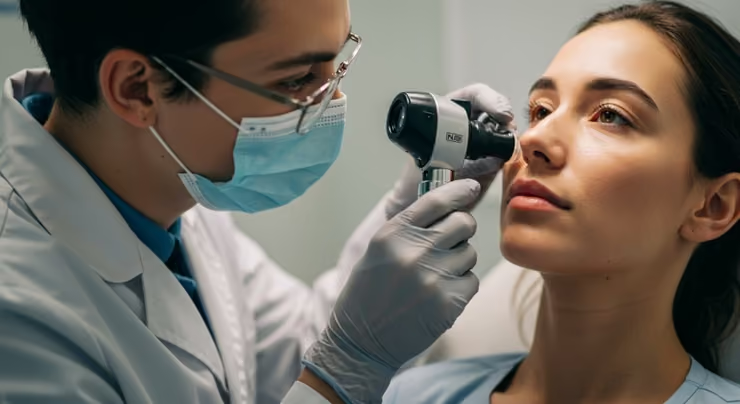
We will talk about your history and your concerns and then, with your permission, do a complete visual check of your skin. It is not invasive. We usually look at the scalp, ears, trunk, arms, legs, palms of the hands, soles of the feet, nails, and between the fingers and toes.
We will talk with you about checking your underwear area and other sensitive areas on your body. You can ask for a chaperone to be in the room, and you can decline to have any areas of your body checked. Please keep in mind that the completeness of the skin check may be affected by whether areas are covered, by dressings, by mobility, and by your preferences.
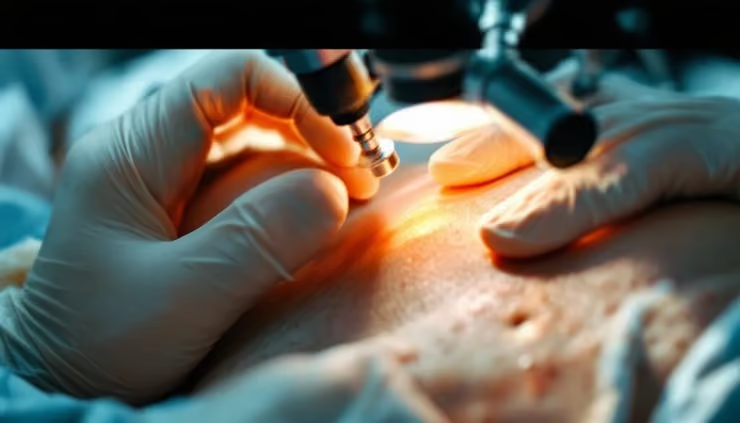
To decide if a spot needs to be looked at in the lab, we may use a special magnifying light called dermoscopy. But ultimately the only way to know for sure if something is skin cancer is to remove a small sample and have it sent to a laboratory.
We can often do that at the time of your visit. Your clinician will tell you if a later appointment is fine for that spot. There are risks to doing a biopsy, including discomfort, bleeding, infection, pigment changes, and permanent scarring.
For certain patients with a lot of moles or atypical moles, a dermatologist may consider a "mole map" which allows them to take pictures of certain areas of your skin and compare them over time. It does not diagnose skin cancer, and it doesn't replace biopsies, but it is a tool that can be used for certain patients.

Preparing for Your Check
- Your spots: Any spots that you're concerned about and when you noticed that they changed, and pictures of them if you have them.
- Your background: A personal history of skin cancer, a family history, sunburns or tanning.
- Makeup and polish: Please avoid makeup over the spot of concern and polish on the nail to be checked (if possible). If not, still please come in.
- Earlier records: If you were seen by a dermatologist previously, please bring old dermatology and lab reports.
- Your questions: Bring your questions with you, including questions about when you should come back for checks.
The Months Between Visits
Watching Your Skin
Knowing your own skin can be very helpful in finding a spot of concern. Your dermatology clinician can recommend a schedule to examine your own skin. You may want to use a mirror or a helping hand to examine your scalp, back, palms, soles, nails, and between your toes.
Your checks are important, as are the ones you have with your dermatology clinician. While neither are perfect at catching skin cancer, it is important to work together. You can often find a spot first, and your clinician can examine areas that are difficult to reach on your own.
There are a few tips that can help you remember what to look for, such as the “ABCDE’s of Melanoma.” It covers asymmetry, border, color, diameter and evolution. Evolution, or change over time, is the most important factor to keep in mind.
The ABCDE’s can help you determine which moles you may want to have checked by a clinician. Keep in mind that some melanomas can be small, evenly colored, pink, red, skin colored, or grow quickly. Another helpful tip is to keep an eye out for the “ugly duckling,” or the spot that stands out from the rest of your spots.
Skin cancers can grow at different rates. Some melanomas can grow and change over weeks to months. Finding melanoma at an earlier stage is linked with a much better outlook, so don’t wait until your next skin check to have a changing or worrying spot examined.
Protecting Your Skin
Skin checks can find skin cancer, including at an early stage. Avoiding ultraviolet light can help prevent many skin cancers, but keep in mind that not all skin cancers are caused by the sun or preventable.
Avoid indoor tanning. Seek shade and wear protective clothing, a broad brim hat, and sunglasses. Apply a broad spectrum water resistant sunscreen of SPF 30 or greater generously to all exposed skin and reapply every couple of hours and after swimming or sweating.
When to See a Dermatologist
Contact us promptly, before your next scheduled check, if you notice any of these on your skin or your child's:
- A new spot that looks unusual
- A spot that looks clearly different from your others
- Change in a spot's size, shape, color or symptoms
- A spot that grows quickly
- Persistent itching or pain in a spot
- A spot that breaks open and stays open
- Bleeding from a spot without explanation
- A sore that does not heal, or heals and comes back
- A new or changing streak in a fingernail or toenail, especially a dark one
- Dark color spreading onto the skin beside a nail
- A new spot on a palm or the sole of a foot
- In a child, a spot that itches, hurts or causes any other symptom
Any check can bring worry, false alarms and false reassurance. It can also mean sampling spots that prove harmless, or finding and treating growths that would never cause harm.
Before we sample a spot, tell us about your medicines, allergies, bleeding problems, pregnancy, and past problems with scarring. Change a medicine only with your clinician's guidance. This article is general education and cannot diagnose you or replace an examination.
Our Approach
We are a physician directed dermatology practice in the South Loop that cares for your skin. Our board certified dermatologists use medical evidence to help guide your care based on your personal history. We will examine your skin, help you understand our findings, and help you decide when to return for your next skin check.
Questions Patients Often Ask
Should Someone Without Risk Factors Have a Check Every Year?
Not necessarily. If you have no risk factors and no skin spots of concern, coming in once a year is one option for skin checks. There are other options as well.
When Should Skin Checks Start?
It varies. When you first come in, your dermatology clinician will help you decide based on your personal and family history, as well as any other risk factors you may have.
Does a Skin Check Hurt?
No. The skin check itself is purely visual. If your clinician recommends sampling a skin spot, they will talk with you about the procedure, how to care for the wound, and when to expect your results back.
Does the Examination Include Areas Under Your Underwear?
It varies. Your dermatology clinician will talk with you prior to your skin check to help you decide. In the end, it is up to you.
Talk With Us About Your Next Step
If you are still deciding, come in. Let your dermatology clinician take a look and help you plan your next step. Request an appointment or contact us with any questions.
Individual results and duration of results may vary. Outcomes are not guaranteed.