Your Botox® aftercare is short and easy, and each step has a reason. Dysport® aftercare is the same, and these steps are sensible precautions rather than proven rules.
What the Evidence Says About Aftercare
In dermatology and plastic surgery guidance, one step after Botox® or Dysport® has the broadest agreement, though no strong study has proven it: avoid rubbing or massaging the areas where you’ve had treatment.
What We Ask You to Avoid for the Rest of the Day
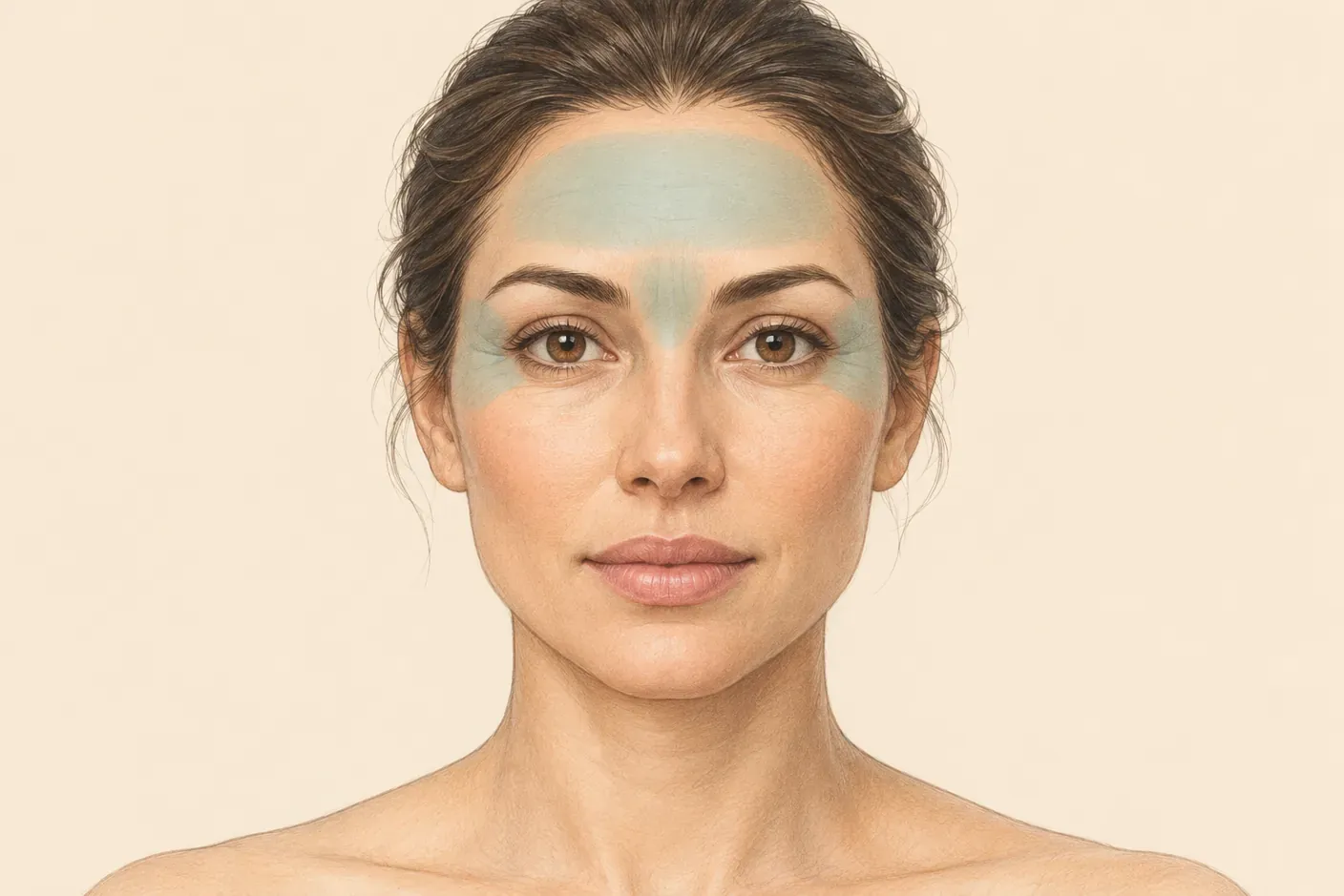
- Rubbing or pressing: Avoid rubbing or massaging the treated areas or putting pressure on the areas. Think of the pressure from tight hats, headbands, goggles and swim caps over your brow. Rubbing may cause a small amount of the product to shift to the nearby muscle(s), which may cause a temporary droop.
- Avoid strenuous exercise: Skip your workouts, lifting weights and other activities that will markedly increase your heart rate, because they may cause flushing and may increase your swelling or risk of bruising. However, you may continue walking and normal activities.
- Avoid saunas and hot yoga: They may cause flushing.
- Avoid alcohol: It may increase your redness or risk of bruising.
The following day, you may return to your normal activities, including your normal workout routine, unless your provider says otherwise.
You may return to work and your normal activities immediately. You may move your face normally after the procedure.
You may not get a facial, facial massage or facial scrub or lie on your face on a massage table for the rest of the day. Contact our practice if you need to schedule a skin treatment.
How Long After Botox® Can You Lie Down?
Some providers will tell you to stay upright for about 4 hours after the injections (the 4-hour rule), to avoid lying down, bending over and getting your head lower than your body. But no studies have shown that those actions after your injections will affect your results or make eyelid drooping more likely. It won’t hurt to follow this rule, but you don’t have to unless your provider asks you to.
You should not put the treated areas against your pillow when you sleep that night. Sleeping on your back can help.
What Is Normal in the First Two Weeks?
Some of the tiny “bumps” from the injections will flatten within a few hours after your Botox® or Dysport® treatment. Any redness, tenderness and mild swelling usually subside within a few hours or within a day. Bruising may take up to a week or two to go away.
Mild headache may occur after treatment of the forehead or frown lines, but usually goes away within a few days. Applying a cold compress gently (without putting pressure on the injection points) for short periods of time can help decrease swelling and limit the risk of bruising.
Your results will develop over several days. You will see the full effects at about 2 weeks after your injections.
Your provider will want to reassess you 2 weeks after your first treatment to check your response. Later, you will need to be re-treated depending upon how long it lasts for you.
Before You Book
Before any treatment, tell us every medicine and supplement you take, including blood thinners, anti-inflammatory pain relievers, fish oil, herbal supplements and muscle relaxants. Sleep, allergy and cold medicines count too, prescribed or not, and so does an antibiotic shot you had recently. Also mention any botulinum toxin treatment, of any brand, in the last four months, and any trouble swallowing or breathing you have or have had.
Treatment waits during pregnancy or breastfeeding, and during an infection where you would be treated. It is not given if you are allergic to any botulinum toxin product or its ingredients, or, for Dysport®, to cow's milk protein. A condition that affects the nerves and muscles (such as myasthenia gravis) raises the risk of serious effects and needs closer review first.
Never stop a prescribed medicine, including a blood thinner or prescribed aspirin, without your prescriber's go-ahead. Our treatment page lists other reasons to wait or take a closer look.
Less often, treatment of the forehead, frown lines or eye area can cause a drooping eyelid, a heavy or dropped brow, or uneven brows. Dry, irritated or light-sensitive eyes can follow, and these effects fade as treatment wears off, most often over a few weeks and sometimes longer. At cosmetic doses, the treatment's effect rarely spreads beyond the treated area, and a serious allergic reaction is also rare.
If any of these signs appears, even hours or weeks after treatment, get emergency help right away and do not drive yourself.
- Trouble breathing or shortness of breath
- Trouble swallowing
- Trouble speaking or saying words clearly
- Hoarseness, or a change in or loss of your voice
- Weakness all over your body
- Double vision
- Blurred vision or any other change in your vision
- Severe eye pain
- Loss of bladder control
- Hives, red itchy welts, itching or a rash
- Swelling of your lips, tongue or throat, or of your face beyond the treated spots
- Wheezing or asthma symptoms
- Dizziness or feeling faint
Contact our office promptly, the same day, if one of these appears on its own; alongside any sign above, it is an emergency. If we are closed, go to urgent care. While a drooping eyelid lasts, do not drive or do anything else that needs clear vision.
- A drooping eyelid, often on one side and worse at the end of the day
- A heavy or dropped brow
- Uneven brows, or one brow arching higher than the other
- Dry, gritty or irritated eyes, or sensitivity to light, that do not settle
- Eye pain
- An eye that does not close all the way
- Increasing redness, warmth or pus at an injection point
This is general education and does not diagnose you or replace an evaluation.
How Our Team Approaches Your Care
Our practice in the South Loop offers physician-directed treatment as part of your overall skin care. Our Botox® and Dysport® aftercare instructions are based on the evidence, and we tell you plainly which steps are precautions.
Questions Patients Often Ask
Can I Wear Makeup Right After Botox®?
Yes, but please apply it gently, without rubbing or pressing the makeup into the injection points.
Can I Fly After Botox® or Dysport®?
Yes, there is no evidence that flying will affect your results. However, you should follow the 4 precautions above on the day of the treatment.
Will Working Out Shorten My Results?
Not necessarily. There is no evidence that exercising on the day of your treatment will make your results shorter. One small study suggests that very active people may have shorter results, but the evidence is scant.
How Far Ahead of an Event Should I Book?
It varies. You should schedule your appointment at least 2 weeks in advance, to give your results time to fully develop, and to give any bruises time to fade.
Talk With Us About Your Next Step
Have questions? Request an appointment or contact us today to plan your next step.
Individual results and duration of results may vary. Outcomes are not guaranteed.